
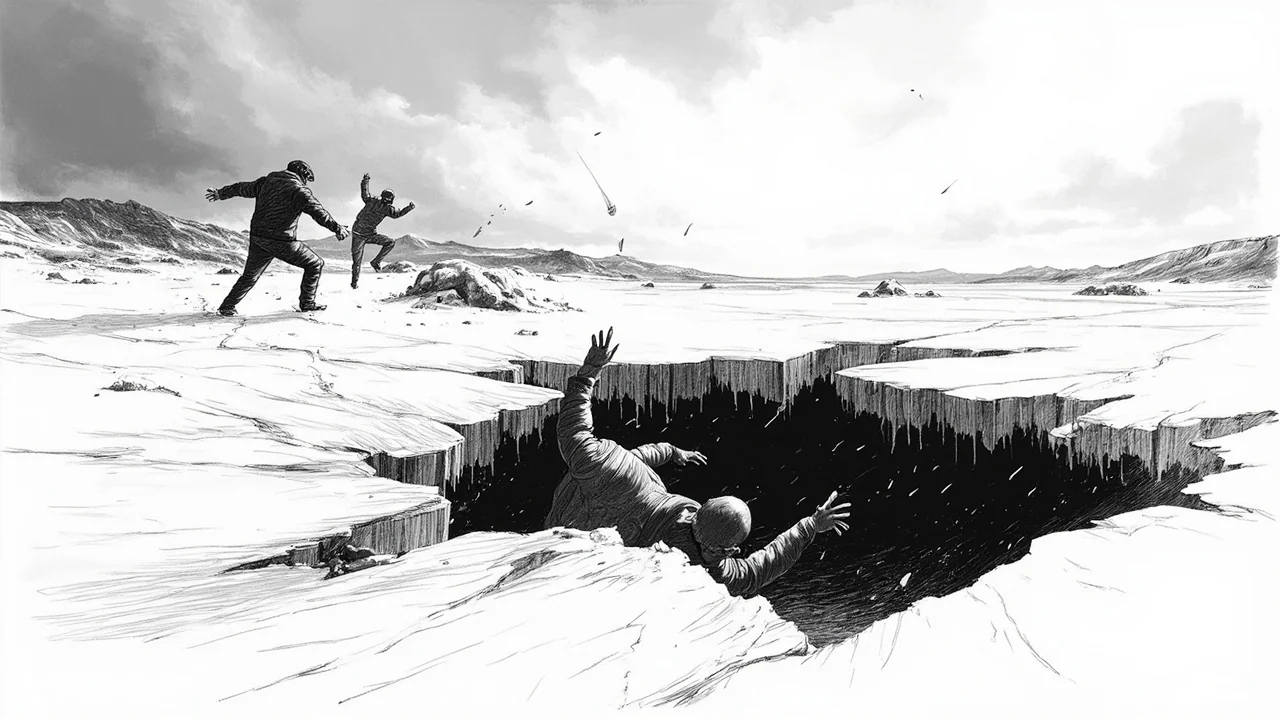
Norway's Rogaland police have confirmed two men died after falling through thin ice on a fjord near Tysvær. The tragic accident occurred Sunday afternoon when the pair ventured onto the frozen surface of the local waterway. A rescue helicopter crew pulled both men from the frigid water and flew them to Haukeland University Hospital in Bergen. Medical teams performed life-saving first aid upon arrival, but their efforts were unsuccessful. Police confirmed both men had died by Monday. Emergency services received the initial call around 3:30 PM local time. Witnesses reported seeing the men on the ice before it gave way. The rescue operation involved both local police, a Sea King helicopter from the 330 Squadron, and Tysvær municipality's emergency response team. The helicopter crew located the victims in the water within minutes of arriving on scene. Hospital officials stated the men were suffering from severe hypothermia upon admission. The exact location where the ice broke has not been publicly disclosed. Police are not releasing the names of the deceased pending notification of relatives. Authorities say an investigation into the precise circumstances is ongoing. They are examining why the men were on the ice and the local conditions at the time.
A Frigid Rescue Operation
The rescue operation highlighted the challenges of winter emergencies in Norway's coastal regions. The Sea King helicopter, based at Sola Air Station, is a primary asset for maritime and mountain rescues. It was dispatched immediately after the emergency call was logged. Rescue swimmers were lowered into the water to retrieve the men. The water temperature in the Boknafjord area at this time of year averages between 2 and 4 degrees Celsius. Survival time in such cold water without a protective suit is tragically short. The hospital in Bergen is the region's major trauma center, equipped to handle severe hypothermia cases. The distance from Tysvær to Bergen is approximately 150 kilometers by air. The speed of the airlift was critical for any chance of survival.
The Unpredictable Nature of Coastal Ice
This incident underscores the inherent dangers of coastal and fjord ice, which is notoriously unstable. Unlike the thicker, more stable ice found on inland lakes at high altitudes, sea ice is affected by tides, currents, and salt content. It can form in deceptive, thin sheets that appear solid. The Norwegian Water Resources and Energy Directorate (NVE) and the Norwegian Society for Sea Rescue (RS) consistently warn against venturing onto fjord ice. They note that ice near shore, where freshwater runoff occurs, can be particularly treacherous. Ice thickness can vary dramatically over a small area. A warm period in late February across parts of Rogaland may have contributed to weakening the ice structure. Local police often issue seasonal warnings, but adherence varies among the population.
A Community in Mourning
Tysvær, a municipality of about 11,000 people, is a tight-knit community. News of the accident has cast a pall over the area. Local officials have expressed their condolences to the families involved. The mayor's office released a brief statement acknowledging the tragedy and thanking the emergency responders for their efforts. Such incidents resonate deeply in Norwegian society, where outdoor life is central to the national identity. Winter activities like ice fishing, skating, and skiing are common, but they carry inherent risks. This event serves as a grim reminder during a season when many are tempted to test the ice as days grow longer. Community leaders are emphasizing safety messaging in the wake of the deaths.
The Science of Hypothermia and Rescue
Medical response to cold-water immersion follows specific protocols. The hospital's focus on life-saving first aid likely included advanced rewarming techniques. These can include warm intravenous fluids, warm humidified oxygen, and external rewarming methods. The body's core temperature can drop rapidly in near-freezing water, leading to cardiac arrest. Even if a victim is pulled out quickly, the after-drop phenomenon, where cold blood from the extremities returns to the core, can cause further temperature decline. This makes on-site and in-transit care absolutely critical. The rescue helicopter is equipped with medical supplies to begin treatment immediately during the flight. Every minute counts in such scenarios, and the response chain from witness call to hospital admission represents a highly coordinated system.
Historical Context and Safety Campaigns
Similar tragedies occur with tragic regularity in Norway. Each winter, several people die after falling through ice on lakes, rivers, and fjords. Safety organizations run annual campaigns with clear advice: check official ice thickness reports, never go alone, carry safety spikes, and avoid coastal ice entirely. The general rule stated by experts is that ice should be at least 10 centimeters thick for walking, and 20 centimeters for groups. However, measuring thickness is difficult for the average person. The only safe ice is ice that has been professionally checked and marked. Many municipalities, especially in inland areas, designate and monitor safe skating areas. Coastal communities rarely have this option due to the unstable nature of sea ice. The message from authorities remains consistent but difficult to enforce across Norway's vast and accessible coastline.