
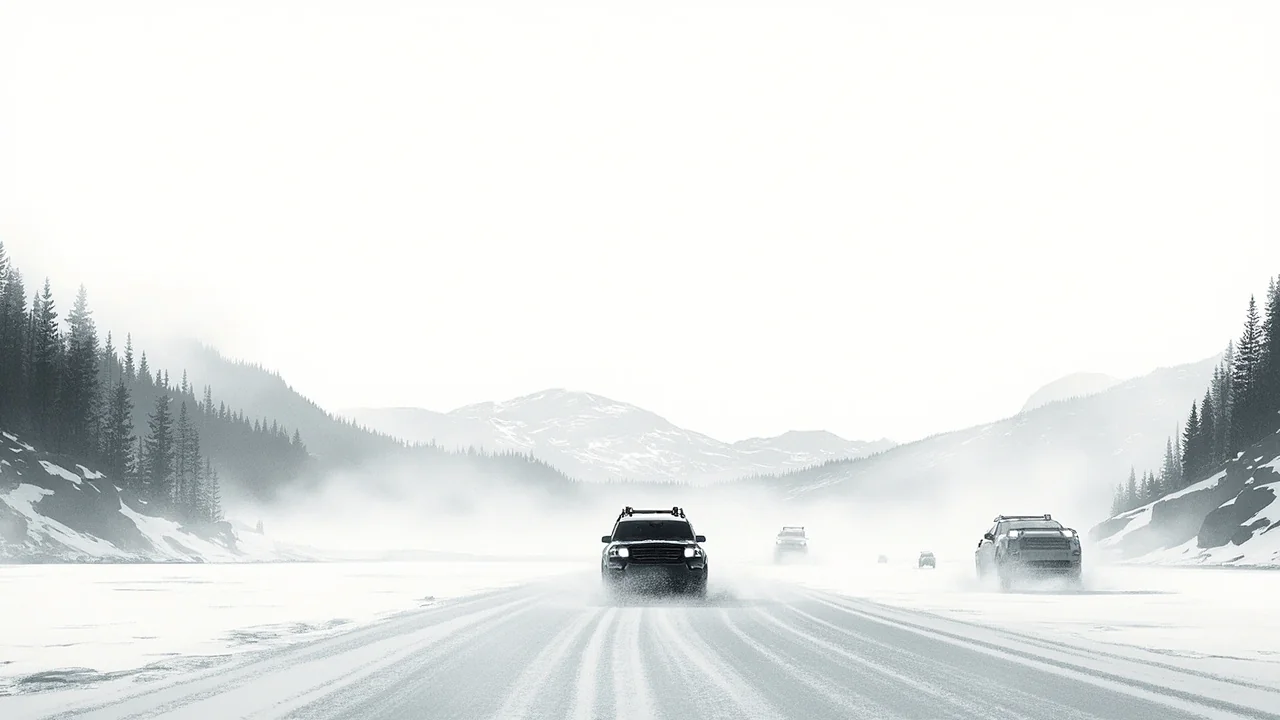
Norway’s State Nature Inspectorate has reported 21 individuals to police after discovering extensive illegal motorized driving on the frozen Sævellavatnet lake east of Bergen. The action followed the discovery of vehicle tracks and cars with ice spikes parked near the water in an area between Tysse and Eikelandsosen. Officials described a scene of organized activity on the ice, prompting a fresh warning from authorities about a widely misunderstood law.
A Busy Scene on the Frozen Lake
Senior advisor Olaf Bratland with Statens naturoppsyn said inspectors encountered a significant gathering. 'There were a lot of people and vehicles of different types,' Bratland said. 'It looked like there was a prepared track they were driving around on.' The discovery was made during routine surveillance, when the suspicious tracks on the ice surface prompted a closer investigation. The subsequent intervention led to the identification of 21 individuals now facing legal complaints for breaches of the Act on Motorized Traffic in Uncultivated Land.
A Commonly Unknown Prohibition
According to Bratland, most of those involved appeared to be unaware their activity was illegal. This aligns with police experience, which indicates public knowledge of this specific regulation is low. In a press release issued following the reports, police prosecutor Sigrid Sulland emphasized the preventative aim of their communication. 'Our experience is that many are not familiar with this prohibition,' Sulland said. 'We therefore wish to disseminate this information to prevent illegal motorized traffic in uncultivated land, dangerous situations, and unnecessary police reports.'
The law in question, the Motorized Traffic Act, is designed to protect the natural environment and ensure public safety in Norway's extensive wilderness areas, known as 'utmark.' It generally prohibits the use of motor vehicles off-road without explicit permission, a rule that extends to frozen lakes and rivers unless on designated ice roads or with special authorization.
Legal Consequences and Enforcement Focus
The reporting of 21 individuals represents a significant single enforcement action under this legislation. Each case will be processed by police, potentially resulting in fines. The severity of the penalty can depend on the circumstances, including the environmental sensitivity of the area and whether the driving was deemed reckless. This incident near Bergen serves as a high-profile example of how authorities are applying the law.
Statens naturoppsyn plays a critical role as the eyes and ears in protected and vulnerable natural areas. Their inspectors have the authority to document violations, collect evidence, and report offenders to the police. Operations like this one at Sævellavatnet often stem from such routine patrols, where physical evidence like tire tracks and parked vehicles provides the initial lead.
The Broader Context of Outdoor Access
The case touches on a central tension in Norwegian outdoor life: the tradition of free public access to nature, known as 'allemannsretten,' versus the need to regulate activities that can cause damage or danger. While the right to roam is cherished, it comes with the responsibility to avoid causing harm to the environment, disturbance to wildlife, or risk to others. Motorized vehicles, due to their potential for noise pollution, environmental damage, and conflicts with other recreational users, are heavily restricted outside of designated roads and trails.
Winter conditions can create a false sense of permissibility, as frozen lakes and snow-covered terrain may seem like open spaces suitable for driving. However, the legal framework does not change with the seasons. Driving on frozen bodies of water is particularly risky, not only legally but also from a safety standpoint. Ice thickness can vary dangerously, and the weight of a vehicle poses a severe risk of breaking through.
A Preventative Strategy from Police
The police's decision to issue a detailed press release alongside the enforcement action highlights a strategy focused on education and prevention. By publicly explaining the law and its application in this case, they aim to reduce future violations more effectively than through fines alone. This approach acknowledges that many breaches are not willful but stem from a genuine lack of awareness.
Information campaigns about the rules for motorized traffic in nature are a recurring feature, especially at the start of winter and summer recreation seasons. This incident is likely to be referenced in such communications as a concrete example. The goal is to ensure that enthusiasts for activities like ice fishing, snowmobiling, or off-roading understand the clear legal boundaries before they set out.