
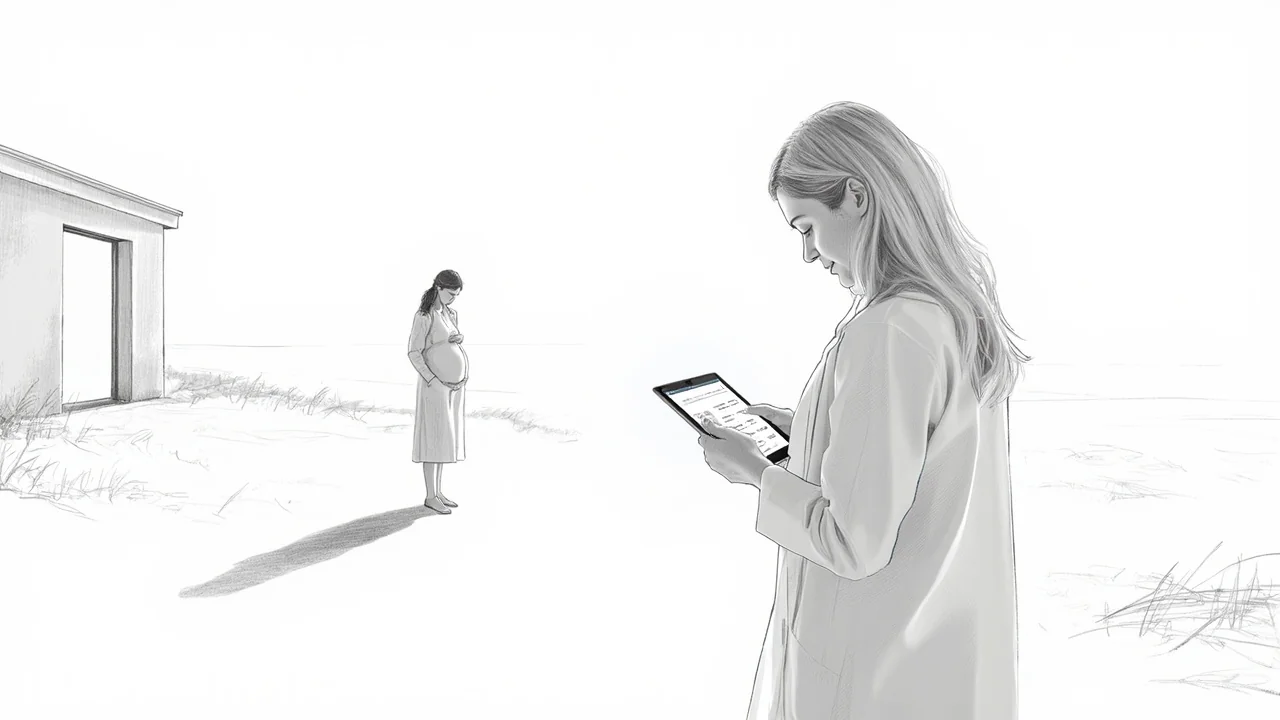
Norway’s 55,000 pregnant women each year will soon trade paper health cards for a digital system now available to all general practitioners nationwide. The long-awaited shift eliminates the familiar A4 sheet that has been manually updated at every prenatal check-up—a process both patients and clinicians have criticized as outdated in an era of advanced digital health infrastructure.
The rollout marks a significant step in Norway’s broader push to modernize public health services. As of this month, every general practitioner in the country can access and update the digital pregnancy health card through secure national health platforms. In March, municipal health stations—where most routine prenatal visits occur—will also gain full access, completing the nationwide implementation.
From Paper Trails to Digital Records
For decades, Norwegian expectant mothers carried a physical health card, often worn thin from repeated handling, to document everything from blood pressure readings to ultrasound results. Clinicians filled in details by hand during each visit, creating a fragmented record vulnerable to loss, damage, or inconsistent notation. The new digital system integrates these entries into a centralized, real-time patient record accessible across care providers.
Health and Care Services Minister Jan Christian Vestre emphasized the move aligns with Norway’s ambition to lead in digital health innovation. “We aim to have the world’s most digitalized health services,” he said. “We can’t keep relying on a worn-out paper sheet for something as critical as prenatal care. Now, the rollout is underway.”
Nationwide Access Begins Now
The phased implementation began with general practitioners, who serve as the first point of contact for many pregnant women, especially in rural areas. With over 3,000 GP offices across Norway—from Oslo’s dense urban clinics to remote practices in Finnmark—uniform digital access ensures continuity of care regardless of geography.
Municipal health stations, which handle the majority of routine prenatal monitoring, will join the system in March. These local facilities conduct regular check-ups, administer vaccinations, and provide nutritional and mental health guidance. Integrating them into the digital framework means midwives, nurses, and doctors can instantly view and update a patient’s full pregnancy timeline without waiting for paper transfers or risking transcription errors.
Why This Change Matters
The paper-based system, while functional, created practical hurdles. Lost cards meant repeating tests or relying on memory. Illegible handwriting occasionally led to miscommunication. And for women seeing multiple providers—such as a GP, a specialist, and a midwife—coordinating care required manual follow-up.
The digital card solves these issues by embedding data directly into Norway’s national electronic health record (EHR) system. Each entry is time-stamped, authenticated, and linked to the mother’s unique patient ID. Ultrasound images, lab results, and risk assessments appear in chronological order, reducing redundancy and improving clinical decision-making.
Critically, the system adheres to Norway’s strict data privacy laws. All information is encrypted and stored within national servers, with access limited to authorized healthcare personnel involved in the patient’s care. Patients can also view their own records through the national Helsenorge.no portal, fostering greater engagement in their prenatal journey.
A Long-Awaited Upgrade
Calls for digitizing the pregnancy health card have grown louder over the past decade. Patient advocacy groups, medical associations, and even parliamentary committees flagged the paper system as an anomaly in a country that pioneered digital prescriptions and online appointment booking.
In 2021, the Storting (Norwegian Parliament) passed a resolution urging the Ministry of Health to accelerate digital health initiatives, citing maternal care as a priority area. The current rollout fulfills that mandate, though development faced delays due to interoperability challenges between regional health systems and concerns about user training for older clinicians.
Now that technical and administrative barriers have been addressed, the focus shifts to adoption. The Norwegian Directorate of Health has launched training modules for GPs and health station staff, along with informational materials for expectant mothers explaining how to access their digital records.
What Comes Next?
With general practitioners onboard and health stations set to join in March, the next phase involves evaluating real-world usage. Officials will monitor system reliability, user satisfaction, and whether the digital card reduces missed appointments or duplicate testing.
Long-term, the platform could expand to include postnatal care, infant vaccination tracking, and integration with maternity leave applications through NAV (Norway’s Labour and Welfare Administration). Such linkages would further streamline the transition from pregnancy to early parenthood—a period already demanding significant administrative navigation.
For now, the immediate impact is practical: fewer lost papers, clearer records, and more time for clinicians to focus on care rather than paperwork. As one Oslo-based midwife noted during a pilot test last year, “It’s not just about convenience—it’s about safety. When every detail is visible and accurate, we catch risks earlier.”
As Norway continues its digital transformation of public services, the pregnancy health card stands as a tangible example of how technology, when thoughtfully implemented, can support some of life’s most vulnerable moments. Will this model inspire similar upgrades in other Nordic countries—or even beyond? The answer may lie in how smoothly Norwegian mothers and providers adapt to their new digital companion.
Read more: Norway Oil Fund Loses $40B as Tech Bet Backfires.
Read more: Norway Submarine Base Faces Power Grid Rejection Crisis.