
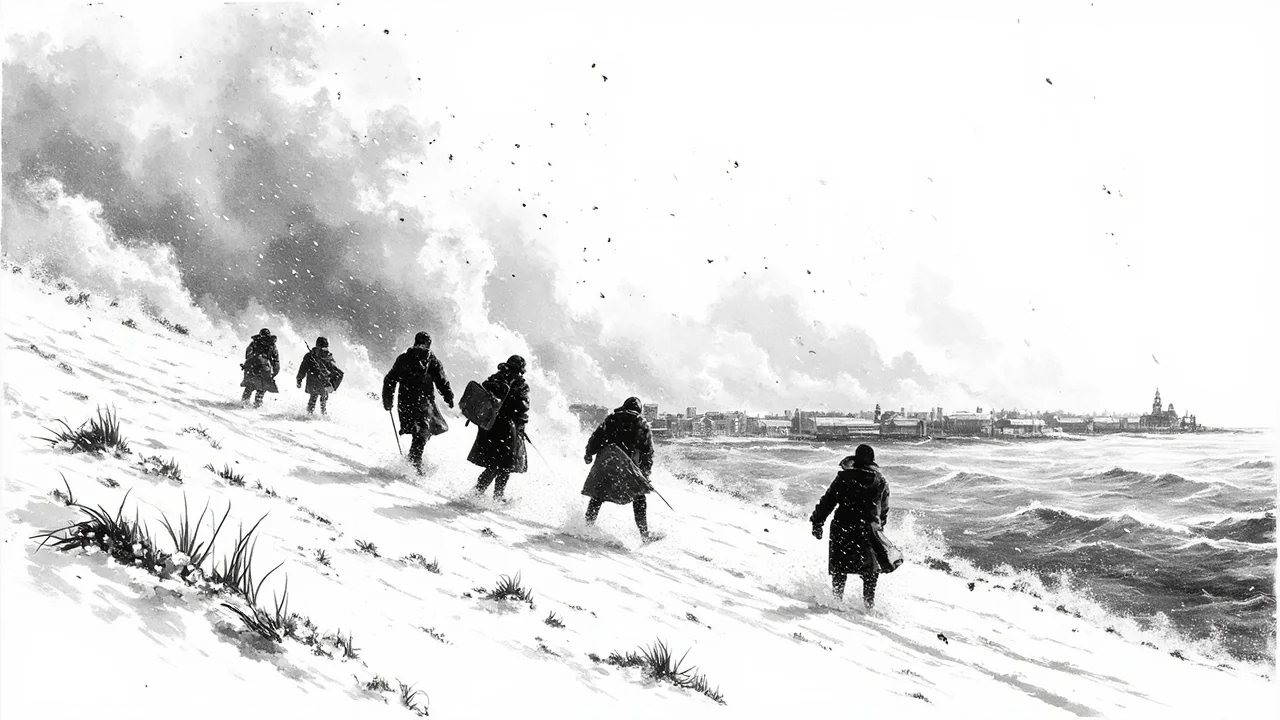
Norway's southern coast faced an unprecedented meteorological assault in February 1954, when a sudden, ferocious snowstorm transformed a mild winter into a historic crisis that isolated communities and tested local resilience. The event, later described as the worst snow catastrophe in the region's history, began with deceptive calm. Through early February, the Sørlandet region had seen little snow. Ski jumpers around Arendal waited in vain for proper training conditions, and residents enjoyed a relatively open winter. That changed abruptly on the night of February 9. A preliminary blast hit the inland municipality of Vegårshei, dumping nearly half a meter of snow on Myra. Locals, believing this was more than sufficient, were unprepared for what followed. The main weather system moved in with relentless force, delivering snowfalls that dwarfed the initial deposit. For days, the snow fell without significant pause, driven by strong winds that created massive drifts. Roads and railway lines, vital connections for the scattered coastal towns and inland villages, disappeared under the mounting white blanket. The region's infrastructure, designed for maritime challenges more than alpine-style snowfall, was completely overwhelmed.
The Calm Before the Storm
In the weeks leading up to the catastrophe, there was little indication of the coming turmoil. December and January had been mild with scant snowfall, creating poor conditions for winter sports. The anxiety among ski jumpers and sports enthusiasts was a common topic, a mundane concern that would soon be forgotten. The landscape of Sørlandet, known for its rugged coastline and relatively temperate winters compared to the inland north, appeared entirely unprepared for a major snow event. This sense of normalcy made the sudden shift all the more shocking for the population.
A Region Grinds to a Halt
As the snow accumulated, daily life came to a standstill. The storm's primary impact was the total isolation of communities. Roads became impassable, cutting off villages from supplies, medical services, and communication with neighboring towns. The rail network, a critical transport link, was blocked by deep drifts, stranding both passengers and freight. In an era before modern snow-clearing equipment and instant communication, the isolation was profound. Families were trapped in their homes, and farmers struggled to reach livestock. The societal paralysis was nearly total, with the normal rhythms of work, school, and commerce suspended indefinitely.
Community Response and Struggle
The response to the crisis was necessarily local and improvisational. With regional authorities struggling to coordinate due to broken communications, the burden fell on individual communities and neighbors. Men and boys formed crews to dig out pathways to essential buildings like schools, churches, and general stores. The manual labor of shoveling was backbreaking and continuous, as new snow quickly filled cleared areas. Stories emerged of doctors making house calls on skis or being pulled on sleds to reach patients, and of neighbors sharing dwindling food and fuel supplies. The crisis highlighted both vulnerability and a deep-seated spirit of mutual aid, a defining characteristic of Norwegian rural life.
The Long Road to Recovery
Recovery from the snow chaos was a slow, grueling process. It took days, and in some areas weeks, for proper contact to be re-established with the outside world. The initial focus was on clearing key arteries to allow for the delivery of emergency supplies. The clean-up operation revealed the full extent of the damage, with reports of collapsed roofs on barns and outbuildings unable to bear the snow's weight. The economic impact was significant, disrupting local businesses and agriculture. The event left a deep psychological mark on the region, a collective memory of a time when nature demonstrated its overwhelming power.
A Legacy Written in Snow
The great snow chaos of 1954 entered the folklore of Sørlandet. It became the benchmark against which all subsequent winters were measured. For a generation, the phrase "like in '54" conveyed a sense of ultimate severity. The storm demonstrated that even regions with familiar, moderate climates are not immune to sudden, paralyzing natural disasters. It reinforced a national understanding of self-reliance and community responsibility in the face of crisis. The memory of that February, when a seemingly gentle winter revealed a furious intensity, remains a testament to both the force of nature and the enduring strength of the communities that endured it. The question it leaves for modern readers is not if such an event could happen again, but how today's connected society would fare under a similar test of isolation and endurance.