
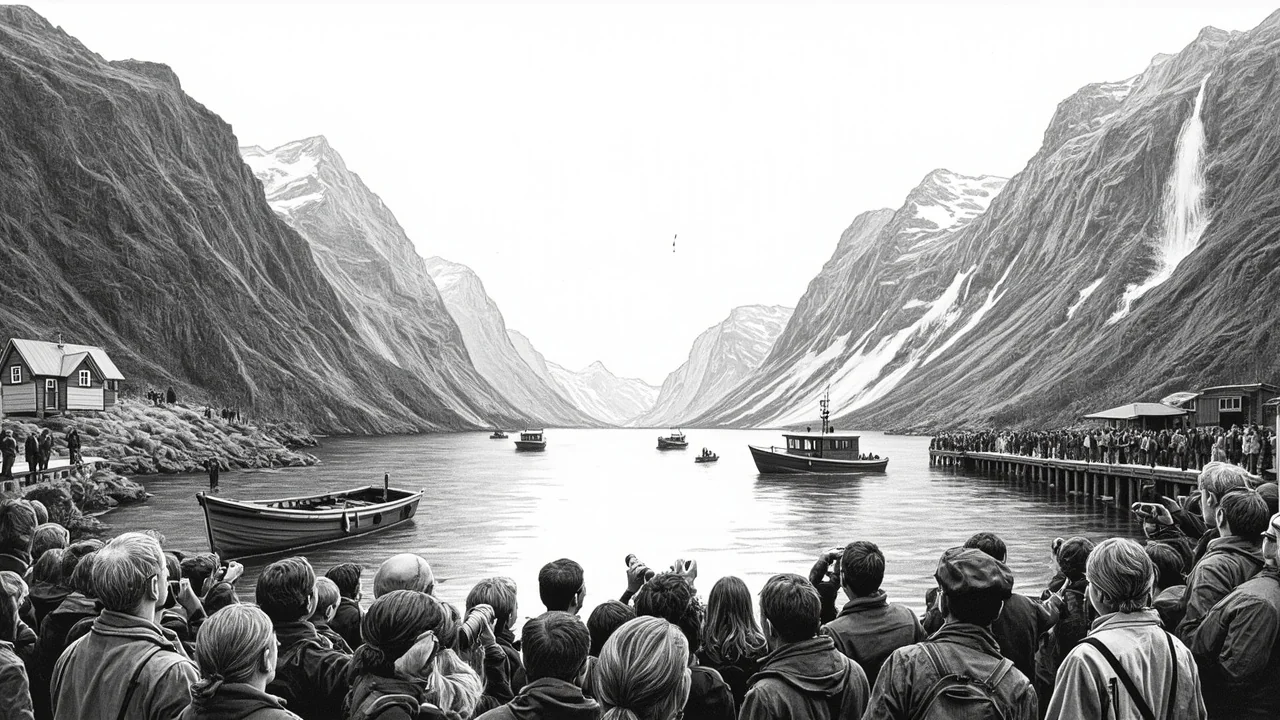
Norway's iconic Geirangerfjord village faces a crisis of too much success. Residents of Geiranger, a UNESCO World Heritage site, have voiced overwhelming frustration at hosting nearly one million summer tourists in a community of just 200 people. The findings, presented at a packed town meeting this week, reveal a community at breaking point.
Residents describe daily chaos
A comprehensive survey of locals paints a picture of a village overwhelmed during the peak season. 'The centre is chaos in every way. Full in the car park, full in the shops, full in the restaurants, full in the streets. Full everywhere. Not pleasant,' said one resident interviewed last summer. The sentiment is stark, with many threatening to leave. Another resident highlighted the loss of simple pleasures, stating, 'It is impossible to go out on the water with a boat. It is overcrowded with operators of all kinds.'
The numbers behind the frustration
On the busiest days, over 15,000 visitors descend upon Geiranger. The resident survey shows 72% believe there are simply too many tourists, with over 40% calling the number 'far too many'. The pressure extends beyond crowded streets to severe strain on local infrastructure. Respondents reported issues with wild camping, a critical lack of parking, dangerous traffic situations, and chaos at the famous Ørnesvingene hairpin turns, a major photo stop. Environmental and health concerns are also rising. 'Pollution, human waste, and litter. Bad air because of all the bus traffic,' answered another survey participant.
A call for drastic limits
Consultant Trond Amland, whose firm 2469Reiseliv conducted the study, presented clear and bold recommendations. He stated Geiranger 'scores red' on several points during high season. His primary proposal is for the tourism industry to set a maximum daily limit of 10,000 to 11,000 people. 'We are taking drastic action and suggest that one should introduce restrictions and set a limit for how many should simply be allowed in, and dare to say that it is full,' Amland said. This approach represents a fundamental shift from unlimited growth to managed capacity.
The tourism industry's balancing act
Not all stakeholders agree with the proposal for hard visitor caps. Tom Anker Skrede, tourism chief for the Destination Ålesund and Sunnmøre region, advocates for a different solution focused on dispersal. 'We must spread it well out so that it is good both for those who live here and those who come to visit here,' Skrede said. This perspective emphasizes smoothing the tourist flow across a wider area and potentially across more of the year, rather than turning people away at an imaginary gate.
Hotel director Monja Mjelva echoed the desire for a more balanced season, highlighting the community's need for year-round vitality. 'It is important that we are a living village all year and not just full in the summer,' Mjelva said. This comment underscores a key economic dilemma: how to capture the immense value of summer tourism without letting it destroy daily life, while also building a sustainable off-season economy.
The road ahead for Geiranger
The packed town meeting indicates a community engaged and demanding solutions. The path forward will require difficult compromises. A hybrid model may emerge, combining elements of both proposed solutions. This could involve a softer cap system, such as timed entry tickets for key sites or road access restrictions during peak hours, coupled with aggressive marketing of nearby alternative fjord experiences to spread the load.
Investment in infrastructure is non-negotiable. Addressing the lack of parking, managing waste, and regulating bus traffic are immediate steps that could improve daily life without immediately cutting visitor numbers. The community and industry must also explore how to better capture the economic value of each visitor, aiming for higher spending rather than simply higher headcounts, a concept known as 'value over volume'.
The situation in Geiranger is a clear warning signal for other Norwegian destinations experiencing rapid growth. The question is no longer if change is needed, but what form it will take. The community's voice, now clearly documented, must be the central guide. The future of Geiranger depends on finding a model where tourism sustains the village instead of suffocating it. The world is watching to see if this jewel of the fjords can pioneer a sustainable path for other iconic destinations to follow.