
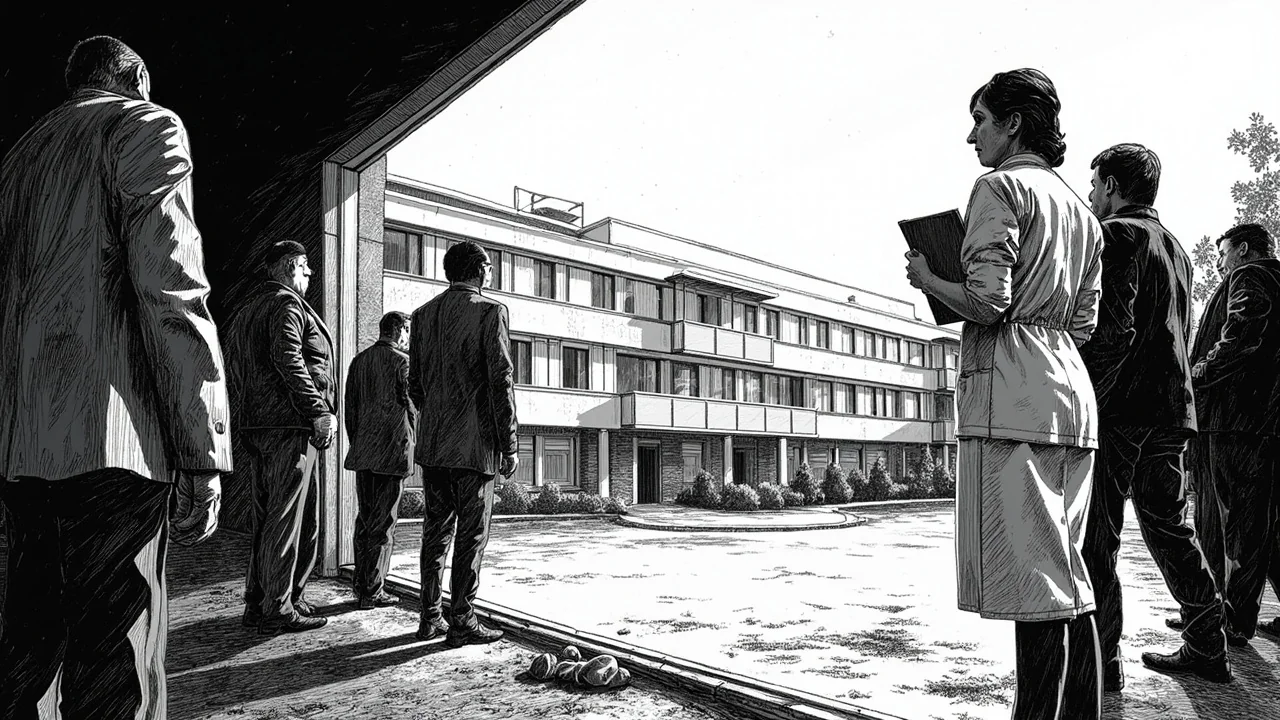
Norway's five major new hospitals have all been granted exemptions from the national requirement to build bomb shelters. Ahus, Nye Aker, Rikshospitalet, Ålesund, and Østfold Kalnes hospitals have each applied for and received dispensations from the 1995 regulation that mandates protective shelters in all buildings over 1,000 square meters. The legal loophole permitting these exemptions has been in place since 1998 and remains valid until 2026, raising fundamental questions about civil defense preparedness in a time of heightened geopolitical tension in the Arctic region.
A Regulatory Exemption for Critical Infrastructure
The foundational rule is clear. Norway's Forskrift om tilfluktsrom, enacted in 1998, states that any new building with a footprint exceeding 1,000 square meters must include a protective civil defense shelter, commonly known as a tilfluktsrom. These structures are designed to offer protection from blast, fragments, and fallout in the event of an attack. However, the same regulation contains a clause that allows for dispensations. For the past 26 years, the Norwegian Directorate for Civil Protection (DSB) and its predecessor, Sivilforsvaret, have held the authority to grant these exemptions on a case-by-case basis. The process requires the building owner, such as a regional health authority, to formally apply, outlining why compliance is impractical or unreasonably burdensome.
The Hospitals Built Without Protection
Over the last five years, this exemption clause has been used extensively for some of the country's most significant and expensive public health projects. The list includes central pillars of the national healthcare system. Oslo University Hospital, which encompasses the new Rikshospitalet and Nye Aker facilities, secured dispensations. Similarly, the large-scale Akershus University Hospital (Ahus), Ålesund Hospital in Møre og Romsdal, and the new Østfold Hospital at Kalnes near Sarpsborg were all built without integrated bomb shelters after their applications were approved. The approving authority, Sivilforsvaret, has confirmed that every single application from a hospital project in this period has been granted. This consistent approval record suggests the exemption is treated as a procedural formality rather than a rigorous security assessment.
The Geopolitical Context of the 2026 Deadline
The ongoing validity of this dispensation rule until 2026 exists against a starkly changed security backdrop. When the law was passed in the late 1990s, the post-Cold War peace dividend was at its peak, and the perceived threat of armed conflict in Northern Europe was low. Today, Norway's strategic importance has surged due to its role as a critical energy supplier to Europe and its long Arctic border with Russia. National security assessments, including those from the Norwegian Intelligence Service, consistently highlight an increased risk environment. The war in Ukraine has demonstrated the deliberate targeting of civilian infrastructure, including hospitals. This reality makes the absence of hardened shelters in new critical care facilities a significant policy choice. The 2026 sunset clause for the dispensation rule will force a parliamentary reckoning on whether to extend, modify, or terminate the practice.
Operational and Financial Rationales
While the specific justifications in each hospital's application are not public, the general arguments for such dispensations typically cite extreme cost, technical complexity, and operational interference. Building a tilfluktsrom that meets modern standards for air filtration, blast resistance, and sustainment for days or weeks is enormously expensive. For a hospital, integrating such a structure without disrupting the intricate layout of operating theaters, intensive care units, diagnostic imaging departments, and sterile corridors presents a unique engineering challenge. Health authorities argue that capital budgets, already stretched by the soaring costs of advanced medical technology and construction, cannot bear the additional burden. They prioritize spending on direct patient care and medical capacity over what has historically been seen as a remote contingency.
Civil Defense Implications in Wartime
This prioritization, however, creates a stark vulnerability in national civil defense plans. Hospitals are not just buildings, they are lifeline institutions designated to function during a crisis. In a conflict scenario, the need for functional medical facilities would be greater than ever. The existing civil defense strategy relies on a mixture of dedicated public shelters and reinforced basements in larger buildings. By exempting hospitals, the plan loses key nodes in its protective network. It also creates an ethical and operational dilemma: would staff and patients be expected to evacuate to a distant public shelter, abandoning life-saving equipment and vulnerable patients? Or would they remain in a known, unprotected target? The current approach implicitly chooses the latter.
The Path Forward After 2026
The debate coming to the Storting before 2026 will center on cost versus necessity. On one side, health administrators and budget hawks will push to make the dispensation rule permanent or to further relax shelter requirements for complex infrastructures. They will point to finite public funds and competing priorities like reducing patient wait times. On the other side, defense experts, civil protection advocates, and likely a portion of the parliamentary opposition will argue that security fundamentals have irrevocably changed. They will contend that the integrity of Norway's critical national infrastructure must be assured, and that the luxury of assuming away the threat of conflict is gone. The decision will serve as a concrete measure of how seriously Norway takes its own security assessments in an era of renewed great-power competition in the Nordic region. The outcome will determine whether the next generation of Norwegian hospitals is built for peace alone, or for a more uncertain future.