
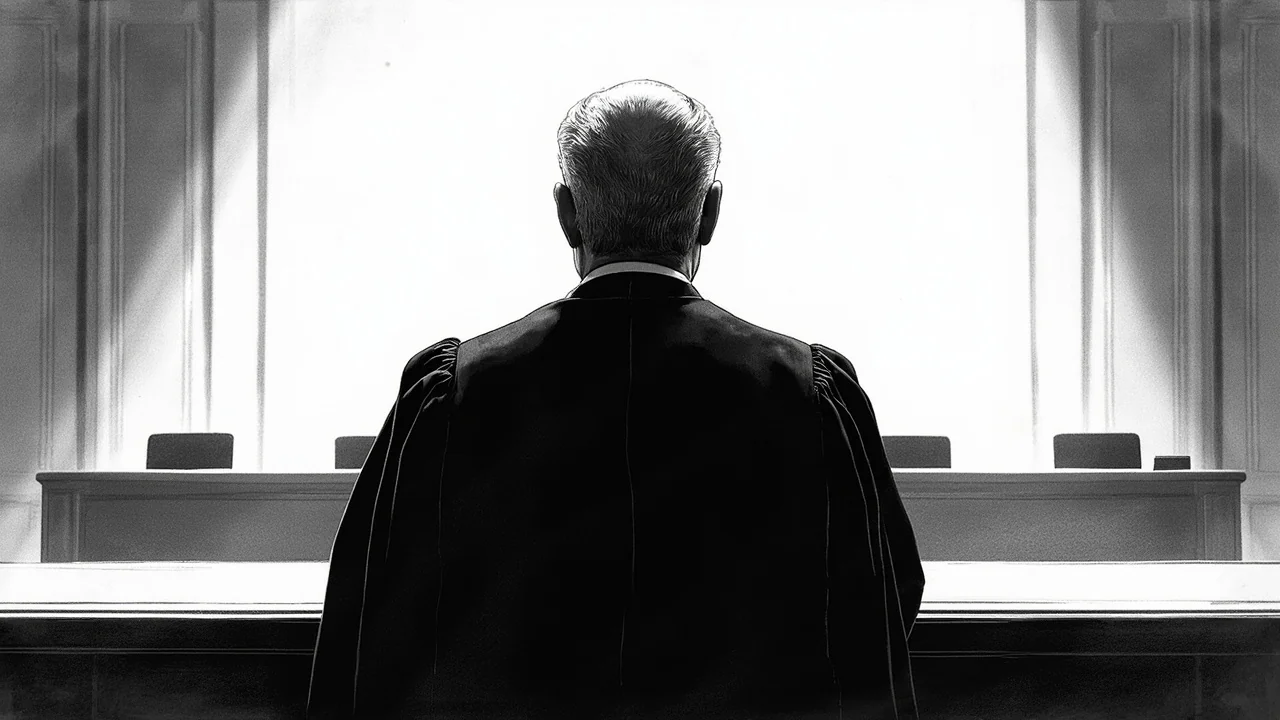
Norway's Supreme Court convenes its largest judicial panel ever on January 27th to rule on a single question of sentencing in a landmark sleep rape case. The historic hearing comes just months after the country abolished its mandatory three-year minimum sentence for rape, a legal shift now facing its first major test. The court’s decision could directly influence the high-profile case against Marius Borg Høiby, who faces four counts of the same charge.
A pivotal case for sentencing guidelines
In an unprecedented move, the Supreme Court will gather in what is known as a grand chamber to deliberate on the appropriate prison term for a 19-year-old man. He was convicted by an appeals court in May 2025 to three years and two months for assaulting a nearly 17-year-old girl while she slept. The two, who did not know each other, had voluntarily gone to the same bed after a party where both were intoxicated. The woman awoke to find the man penetrating her. He also took photos of her genitalia.
The case has moved through several rounds in the judicial system. The defendant's lawyer, John Christian Elden, argues the sentence is excessive. In a statement, Elden said this is the first time sentencing is the theme for so many judges assembled. He contends a distinction must be marked between this act and a violent assault rape in a public park. 'We believe it is very high and destructive for young people's future, and will compare, among other things, with other Nordic countries where this lies lower,' Elden wrote.
The end of a mandatory minimum
The hearing occurs against the backdrop of a significant legal reform. On July 1, 2025, Norway formally abandoned the three-year mandatory minimum sentence for rape, a rule that had been in force since 2010. That rule also established a normal sentencing level for such rapes at four years in prison. Critics of the old minimum penalty argued it was too rigid and gave courts too little room for individual assessment, particularly in complex cases like those involving intoxication or sleep.
Opponents of the mandatory minimum said it was too strict and failed to account for the nuanced circumstances surrounding different assaults. The abolition handed judicial discretion back to the courts, allowing judges to consider factors like the relationship between the parties and the specific nature of the violation. The Supreme Court's upcoming ruling will be the first major interpretation of this new sentencing landscape, effectively setting a new benchmark for lower courts to follow.
Direct implications for the Høiby case
The legal principles established next week will have immediate consequences for another prominent case. Marius Borg Høiby is formally charged with four instances of sleep rape, alleged to have occurred while the women were incapable of resisting due to their state. His trial is scheduled to begin one week after the Supreme Court hearing. John Christian Elden, who is also serving as support counsel in the Høiby case, emphasized his comments were solely about the test case going to the high court.
The connection between the two cases is explicit and procedural. The Supreme Court's guidance on how to weigh the specifics of a sleep rape—where there was initial voluntary contact but no consent to the sexual act—will provide the framework for the court adjudicating Høiby's charges. Prosecutors and defense teams alike will scrutinize the high court's reasoning to bolster their respective arguments on what constitutes a just penalty under the revised law.
A broader Nordic comparison
A key part of the defense's argument hinges on international comparison. Lawyer John Christian Elden indicated he will present evidence that sentencing levels in other Nordic countries for similar offences are lower. This comparative approach is common in Norwegian legal discourse, where policymakers and jurists often look to Sweden, Denmark, and Finland to gauge the proportionality of punishments. The abolition of the mandatory minimum itself was partly motivated by a desire for more nuanced sentencing that could align more closely with regional norms, while still reflecting the seriousness of the crime.
The upcoming ruling therefore transcends a single conviction. It represents a moment of calibration for the Norwegian justice system, balancing the need for strong penalties against sexual violence with the principle of proportionate punishment tailored to individual case facts. The decision will signal how the country's highest legal authority interprets the parliament's intent in removing the mandatory sentence. It will define the new 'normal' for a deeply invasive crime that often occurs behind closed doors, with profound consequences for survivors seeking justice.
The eyes of the legal community and the public are now fixed on the Supreme Court. Its judgment will not only determine the fate of one young man but will also write the first chapter in a new era of Norwegian rape sentencing. For the plaintiffs in the related case, and for future victims and defendants, the stakes of this judicial deliberation could not be higher. The ruling will resonate through courtrooms for years to come, establishing a precedent that seeks to balance justice, proportionality, and societal values in cases of profound personal violation.