
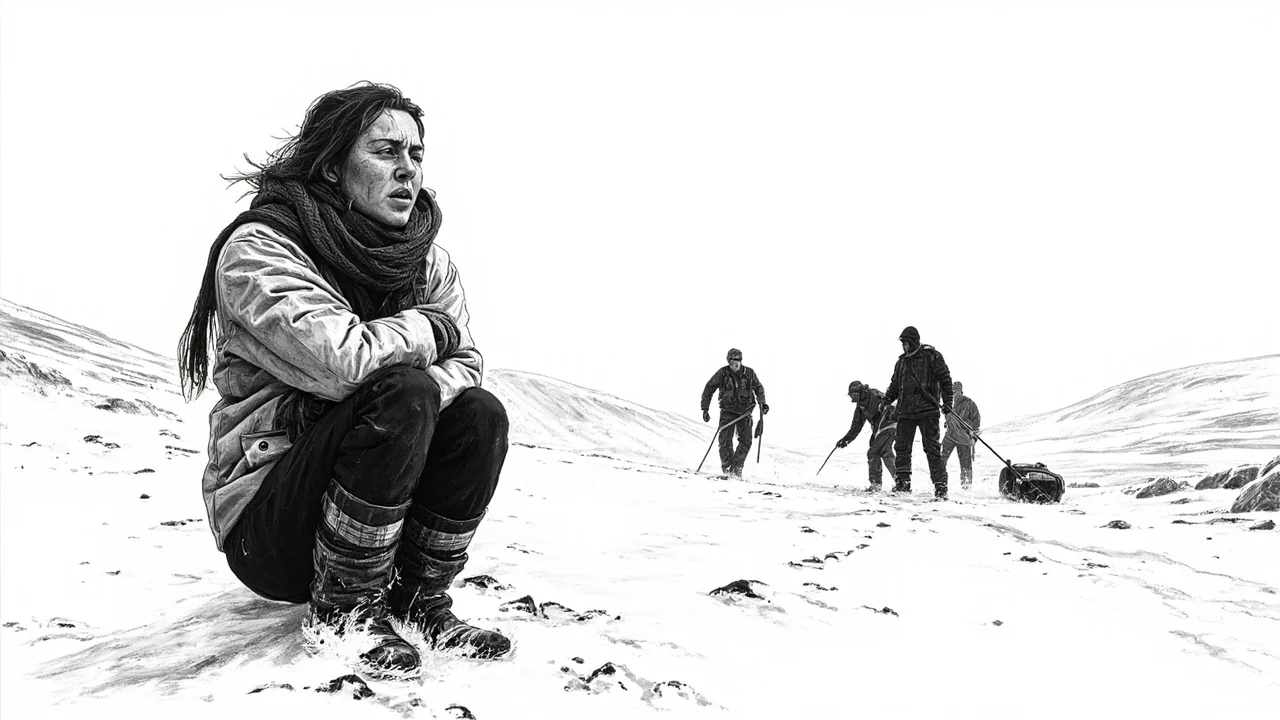
Norway emergency services responded to a life-threatening hypothermia case early Tuesday after a young woman was discovered unconscious outdoors in Verdal, Trøndelag. According to police, the woman had likely been exposed to freezing conditions for an extended period before being located by authorities.
The incident unfolded in the rural municipality of Verdal, situated along the Verdalselva river approximately 80 kilometers northeast of Trondheim. Local temperatures overnight hovered just below freezing, with wind chill factors increasing the risk of rapid heat loss—especially for anyone immobilized or unable to seek shelter.
Critical Condition Sparks Air Ambulance Response
Operations leader Bjørnar Gaasvik confirmed that the woman was found in a severely hypothermic state, requiring immediate advanced medical intervention. "She has probably been outside for quite some time," Gaasvik said in a statement issued shortly after the discovery. Due to the urgency of her condition, she was airlifted by helicopter ambulance to St. Olav’s Hospital in Trondheim, one of Norway’s primary trauma and critical care centers.
St. Olav’s Hospital serves as the central hub for complex emergency cases across Central Norway, equipped with specialized units for treating extreme cold exposure. Medical staff there are trained in managing core body temperatures that drop dangerously low—a condition that can lead to cardiac arrest, organ failure, or neurological damage if not addressed swiftly.
Rural Exposure Raises Safety Questions
Verdal’s landscape, characterized by open farmland, forested hills, and proximity to the Trondheimsfjord, presents unique challenges during winter months. While the area is generally safe, isolated incidents like this highlight vulnerabilities faced by individuals who become stranded or disoriented in cold weather. Authorities have not disclosed how the woman ended up outdoors or whether foul play is suspected, but initial reports suggest no signs of criminal activity.
Local residents expressed concern over the incident, noting that winter nights in inland Trøndelag can be especially treacherous. With daylight lasting fewer than seven hours in late November and early December, visibility drops sharply after 3 p.m., complicating search efforts and increasing the window during which someone might go unnoticed.
Emergency Protocols Activated Swiftly
Police and emergency dispatchers activated standard cold-weather response protocols upon receiving the alert. These include coordination between ground units, air support from HEMS (Helicopter Emergency Medical Service), and direct communication with hospital triage teams to prepare for incoming critical patients. In Trøndelag County, such protocols are regularly tested through joint exercises involving police, fire departments, and health services.
The use of air ambulance underscores the severity of the case. Norway’s air medical service operates under strict criteria: flights are typically reserved for situations where ground transport would significantly delay treatment or worsen outcomes. Given the distance between Verdal and Trondheim—and the narrow therapeutic window for severe hypothermia—the decision aligned with national guidelines.
Hypothermia Risks in Norwegian Winters
Hypothermia remains a persistent, though often overlooked, public health concern in Norway. Even in relatively mild coastal regions, prolonged exposure to wet and windy conditions can drive core body temperature below 35°C (95°F)—the clinical threshold for hypothermia. In inland areas like Verdal, where temperatures frequently dip below -5°C (23°F) in winter, the risk escalates quickly, particularly for those without adequate clothing or shelter.
According to data from the Norwegian Directorate of Health, accidental hypothermia accounts for dozens of emergency admissions annually, with higher incidence among elderly individuals, people experiencing homelessness, and those impaired by alcohol or other substances. However, cases involving young adults—especially women—are less common and often prompt deeper scrutiny into contributing circumstances.
While officials have not released details about the woman’s age, identity, or possible underlying factors, the incident serves as a stark reminder of how rapidly environmental conditions can turn lethal. Survival in extreme cold depends on multiple variables: insulation, metabolic rate, level of consciousness, and access to timely rescue.
Community on Edge as Investigation Continues
As of Wednesday morning, hospital officials had not provided an update on the woman’s condition, citing patient privacy laws. Police continue to investigate the sequence of events leading to her discovery, including whether she was reported missing prior to the find. Neighbors in the sparsely populated area near where she was found described the scene as quiet and undisturbed, offering few immediate clues.
Local authorities urged residents to check on vulnerable individuals during cold snaps and to report anyone seen wandering disoriented or inadequately dressed for the weather. “Even a few hours outside in these conditions can be fatal,” said a spokesperson for the Trøndelag Police District. “If you see something unusual, don’t hesitate to call 112.”
The case also reignites broader discussions about mental health support and crisis response in rural Norway, where access to psychiatric services can be limited compared to urban centers. Though no link has been established, such incidents sometimes involve individuals in acute psychological distress who may wander unintentionally into dangerous environments.
For now, the focus remains on the woman’s recovery. Her family has requested privacy, and community members have begun organizing informal welfare checks on isolated households in the region. As temperatures remain low and snowfall increases across Central Norway, emergency services are bracing for similar calls in the coming weeks.
What led a young woman to spend critical hours alone in the freezing darkness of a Trøndelag night may never be fully known—but her survival hinges on the swift actions of those who found her, and the specialized care awaiting her in Trondheim.
Read more: Norway Oil Fund Loses $40B as Tech Bet Backfires.
Read more: Norway Submarine Base Faces Power Grid Rejection Crisis.