
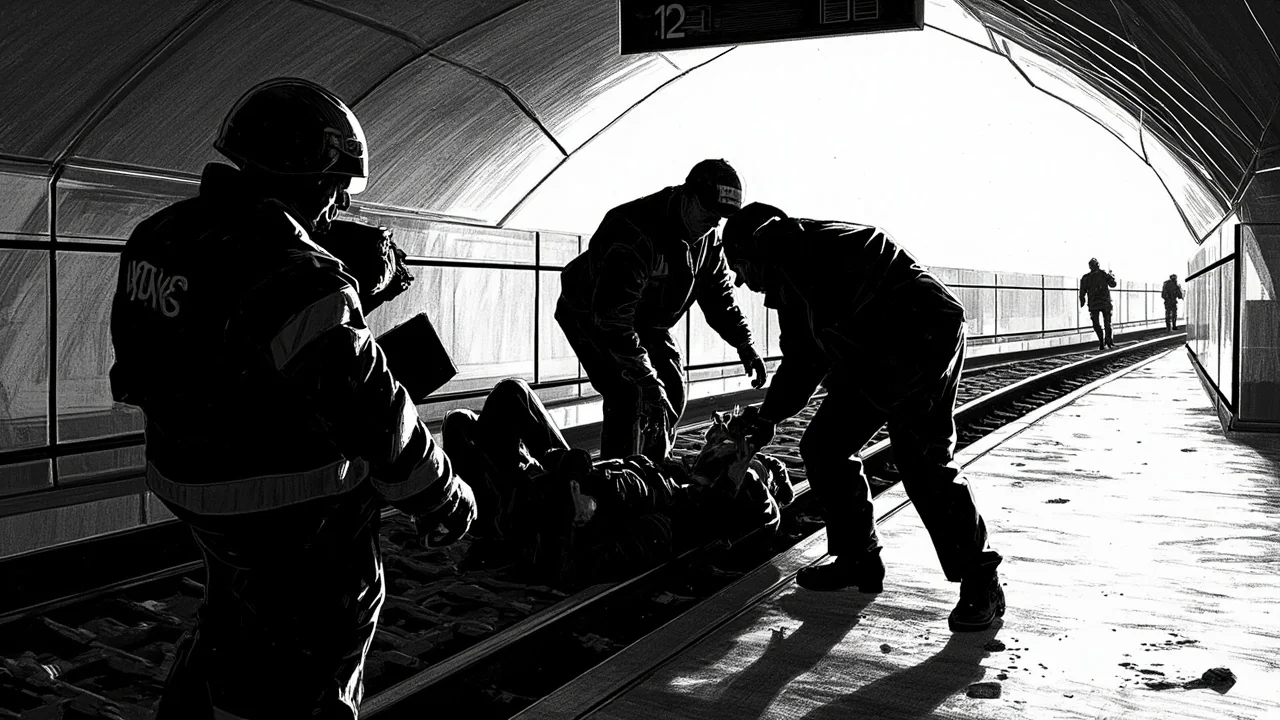
Oslo's T-banenettet subway system faced severe network-wide disruptions after an accident at Økern station injured one person and forced immediate closures on key lines during rush hour. Operations leader Øyvind Hammervold warned the incident would have ripple effects across the entire network, highlighting vulnerabilities in the capital's critical public transport infrastructure. The accident occurred shortly after 6 PM, with police confirming one individual was transported to the hospital, though the exact circumstances remain under investigation. This event underscores the tight interdependence of Oslo's subway lines, where a single point failure can cascade through the system, affecting tens of thousands of daily commuters.
Details of the Økern Incident
Police reported the accident at Økern T-banestasjon just after 6 PM on Tuesday, leading to an emergency response that shut down traffic toward the city center. The station, a crucial node where lines 4 and 5 converge before heading into central Oslo, became the epicenter of the disruption. One person was taken to the hospital for treatment, though authorities have not released details on the severity of injuries or the cause of the accident. Initial responses focused on securing the scene and assessing the damage to both infrastructure and service continuity. The swift closure prevented further incidents but immediately stranded passengers and triggered a chain reaction across the network.
Immediate Network Closures and Delays
By 7 PM, line 4 was closed between Økern and Sinsen, while line 5 was shut down between Veitvet and Carl Berner, effectively severing two major arteries into Oslo's heart. These lines are vital for residents of Groruddalen, a suburban area heavily reliant on the T-bane for daily commutes. On stations that remained operational, delays averaged around five minutes, as confirmed by Ruter press officer Karoline Berg. The closures forced commuters to seek alternative routes, overwhelming buses and other transport options during the evening peak. The disruption demonstrated how localized accidents can paralyze segments of the network, especially on lines that share tracks or signaling systems.
Official Warnings of Ripple Effects
Operations leader Øyvind Hammervold's statement to Aftenposten emphasized the broader implications, noting that the accident would have ringvirkninger for hele T-banenettet. This terminology points to systemic interdependencies where a failure at one junction impacts scheduling, capacity, and safety protocols network-wide. Hammervold's warning reflects operational realities in integrated transport systems, where delays on lines 4 and 5 can bottleneck connections to other lines like 1, 2, and 3. Ruter's communications, handled by Karoline Berg, aimed to manage public expectations, but the five-minute delays on served stations only partially captured the true inconvenience for those on closed segments.
Historical Context and System Vulnerability
Oslo's T-bane has historically been resilient, but this incident echoes past disruptions that exposed fragile points in the network. Lines 4 and 5, which pass through Økern, are among the busiest, serving dense residential areas and critical employment hubs. Their closure not only affects Groruddalen but also strains alternative routes like the Ring Line and bus services, which lack the capacity for sudden surges. The accident raises questions about maintenance schedules, emergency preparedness, and the aging infrastructure on certain sections of the network. Similar incidents in previous years have led to calls for increased investment in redundancy and real-time monitoring systems.
Communication Breakdown and Public Trust
Earlier on Tuesday evening, Aftenposten incorrectly reported that T-banetrafikken was gjenopptatt, based on erroneous information from Ruter. This miscommunication added confusion for commuters seeking reliable updates, undermining trust in official channels during crises. Such breakdowns highlight the challenges transport authorities face in balancing speed and accuracy in disseminating information. In the age of instant social media updates, false reports can exacerbate passenger frustration and lead to unsafe crowding at stations. Ruter's press team had to quickly rectify the error, emphasizing the need for robust verification protocols in future incidents.
Recovery Efforts and Future Outlook
As recovery operations continue, the focus shifts to restoring full service and investigating the accident's root cause. Ruter and municipal authorities will likely review safety protocols at high-risk stations and consider accelerating planned upgrades on the Grorud Line. For commuters, the incident serves as a reminder of the fragility of urban transport systems, especially in winter months when conditions can exacerbate risks. Looking ahead, Oslo's transport strategy must balance expansion with resilience, ensuring that ringvirkninger from single points of failure are minimized through better design and response frameworks. The true test will be how quickly normalcy returns and what lessons are integrated into future network planning.