
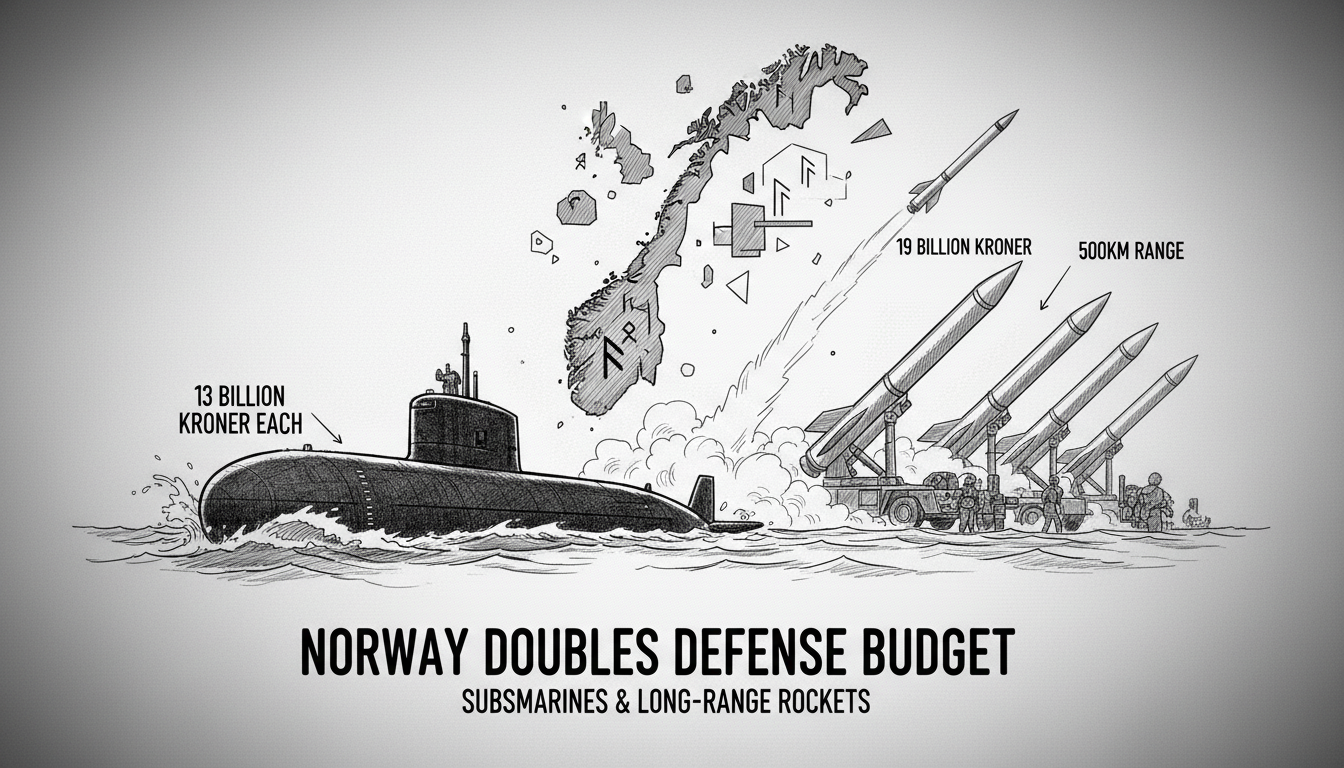
Norway is making its largest defense investment in decades. The government approved a massive spending plan on Friday. This follows a unanimous parliamentary decision on long-term defense strategy last year. The move doubles the original budget for new submarines and introduces a new long-range rocket system for the army.
Defense Minister Tore O. Sandvik called the investment strategically vital. He said it will strengthen national defense capabilities. The army will gain much greater firepower, according to his statement. The plan represents a major shift in Norway's military posture.
Two new German-made Type 212CD submarines are already under construction. Each submarine carries a price tag of 13 billion Norwegian kroner. The first vessel is scheduled for delivery to the Norwegian Navy in 2029. The original 2021 budget framework of 46 billion kroner has now doubled with these new acquisitions.
This submarine purchase approaches the scale of Norway's largest-ever defense procurement. That record remains the acquisition of 52 F-35 fighter jets. That program cost approximately 105 billion kroner in today's currency values.
The army will also receive new long-range rockets worth 19 billion kroner. These rockets can hit targets 500 kilometers away. This represents a completely new weapon type for Norway. Current artillery systems have a maximum range of just 40 kilometers.
Three systems are under consideration for the rocket purchase. Options include the American HIMARS, the South Korean Chunmoo, and the German KNDS. Defense Chief Eirik Kristoffersen has long advocated for such long-range weapons. His military advice emphasized the importance of strengthening the armed forces with long-range strike capabilities.
Sandvik explained the rationale behind the massive spending. He said Norway buys military equipment to avoid using it. The goal is deterrence to maintain peace and discourage potential adversaries. The procurement will also include launch units, logistics support, training materials, and support systems.
This decision reflects broader geopolitical shifts in Northern Europe. Norway shares a border with Russia in the Arctic. Regional tensions have increased in recent years. The Norwegian government is responding to a more uncertain security environment. The investment signals a clear commitment to territorial defense and NATO obligations.
Military analysts note the strategic importance of these systems. The submarines will patrol Norway's extensive coastline and Arctic waters. The long-range rockets provide a new land-based deterrent. Together they address both maritime and land defense gaps identified in recent security assessments.
The funding increase comes despite Norway's traditional restraint in military spending. The country has historically balanced strong defense with diplomatic engagement. Current security concerns appear to have shifted that balance. This represents a substantial reallocation of national resources toward defense priorities.
Implementation will unfold over the next decade. The submarine delivery timeline extends to 2029. Rocket system selection and deployment will follow a separate schedule. The total cost includes maintenance, training, and infrastructure over the systems' lifetimes.
Norwegian taxpayers will fund this through the national budget. The country's substantial sovereign wealth fund could provide financial flexibility. However, the government has not specified exact funding sources for the increased expenditure. Parliamentary approval appears certain given previous unanimous support for defense strengthening.
This procurement will impact Norway's defense industry and international partnerships. German submarine builders and potential rocket suppliers will benefit. The choices may influence Norway's strategic relationships with the United States, South Korea, and European allies.
The scale of spending raises questions about opportunity costs. Some citizens might prefer increased investment in healthcare, education, or climate initiatives. The government has determined that current security threats justify this military prioritization. This debate will likely continue as the procurement progresses.