
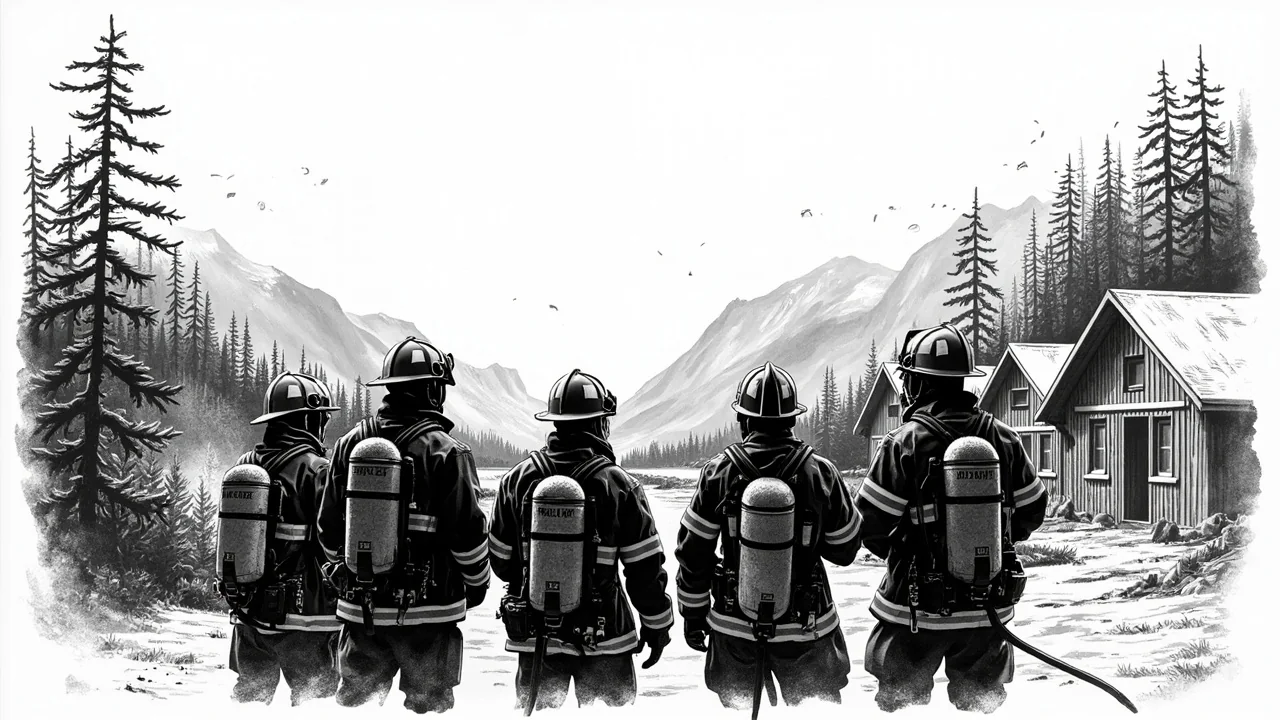
Norway's fire service faces a critical training deficit, with one in four part-time firefighters lacking mandatory basic education. The shortfall raises immediate safety concerns for both emergency responders and the public. A new report from the Directorate for Civil Protection (DSB) reveals the scale of the problem, which fire chiefs say could lead to tragedies.
A System Under Strain
The DSB's 2024 report on the fire service, using data from January 2025, shows a stark divide. While 92% of full-time firefighters have approved training, only 74.1% of part-time personnel meet the same standard. Part-time firefighters form the majority of Norway's fire service workforce. This means a significant portion of first responders may not be fully prepared for complex emergencies. The gap has persisted for years. In 2016, 95.5% of full-timers were qualified, compared to just 63.3% of part-timers.
Johan Marius Ly, a department director at DSB, confirmed the troubling statistics. "It is concerning that some municipalities have not completed basic courses for part-time firefighters," Ly said. He noted ongoing work to improve access to training, including online theory modules. The basic course for part-time personnel is currently under revision, while full-time education has been reformed into a new vocational college program.
Local Chiefs Sound the Alarm
The national data is reflected in local realities. The fire chief in Sunnfjord told local media that a recent deadly training accident in Verdal, where two part-time firefighters died during a smoke diving exercise, could have happened in his district. He directly linked the risk to training gaps, stating that a third of his part-time constables lack basic education. The chief is now considering halting smoke diving exercises at house fires altogether—a drastic measure highlighting perceived risk levels.
This local reaction underscores a national dilemma. Municipalities are responsible for training their personnel, but resources and priorities vary. The reliance on part-time, often volunteer, firefighters is a cornerstone of Norway's civil protection model, especially in rural areas. However, the system is struggling to ensure uniform competency. The DSB report acts as a formal warning that the model's sustainability is at risk without consistent investment in human capital.
The Human and Operational Cost
The training deficit has direct consequences. Firefighting is a technically demanding and inherently dangerous profession. Basic training covers essential skills like handling equipment, understanding fire behavior, performing rescues, and ensuring personal safety. Without this foundation, firefighters are at greater risk. They also may be less effective during incidents, potentially compromising public safety and property protection.
The Verdal tragedy, where two lives were lost during a training scenario, casts a long shadow. It forces a painful examination of whether all participants in such high-risk drills possess the requisite foundational knowledge. While the official cause of that incident is under investigation, it has ignited a debate about readiness. Fire chiefs are now forced to weigh the necessity of realistic training against the safety of their potentially under-prepared crews.
Searching for Solutions in a Decentralized System
The DSB acknowledges the problem and points to digital learning as a key part of the solution. Online theory courses can make training more accessible for part-time personnel who balance firefighting with other jobs and family commitments. Removing the need to travel for classroom instruction is a significant logistical help. Revising the part-time course curriculum may also tailor it better to their specific needs and operational realities.
However, digital theory alone is insufficient. Practical, hands-on training with physical equipment is non-negotiable for firefighter competency. This requires local investment in training facilities, qualified instructors, and time allocated for drills. The disparity in training completion rates between municipalities suggests an uneven commitment to this funding. The state provides guidelines and frameworks, but ultimate responsibility lies with 356 individual municipalities.
A Crossroads for Civil Protection
Norway stands at a crossroads for its fire and rescue service. The model of a professional core supported by a large force of part-time community responders is being tested. The data shows the model is under stress, risking a two-tier system where the level of protection a citizen receives depends on their municipality's training budget. The DSB's report is a clear metric that cannot be ignored.
The path forward requires a concerted effort. State authorities must ensure the revised training courses are fit-for-purpose and adequately supported. Municipalities must prioritize and fund mandatory training for all personnel. There may also be a need for a broader conversation about the structure of the fire service itself, and whether current funding models match the legal requirements for public safety.
The core question is one of value. Are communities willing to invest in the training that ensures those who run toward danger are as prepared as possible? The numbers suggest that, in many places, the answer has been no. The DSB's report is a wake-up call to change that answer before another report documents a preventable tragedy.
| Personnel Type | Qualified in 2024 | Qualified in 2016 |
|---|---|---|
| Full-time Firefighters | 92% | 95.5% |
| Part-time Firefighters | 74.1% | 63.3% |
| Source: Directorate for Civil Protection (DSB) 2024 Report. |