
Norway's public transport security faces scrutiny after a man pointed a pistol at a passenger's face on a busy Bergen tram. Mats-Kristian's ordinary Friday commute transformed into a life-altering confrontation, revealing vulnerabilities in urban transit systems and the lasting psychological impact of such violence.
A Routine Commute Shattered
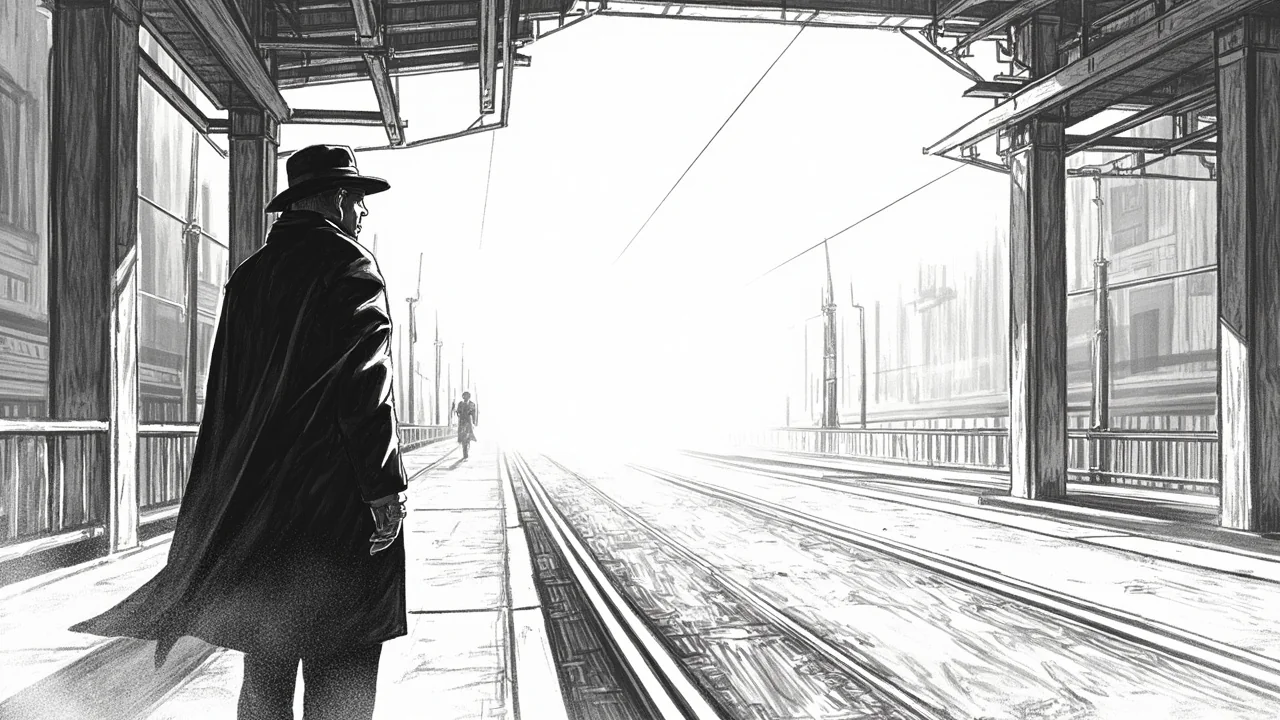
Mats-Kristian was finishing his shift at a kindergarten in Sandviken. The cold evening air sharpened his focus on home, his pregnant partner, and their planned taco dinner. He and a colleague hurried towards the Bybanen light rail platform at Byparken. The departure board showed three minutes. As crowds flowed around them, they boarded the rear carriage and moved forward searching for seats.
He stopped mid-stride. At arm's length, a pistol barrel aimed directly at his face. His body reacted before his mind could process the threat. Adrenaline surged. He threw himself back through the doors, his legs moving autonomously. One primal thought cut through the panic: his unborn son would not grow up without a father.
The Moment of Decision
Halfway across the platform, he halted. His colleague remained inside. He turned back. Inside the carriage, the man now aimed the weapon at her. She stood frozen. Mats-Kristian shouted her name, his voice failing at first. On the second attempt, she turned. His command was simple. Run. She did. They fled together.
He believed the immediate danger had passed, but his nervous system remained on high alert. He approached the driver's cabin, knocking urgently on the glass. The driver initially appeared irritated by the disturbance. Mats-Kristian managed to convey the critical message: a man with a gun was on board. The driver rose, sighed with visible skepticism, and moved to investigate. From a distance, Mats-Kristian watched as the armed man disembarked.
Escalation in the City Center
He moved further into the darkness around Byparken, seeking distance. Silence descended briefly. Then a truck passed. The man raised his pistol towards the driver. The driver accelerated. A loud crack echoed as the weapon struck the truck's cargo bed. Then, stillness returned.
Minutes later, armed police officers stormed past. Bystanders pointed. Mats-Kristian stood motionless, as if the world had paused. Amidst the shock, an absurdly mundane thought surfaced: he still needed to buy ingredients for tacos. He boarded the next tram and went home, carrying the weight of the encounter with him.
The Long Path to a Courtroom
One year later, Mats-Kristian sat in a courtroom to testify. He faced the man with the pistol again. The imposing, threatening figure from his memory was gone. In his place sat a diminished, broken-looking individual. The perpetrator appeared simply human. After delivering his testimony, Mats-Kristian addressed him directly. He expressed hope that the man would receive the help he needed.
This perspective did not diminish the trauma of the event. Instead, it reflected a complex understanding forged in its aftermath. The encounter left two indelible marks: the sheer terror of the moment, and the recognition of the troubled person behind the weapon.
Analysis: Safety on Norway's Urban Transit
While statistically rare, this incident taps into broader concerns about security on Norway's increasingly busy public transport networks. Cities like Bergen, Oslo, and Trondheim have invested heavily in light rail systems to reduce congestion. These systems are designed for efficiency and accessibility, with open platforms and frequent stops.
Security protocols typically rely on a visible presence of personnel and widespread surveillance. This event tests that model. The driver's initial skeptical reaction highlights a potential gap between protocol and real-world threat recognition. Training for frontline transport staff in crisis recognition and de-escalation is now under renewed examination.
The Psychological Aftermath of Sudden Threat
Experts in trauma psychology note that events like this shatter an individual's fundamental sense of safety. Public transport represents a communal, routine space. When violence intrudes there, the psychological impact extends beyond the direct victim. It can foster a low-level anxiety among frequent users, a phenomenon sometimes called hypervigilance.
Mats-Kristian's detailed memory of mundane details—the taco dinner, the three-minute wait—is a common trauma response. The brain fixates on ordinary details as anchors amidst chaos. His journey from sheer panic in the moment to a measured, even compassionate, statement in court illustrates a difficult path toward processing such an event.
A Community's Resilience
The response also shows system resilience. Police arrived rapidly. The incident was contained without physical injury. The judicial process proceeded. Yet, the story's power lies in its personal scale. It is not about major policy failure or systemic collapse. It is about one person facing a weapon during an ordinary commute, and the profound echo that moment creates.
For Bergen, a city proud of its safe, walkable centers and efficient Bybanen system, this serves as a sobering reminder. Security is not just a statistic but a feeling experienced by individuals during their daily routines. Maintaining that feeling requires constant attention, both from system designers and from the community itself.
The Unforgettable Meeting
Mats-Kristian's account ends with a focus on the meeting itself—with the fear, and with the human behind it. This duality is perhaps the most challenging part of processing random public threats. It is easier to categorize perpetrators as monsters. It is far more difficult to acknowledge their humanity while still condemning their actions and protecting society.
His final words in court were not of vengeance but of a hope for rehabilitation. This stance reflects a deep Nordic value of restorative justice, yet it does not erase the reality of the pistol pointed at his face. That image, he confirms, is one he will never forget. It lives alongside the subsequent image of a broken man in a courtroom, forming a complete, complex picture of a single Friday night's enduring impact.