
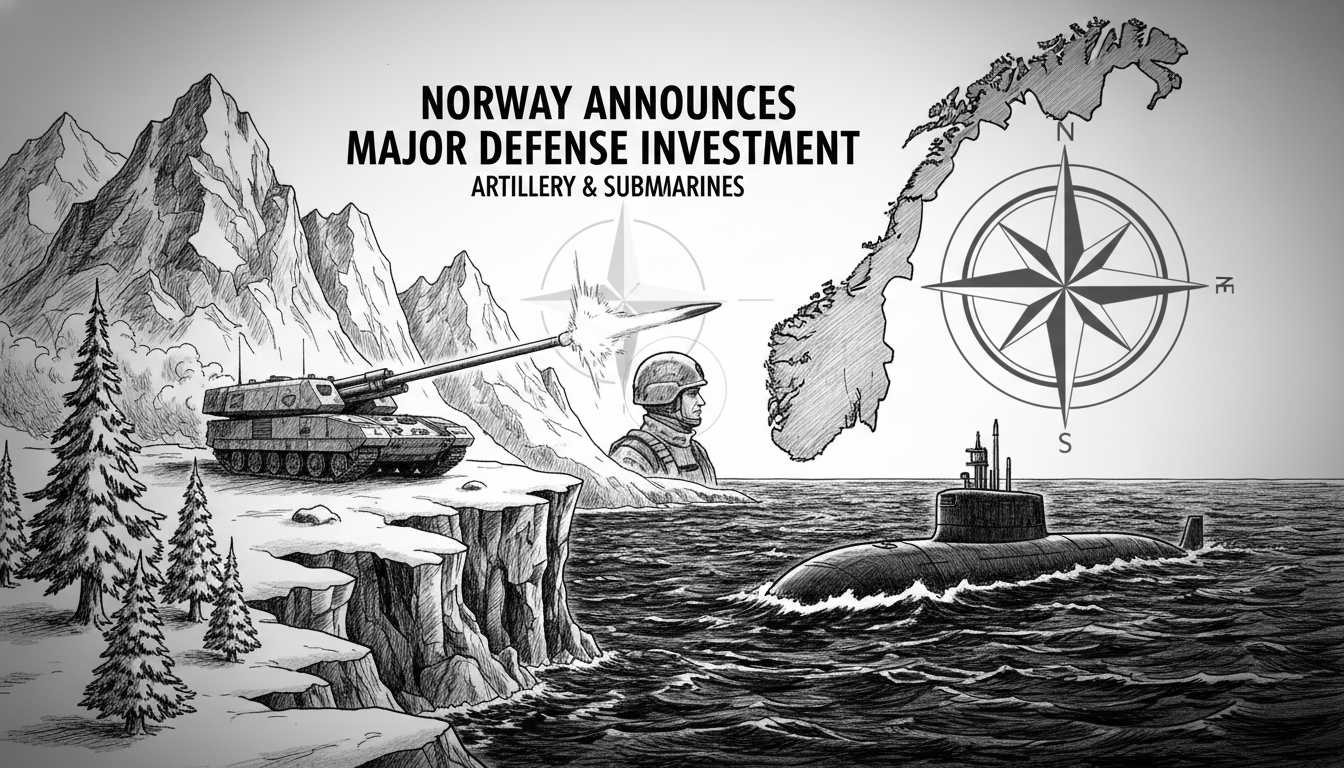
The Norwegian government has proposed a substantial new investment package for its armed forces. The plan involves spending approximately 19 billion kroner on new military capabilities. A significant portion will fund long-range artillery systems and two new submarines. This move aligns with the military's long-term strategic plan and reflects heightened regional security concerns. The proposal will be formally presented to the King in Council.
The current artillery systems have a maximum range of 40 kilometers and face spare parts shortages. The new artillery will have a dramatic range increase to 500 kilometers. Some of this equipment is likely to be stationed in Inner Troms, a region in northern Norway. The Chief of Defence has long advocated for these specific capabilities. The investment addresses what military leaders see as critical gaps in national defense.
A separate part of the investment covers the acquisition of two new submarines. These vessels will be tasked with monitoring NATO's northern flank. Their role is to provide a deterrent against potential aggression in the Arctic region. German arms manufacturer ThyssenKrupp Marine Systems is already building submarines for Norway. Each new submarine carries an estimated price tag of 12 to 13 billion kroner. This defense cooperation also strengthens ties between Norway and Germany.
This substantial spending commitment comes amid a broader reassessment of European security. Norway shares a border with Russia in the Arctic, a region of increasing strategic competition. The investment directly enhances Norway's ability to defend its vast northern territories. Long-range artillery allows for force projection and area denial across challenging Arctic terrain. Modern submarines are crucial for undersea surveillance and protecting sea lines of communication.
The funding decision follows public and political debates about the pace of military modernization. Some analysts argue previous governments under-invested in conventional defense capabilities. This package appears to be a corrective measure. It signals a clear shift towards prioritizing high-end, deterrent weapons systems. The focus on range and surveillance in the Arctic underscores where Norway perceives its greatest vulnerabilities lie. The government is betting that visible, capable defenses are the best way to ensure stability.
What does this mean for Norway's role in NATO? The country is a key ally on the Alliance's northern frontier. By investing in these specific assets, Norway is directly contributing to NATO's collective defense posture. The new submarines will patrol vital waters. The long-range artillery can support allied forces. This investment makes Norway a more capable and resilient partner. It is a tangible response to a more uncertain security environment in Northern Europe. The next steps involve parliamentary approval and the lengthy process of procuring and deploying the new systems.