
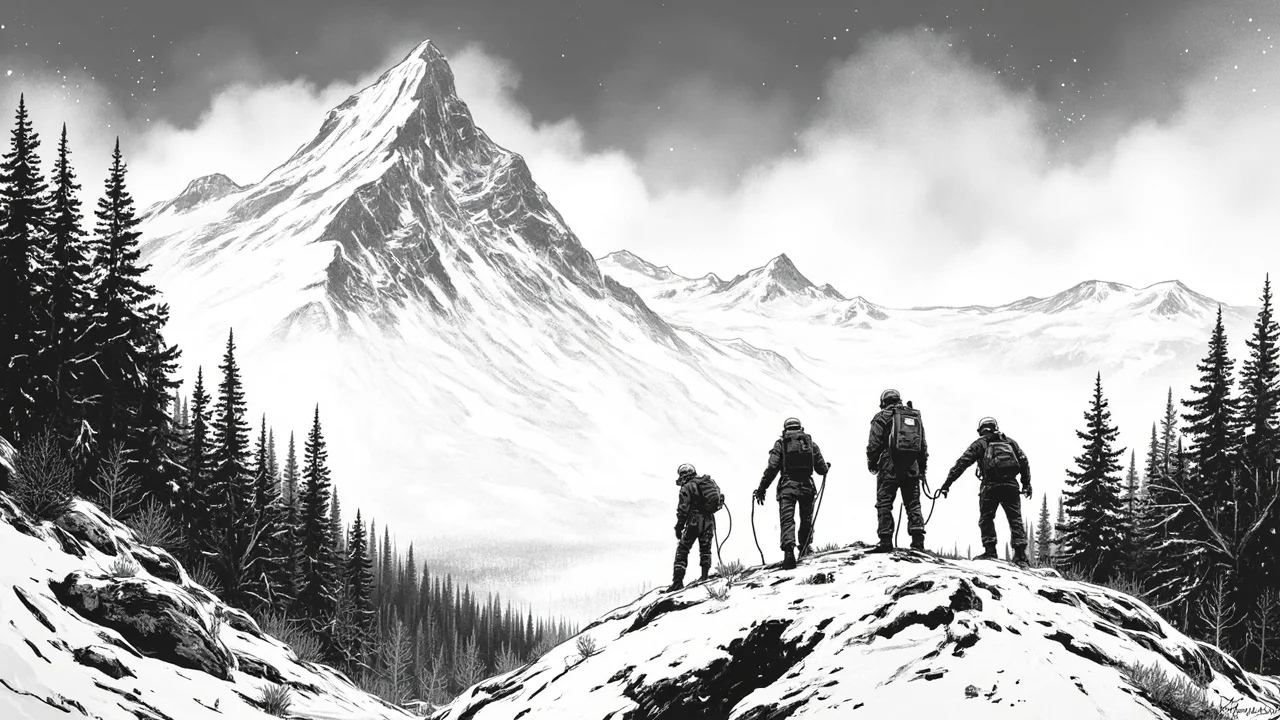
Norway's mountain rescue services are coordinating a complex operation to evacuate four foreign tourists stranded near the summit of Gaustatoppen. The group became lost and is reportedly ill-equipped for the harsh, changing weather conditions on the 1,883-meter peak. A rescue helicopter is en route, and the Norwegian Red Cross Search and Rescue Corps (FORF) has been called to assist the effort, which is being managed by the local rescue coordination center.
This incident highlights the persistent dangers of Norway's rugged wilderness, even on popular and well-marked trails. Gaustatoppen, in Telemark county, is a major tourist destination offering panoramic views of one-sixth of Norway's mainland. Its accessibility via a cable car and a historic funicular railway inside the mountain itself can create a false sense of security for visitors. Sudden weather shifts, including fog, high winds, and temperature drops, are common and can rapidly turn a hike into a life-threatening situation.
The Perils of Popular Peaks
Gaustatoppen's very popularity contributes to its risks. Thousands visit annually, many without extensive mountain experience. The standard hiking route is considered demanding but non-technical in summer. However, the terrain is rocky and exposed near the summit. "The mountain does not discriminate between locals and tourists," said a veteran member of the Norwegian Trekking Association (DNT), who requested anonymity as they are not part of the active rescue. "A clear morning can become a white-out with near-zero visibility in under an hour. If you are not dressed in proper wool layers and windproof shells, hypothermia sets in quickly."
The stranded group's lack of appropriate clothing is a critical concern for rescue teams. Summer in the Norwegian mountains requires preparation for winter-like conditions. Cotton clothing becomes dangerous when wet, sapping body heat. Rescue officials consistently stress the Norwegian mountain code: be prepared for bad weather and sudden changes, even on short trips.
Mobilizing Norway's Rescue Network
The activation of both a Redningshelikopter (air ambulance/rescue helicopter) and the volunteer-based FORF demonstrates the tiered response of Norway's rescue apparatus. The helicopter, likely an AW101 or a Sea King from the 330 Squadron, provides rapid access and aerial reconnaissance. Its crew can perform winch operations if landing is impossible.
FORF volunteers, summoned from their daily jobs and homes, bring essential ground support. They are trained in mountain navigation, first aid, and evacuation over difficult terrain. Their local knowledge is often invaluable. This public-volunteer partnership is a cornerstone of Norwegian emergency preparedness, funded in part by the Norwegian National Search and Rescue Service (Redningsselskapet).
A Recurring Challenge for Norwegian Authorities
This event is not isolated. Every summer, rescue services across Norway respond to hundreds of incidents involving ill-prepared hikers. The Norwegian Mountain Board has repeatedly launched safety campaigns targeting foreign visitors, emphasizing the need for proper gear and realistic planning. Many tourists underestimate the scale and raw nature of the Norwegian landscape, mistaking well-trodden paths for safe urban walks.
The economic and human cost is significant. A single helicopter rescue operation costs taxpayers tens of thousands of kroner. While Norway does not typically charge for rescues, there is an ongoing ethical debate about whether reckless disregard for safety guidelines should incur a fee. The primary goal, however, remains prevention through education.
The Broader Implications for Arctic Tourism
As Arctic and mountain tourism grows in Norway, pressure on rescue services increases. This incident on Gaustatoppen serves as a microcosm of a national challenge. Balancing open access to nature (the allemannsretten) with public safety is a continuous policy discussion in the Storting. Some regions are considering more stringent signage or even guided-only access to certain sensitive areas during volatile seasons.
The success of this operation will depend on weather cooperation and the physical state of the stranded tourists. Rescue teams must also ensure their own safety, a principle that can sometimes slow progress. The rocky, steep slopes near Gaustatoppen's summit are hazardous for both the stranded and the rescuers.
Analysis: Preparedness in the Age of Instagram
This emergency raises uncomfortable questions about modern tourism. The pursuit of the perfect summit photo for social media can override sensible judgment. Gaustatoppen's iconic view is a powerful lure. Experts argue that risk perception is skewed by online imagery that rarely shows fog, sleet, or howling winds.
"We see people in sneakers and light jackets aiming for the summit at 4 PM," the DNT source added. "They see the photos online but not the meteorological data. Norway's beauty is raw and untamed. Respecting that is the first rule." National parks and tourist boards now work to market both the splendor and the seriousness of the Norwegian outdoors.
Looking Ahead: A Test of Systems and Conditions
The immediate focus is a safe evacuation. The coming hours will test the coordination between the airborne and ground teams, a collaboration refined over decades of such call-outs. The outcome will also depend on the weather, a factor entirely beyond human control that remains the dominant authority in the Norwegian mountains.
This event will likely enter the statistics that inform next year's safety campaigns. It underscores a stark reality: in Norway, wilderness is always close, and its conditions are absolute. The country's robust rescue system is a necessary safeguard, but it is not a substitute for personal responsibility and preparedness. As the helicopter approaches the shrouded peak, the hope is for a swift and successful conclusion—and that the lessons from this cold, stranded group on Gaustatoppen resonate with the next wave of visitors lured by the call of the high places.