
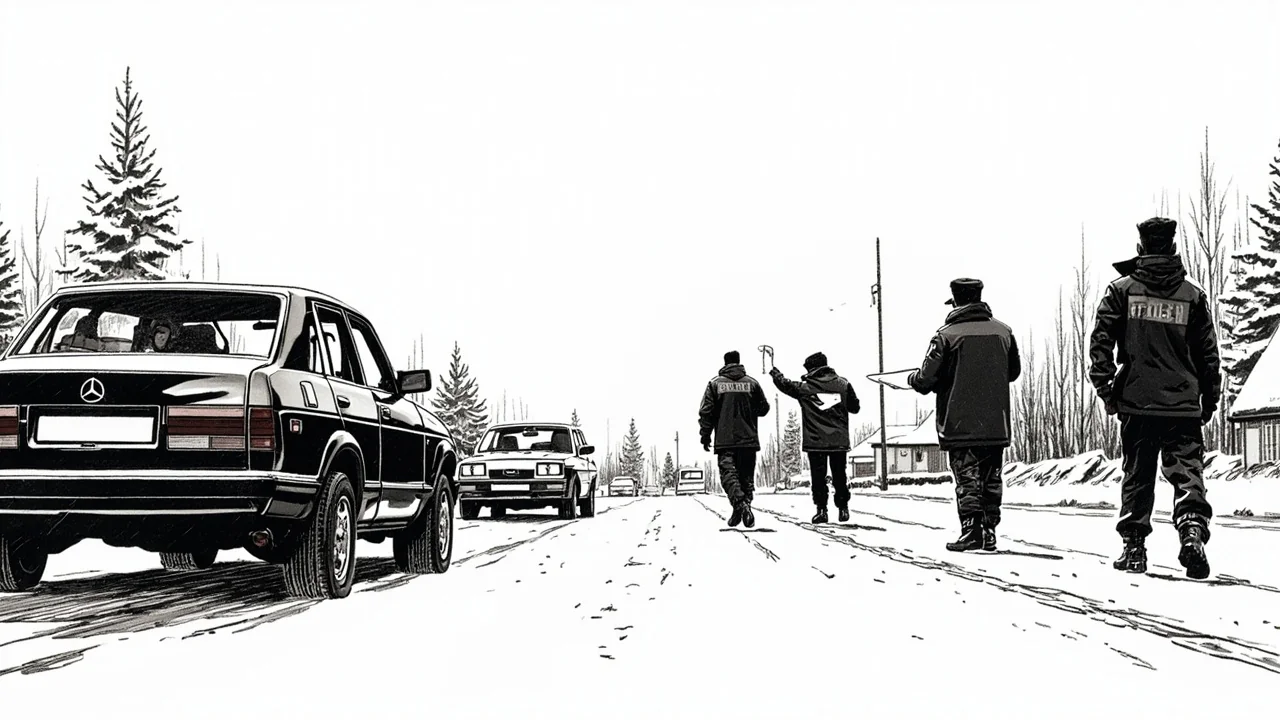
Norwegian police have issued over 500 fines and numerous license suspensions this winter to drivers operating vehicles with ice-covered windshields. The Østfold Police District's recent social media campaign, showing photographs of offending vehicles, highlights a persistent and dangerous seasonal problem. This enforcement drive underscores a strict interpretation of road traffic law §3, which mandates a driver's absolute responsibility for clear visibility.
One driver in Råde was charged and had their license revoked on the spot last weekend for driving with a fully frosted front windshield. 'The driver always has a responsibility to have a clear view. Now when it's cold, people must scrape and prepare their car,' said Operations Manager Rune Isaksen in a statement. The police action is not isolated to Østfold; similar crackdowns are reported from Rogaland to Troms as temperatures plunge across the country.
The Cost of a Clouded View
The legal consequences for neglecting to clear windows are immediate and severe. A fine of 7,300 kroner ($670) is standard for the offense. In more egregious cases, like the one in Råde, police will immediately confiscate the driver's license on the grounds of 'reckless driving.' The license suspension typically lasts for a minimum of three months, requiring the driver to reapply and potentially retake tests. This penalty framework treats a frosted windshield not as a minor nuisance, but as a critical failure in a driver's duty of care.
Police argue the comparison to drunk driving is apt in terms of risk creation. 'Driving without visibility is like driving blindfolded,' said one traffic officer, who requested anonymity as they were not authorized to speak publicly. 'You cannot see pedestrians, cyclists, or other vehicles. The few minutes saved by not scraping your windows are not worth a lifetime of regret if you cause a serious accident.'
A Behavioral Blind Spot
Despite clear laws and annual winter safety campaigns, the behavior persists. Experts point to a combination of morning haste, underestimation of risk, and overconfidence in local knowledge. 'There is a cognitive bias at play,' explains Dr. Anette Hansen, a behavioral researcher at the Institute of Transport Economics (TØI). 'People think, ‘I’m just going down the road,’ or ‘I can see through a small patch.’ They frame it as a short, low-risk trip, not accounting for the unexpected child, animal, or vehicle that could appear at any moment.'
This is compounded in suburban and rural areas, where drivers may perceive less traffic. The Østfold police photos often feature vehicles in residential neighborhoods, suggesting drivers let their guard down close to home. The problem peaks during the first major cold snaps of the season, before winter driving habits are fully re-established.
Analysis: A Failure of Habit, Not Law
The consistent need for this enforcement action reveals a gap between legal knowledge and habitual compliance. Norway has one of the world's strictest and most respected traffic safety regimes, with laws covering winter tires and headlight use rigorously followed. The frosted windshield violation stands out as a rule that a segment of the population continues to ignore.
From an insurance perspective, the implications are clear-cut. 'In any accident where a driver involved had impaired visibility due to ice or snow on the windows, that driver would be found fully or primarily at fault,' says Lars Jensen, a senior claims advisor at Gjensidige. 'The police report documenting the violation would be definitive. No insurance payout covers the cost of a life lost, but financially, the driver would also bear the full brunt of material damages.'
Enforcement is the chosen tool, as education alone has proven insufficient. The public shaming element of posting photos on social media is a modern twist on traditional fines, aiming to leverage social norms and peer pressure. 'It’s about creating a social standard where this is seen as unacceptable, not just illegal,' Dr. Hansen notes. 'Seeing your neighbor's car blurred out in a police post carries a different kind of weight than an abstract fine in the mail.'
The Mechanics of Responsibility
The law does not accept excuses. A defroster that needs more time to work is not a valid defense; the driver must wait. Light frost or fog on the inside must be wiped away. All windows, not just the front windshield, require clearing to ensure full peripheral and rear visibility. The responsibility is absolute and falls solely on the person behind the wheel.
This presents practical challenges for parents during the morning school run and for workers on early shifts. The solution, police and safety advocates stress, is simple: factor in scraping time. 'Start your car, turn on the defroster to maximum, and then begin scraping,' advises Operations Manager Isaksen. 'A proper ice scraper and a can of de-icer are the cheapest and most effective safety devices you can buy.'
A Cold Reality Check
As climate patterns shift, winter conditions in coastal regions like Østfold may become more variable, with more frequent freeze-thaw cycles leading to icy mornings. The fundamental safety requirement, however, remains unchanged. The police crackdown serves as an annual reminder that Norway's high road safety standards are maintained through consistent application of the law, even for what some might consider a minor infraction.
The next major cold front is always on the horizon. The question for Norwegian drivers is whether the lesson of over 500 fines this season will lead to a behavioral change, or if the scrape of ice will continue to be drowned out by the morning rush. The price of neglect, as one driver in Råde learned, is far steeper than a few extra minutes spent in the cold.