
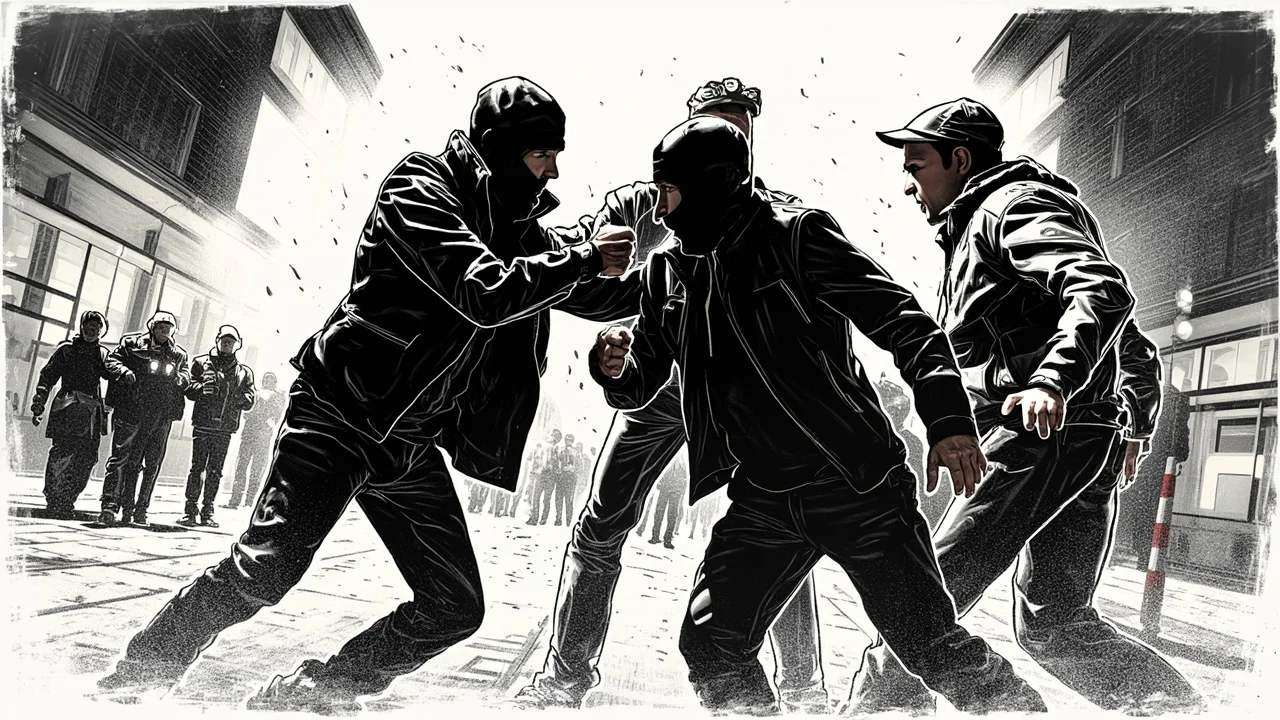
Norway police responded to three separate violent incidents across Bergen this weekend, resulting in four arrests and one man hospitalized. The events unfolded from Friday afternoon through early Saturday morning, highlighting a busy period for local law enforcement.
A man in his thirties was taken to the emergency room after being kicked in the face. The assault happened in the Åsane district just after 3 a.m. on Saturday. Police received the alert at 3:13 a.m. and dispatched patrols to search for the suspects.
Two men, described as being in their late teens, were apprehended shortly afterwards. They are now in custody. "I cannot say more about the course of events," said operations leader Morten Rebnord of the West Police District. He cited ongoing investigations and that none of those involved had been formally interviewed yet.
Rebnord also had no information on whether the parties knew each other or what prompted the attack. The victim suffered a cut above one eye and a possible broken nose.
A Separate Chase with a Hammer
Earlier on Friday evening, police reported a different incident at the Sartor shopping center. Two youths allegedly chased and threatened another person with a hammer. Security guards at the center alerted authorities.
The initial report mentioned a knife threat, but this was later corrected to a hammer. "No one is reported injured," wrote operations leader Frode Kolltveit in the police log. It remains unclear if those involved knew each other previously.
Three police patrols were sent to the scene. Officers spoke with five young people at the location. "None of them have so far admitted to participating in the incident," Kolltveit noted. By 6:17 p.m., police confirmed they had located one of two suspects they were seeking. They called off the search for the second individual but opened a formal case.
Traffic Stops and Drunk Driving
Friday afternoon also saw police conducting targeted traffic controls for behavior and substance use on Bontelabo in central Bergen. Two drivers were fined 10,450 kroner each for using their mobile phones while driving. They also received three penalty points on their licenses.
Another driver was stopped for the same offense but refused to accept the fine. That driver was formally reported to the authorities. A final motorist was taken to the emergency room for a blood test. This driver is suspected of driving under the influence of drugs or alcohol.
Analyzing a Pattern of Weekend Incidents
While the police have not connected these three events, their concentration within a roughly 12-hour window paints a picture of typical weekend challenges for urban police forces. The incidents range from a serious physical assault to public threats and traffic violations, including a serious drunk driving suspicion.
Criminologists often note that weekend nights, particularly in urban areas, see a spike in reports of violence and public disorder. Factors include increased social gatherings, alcohol consumption, and more people in public spaces. The Åsane assault occurred in the very early hours, a common time for such conflicts to erupt.
The quick apprehension of suspects in the Åsane case suggests effective police response to a direct report. The Sartor center incident, involving multiple youths and conflicting initial reports, shows the complexity officers face when arriving at a scene where narratives are still forming.
The Broader Context of Public Safety
These incidents occur against a backdrop of ongoing public investment in infrastructure and safety. In a separate announcement on Friday, the Norwegian Public Roads Administration signed a contract worth approximately 25 million kroner with Mesta. The work involves securing three railway tunnels—Tore Fossmark, Hananipa, and Romslo II—as part of the larger Arna-Stanghelle joint project. Work began in January, focusing on cleaning, securing with bolts, and spray concrete.
This contrast is notable: significant state resources are dedicated to long-term physical infrastructure safety, while police handle immediate, human-caused threats to public security. Both are essential components of a functioning society, but they operate on vastly different timelines and scales.
Community Impact and Police Resources
The series of events required substantial police resources. Multiple patrols were deployed for the Åsane assault and the Sartor center threat. Additional officers were tied up with the traffic control operation, which yielded multiple violations. Processing arrests, conducting interviews, and managing custody also demand considerable time and administrative effort.
For residents, news of a violent assault and a public chase with a weapon in different city districts within hours can affect the perception of safety. While statistically Norway remains one of Europe's safest countries, localized clusters of incidents can feel alarming to the communities where they happen.
The police have not released the identities or motives of those arrested. The judicial process will now take over, determining charges and potential consequences. The man injured in Åsane faces a recovery period, his physical wounds a stark reminder of the sudden violence that interrupted an ordinary weekend night.
A Look at Response and Prevention
The police response demonstrates standard protocol: immediate dispatch to violent incidents, securing the scene, apprehending suspects, and providing aid to victims. The traffic controls are a proactive measure, intended to deter dangerous behavior before it causes harm.
Preventing such incidents entirely is a more complex societal challenge. It involves broader discussions about youth engagement, substance abuse, conflict resolution, and community resources. The fact that some suspects were in their late teens raises questions about the environments and pressures facing some young adults.
As the city moves into a new week, the police logs will reset. But for those involved—the injured man, the arrested individuals, the witnesses, and the officers who responded—the events of this Friday and early Saturday will have lasting repercussions. The systems of law, healthcare, and justice now engage to manage the aftermath, while the community is left to consider the fragile nature of public peace.