
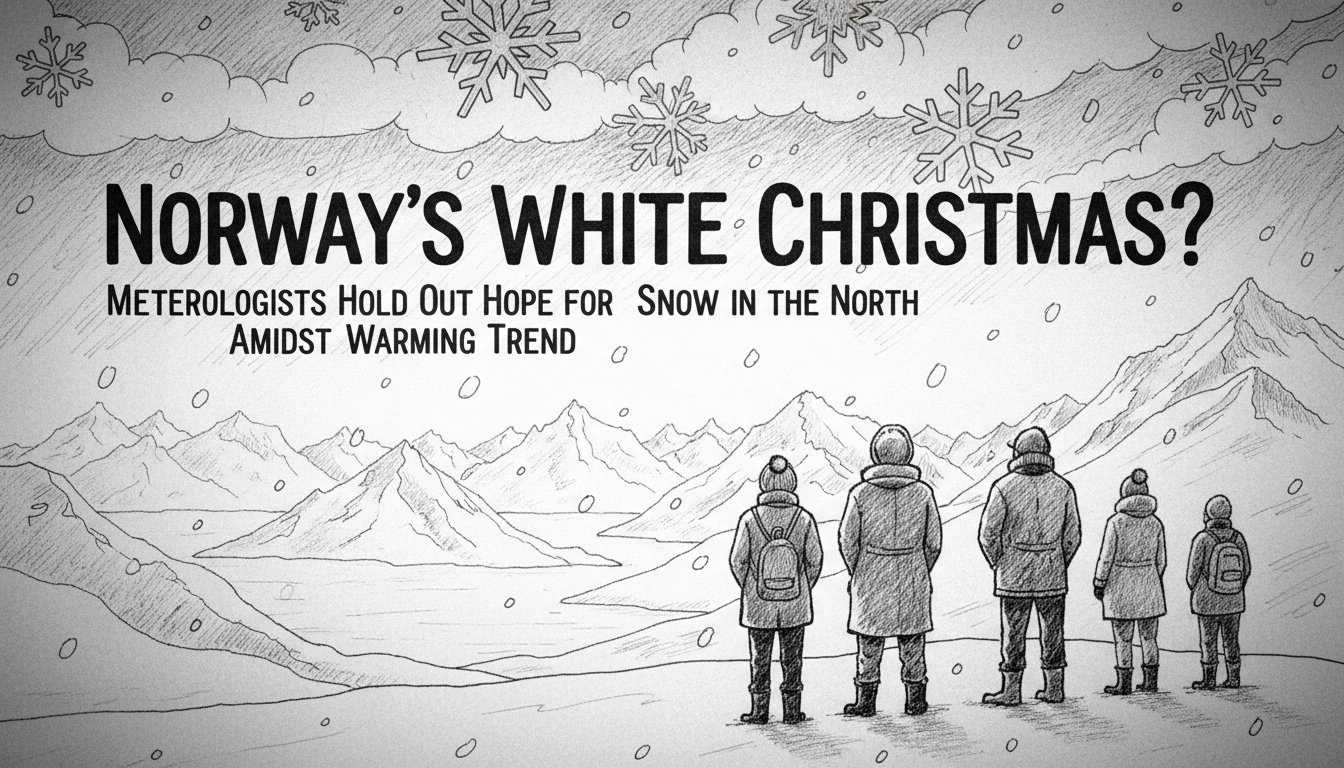
Norway faces a starkly divided weather forecast for the Christmas season, with mild, rainy conditions expected across the south and colder, wintery weather holding firm in the Arctic north. This pattern reflects a broader climatic trend that is reshaping traditional Nordic winters and carries implications for energy consumption, tourism, and local culture. The chance of a classic white Christmas has become significantly lower in southern regions over recent decades, while remaining high in counties like Troms and Finnmark.
Official meteorologists state that large parts of Southern Norway can expect mild weather and rain during the Advent period. Northern Norway will experience colder and more winter-like conditions. The number of white Christmas Eves has decreased in several areas, particularly in the lowlands of the south, when compared to previous decades. One meteorologist offered a sliver of hope for snow lovers. 'I do not want to rule out a white Christmas completely yet,' the forecaster said.
Data comparing the period from 1961 to 1990 with 1991 to 2020 shows a clear decline. Some areas from the Swedish border to Kristiansand have experienced ten fewer white Christmas Eves. In the lowlands, only Troms and Finnmark maintain a high probability of snow on December 24th. The long-term forecast indicates mild weather and rain for major coastal cities in the south, including Oslo, Bergen, and Stavanger.
Meteorologists see no clear signs of a new cold period before Christmas. They emphasize that weather can shift rapidly just before the holiday. A complex phenomenon known as 'sudden stratospheric warming,' which can trigger prolonged cold spells, shows no signs of influencing the weather in the immediate future. The polar vortex, which was weakened and displaced from the North Pole in November, is now returning to its usual position.
This north-south divide has tangible effects. In the south, reduced heating demand during a mild winter can impact natural gas markets, as Norway is Europe's largest piped gas supplier. Hydropower reservoir management may also be adjusted. In the north, communities and industries reliant on predictable cold and ice, from reindeer herding in Finnmark to certain fisheries, plan around these patterns. The iconic winter tourism in mountain regions like Hallingdal or around the Sognefjord depends on reliable snow.
For now, the final days leading up to Christmas remain uncertain. 'Yes, suddenly it can turn a couple of days before Christmas, and then you get that Christmas snow many are looking for,' the meteorologist noted. While Flå in Hallingdal still has snow, places like Utvikfjellet in Gloppen commune, which often has good snow depths in December, are bare this year. The forecast for the next week shows above-freezing temperatures in the south and colder conditions in the north, a pattern expected to dominate much of Advent.