
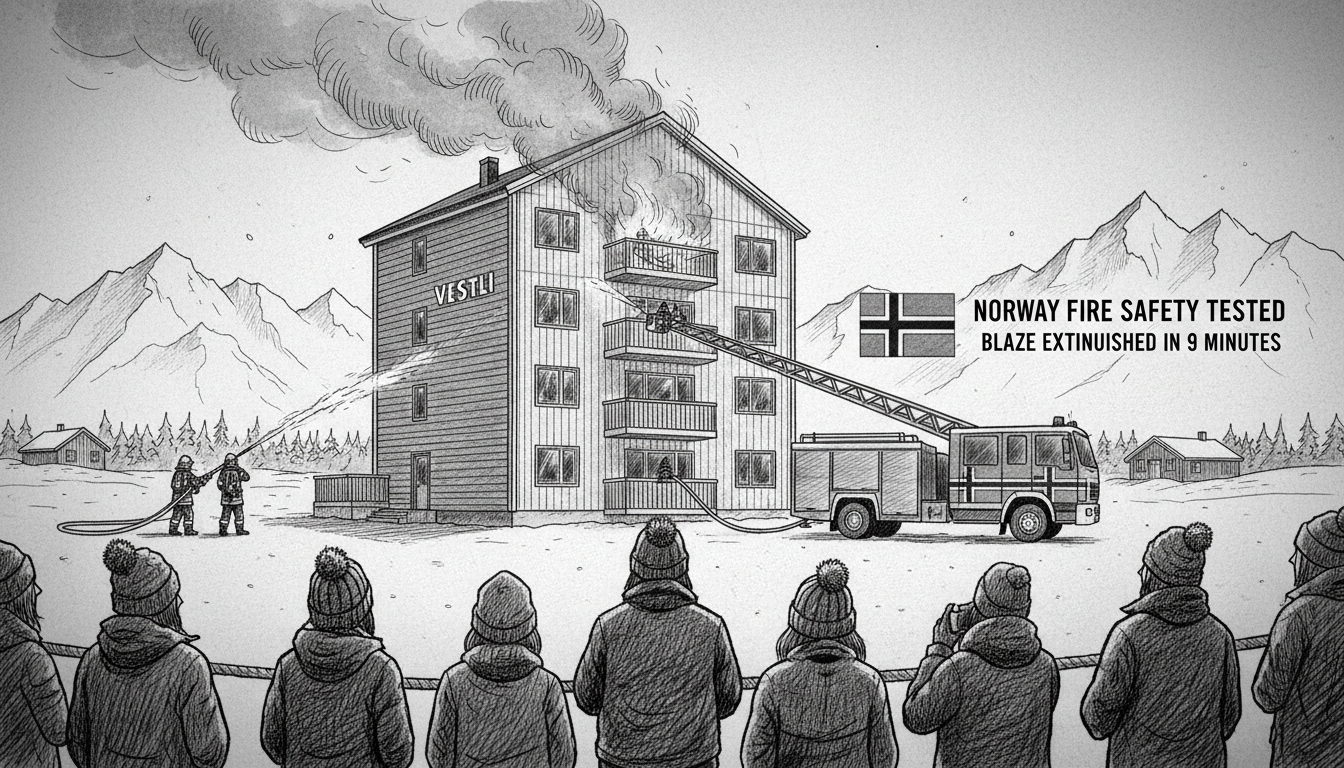
Norway's stringent fire safety protocols faced a real-world test on Christmas Eve when a blaze erupted in a residential apartment block in Oslo's Vestli district. The fire, reported at 3:08 PM in a first-floor apartment, was declared extinguished just nine minutes later. Seven fire trucks responded to the scene, evacuating residents who were allowed back inside shortly after the all-clear. No injuries were reported, a testament to the rapid and effective emergency response.
A Swift and Coordinated Response
The operational tempo of the Oslo Fire and Rescue Service was on full display. Dispatchers at the 110 emergency center coordinated the deployment of seven firefighting units to the address in the Stovner borough. The first responders arrived to find smoke and flames visible from a ground-floor unit. Their priority was immediate evacuation of the building's residents, followed by a targeted attack on the fire's source. By 3:17 PM, the incident commander confirmed the fire was under control. This precise timeline, from alarm to resolution, highlights the efficiency drilled into Norway's emergency services through regular training and clear protocols.
“The speed of response is absolutely critical in residential fires,” said Lars Holen, a former fire chief and current safety consultant. “The first few minutes determine the outcome. In this case, the system worked as designed: early detection, rapid alarm, and professional intervention contained the incident to one unit and prevented any physical harm.” The successful outcome underscores the value of Norway's substantial investment in its emergency infrastructure, where response time benchmarks are rigorously monitored and maintained.
The Vestli Context and Building Safety Standards
Vestli is a residential neighborhood characterized by apartment blocks from the 1970s and 80s, interspersed with green spaces. Like much of Norway, its buildings are subject to some of the world's most demanding fire safety codes. These regulations mandate compartmentalization—using fire-resistant materials to create barriers that slow a blaze's spread—along with mandatory, regularly inspected smoke alarms in every dwelling. The goal is to create a defensible space, allowing occupants time to escape and firefighters time to arrive.
The incident, though minor, serves as a live drill for the entire safety chain. It tests not only the fire department but also building management's evacuation procedures and residents' own preparedness. In multi-story buildings, preventing vertical spread through stairwells and ventilation shafts is a primary focus of Norwegian building design. The fact that this fire was confined to its unit of origin suggests these passive safety measures performed their function.
Analysis: The High Stakes of Residential Fire Safety
While this event ended without tragedy, it casts a spotlight on the ever-present risks in urban living. Norway experiences hundreds of residential fires annually, with causes ranging from electrical faults and cooking accidents to careless disposal of smoking materials. Each incident carries the potential for catastrophic loss of life and property, making prevention and preparedness national priorities.
The Norwegian Directorate for Civil Protection (DSB) continuously updates its guidelines, often incorporating lessons from rare but serious fires. Public awareness campaigns stress the importance of functional smoke detectors and having an escape plan. For firefighters, the strategy emphasizes aggressive interior attack and ventilation to protect lives and limit structural damage. The Vestli response, deploying seven vehicles for a single apartment fire, may seem disproportionate to outsiders. However, it reflects a standard doctrine of overwhelming force to achieve a swift, decisive outcome, minimizing risk to both residents and crews.
Expert Perspective on Prevention and Preparedness
“A nine-minute extinguishment is an excellent result, but the true success story is zero injuries,” noted Kari Nilsen, a fire safety engineer with the research institute SINTEF. “This starts long before the fire trucks roll. It starts with building materials that don't emit toxic fumes, with doors that self-close, and with educated residents who don't prop open fire doors. The Norwegian model integrates design, regulation, and public education.”
Experts point to several key factors that likely contributed to the positive outcome in Vestli. First, the early reporting of the fire, possibly by a working smoke alarm or an alert neighbor, was essential. Second, the building's construction likely met modern standards for fire resistance between units. Third, the professional competence and resources of the Oslo Fire Service enabled a rapid, effective knockdown. This layered approach—prevention, containment, and response—forms the bedrock of Norwegian fire safety philosophy.
A Community's Quiet Christmas Eve Interruption
For the residents of the Vestli block, the afternoon brought an unwelcome shock and a disruption to Christmas Eve preparations, a central family holiday in Norway. The sight of multiple emergency vehicles, the order to evacuate, and the smell of smoke will leave a lasting impression. Yet, the incident also provided a powerful, positive demonstration of their community's safety net in action. Neighbors checking on each other during the evacuation and the efficient, reassuring work of the emergency crews reinforce social cohesion and public trust.
Local officials will now focus on the aftermath, ensuring displaced residents from the affected unit have temporary accommodation and initiating the insurance and repair processes. The cause of the fire will be investigated by fire inspectors, a standard procedure that feeds data into national statistics and helps identify emerging risks. Whether it was a faulty appliance, a cooking mishap, or an electrical short, the findings will contribute to future safety advisories.
The Broader Implications for Urban Safety
This minor fire in northeastern Oslo resonates beyond the immediate neighborhood. It serves as a periodic reminder for municipalities across Norway to review their emergency response capacities and for housing cooperatives to audit their safety equipment. In a country where wooden construction remains popular, even in urban extensions, the commitment to fire safety must be unwavering. The Vestli event proves that vigilance pays off. The systems in place, from the moment a resident dials 110 to the moment the last fire truck leaves the scene, are designed for one overriding purpose: to ensure that a routine incident never escalates into a front-page disaster.
As Norway continues to densify its cities and build new residential quarters, the lessons from countless controlled responses like this one are baked into the planning. The ultimate goal is to make such efficient extinguishments so commonplace that they are barely newsworthy. The Christmas Eve fire at Vestli, notable for its swift resolution and lack of harm, is not a story of failure, but a quiet affirmation of a system working precisely as intended. It asks a silent question of every community: are we equally prepared?