
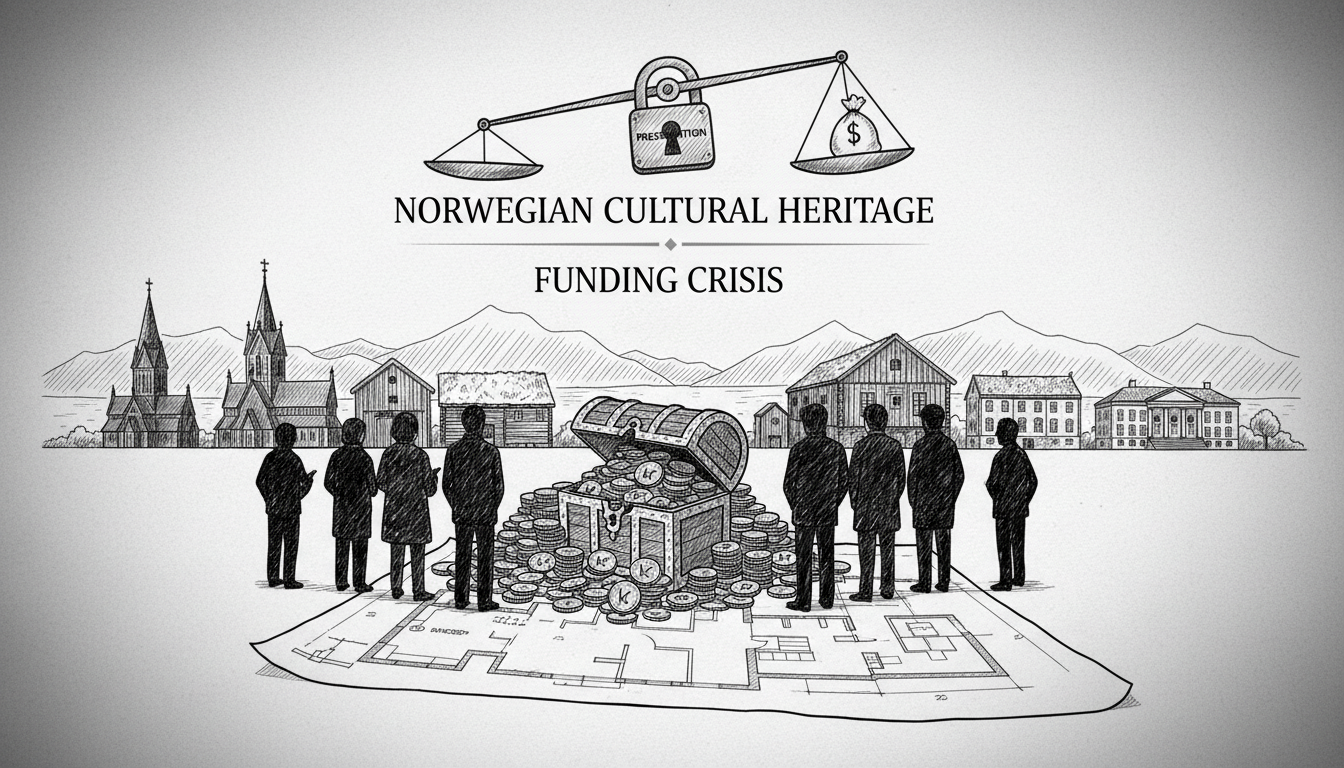
Norway's Directorate for Cultural Heritage faces unprecedented demand for preservation funding. Private owners of protected buildings and industrial monuments have requested 1.2 billion kroner in grants for restoration projects.
The directorate received applications covering hundreds of cultural heritage sites across Norway. This represents the largest funding request in the agency's history.
Director Hanna Geiran commented on the situation. She said the high number of applications shows strong commitment from property owners. Many want to begin restoration work in the coming year.
Private owners of protected buildings submitted the most applications. Owners of technical-industrial heritage sites also sought substantial funding increases. These include former factories, mills, and industrial facilities with historical significance.
Norway maintains strict preservation laws for culturally important structures. Property owners often face high maintenance costs for these protected buildings. The state provides grants to help cover restoration expenses while maintaining historical authenticity.
This funding surge reflects growing awareness of cultural preservation needs. It also indicates economic pressures on heritage property owners. Many struggle to maintain historically accurate renovations while meeting modern living standards.
The directorate must now evaluate all applications against available funding. They prioritize structures at greatest risk of deterioration. Projects demonstrating historical importance and urgent need receive careful consideration.
Cultural heritage preservation remains a contentious issue in Norwegian politics. Some argue preservation requirements burden property owners excessively. Others see state support as essential for maintaining national identity.
This record funding request comes amid broader debates about cultural spending. Norway balances modern development needs against preservation of historical sites. The high application volume suggests many property owners value their heritage responsibilities.
What does this mean for Norway's cultural landscape? The substantial funding requests indicate both challenges and opportunities. Property owners show willingness to invest in preservation, but need financial support to do so properly.
The directorate's decisions will shape Norway's historical preservation for years. They must distribute limited funds among many worthy projects. Their choices will determine which cultural treasures receive necessary repairs and which might deteriorate further.