
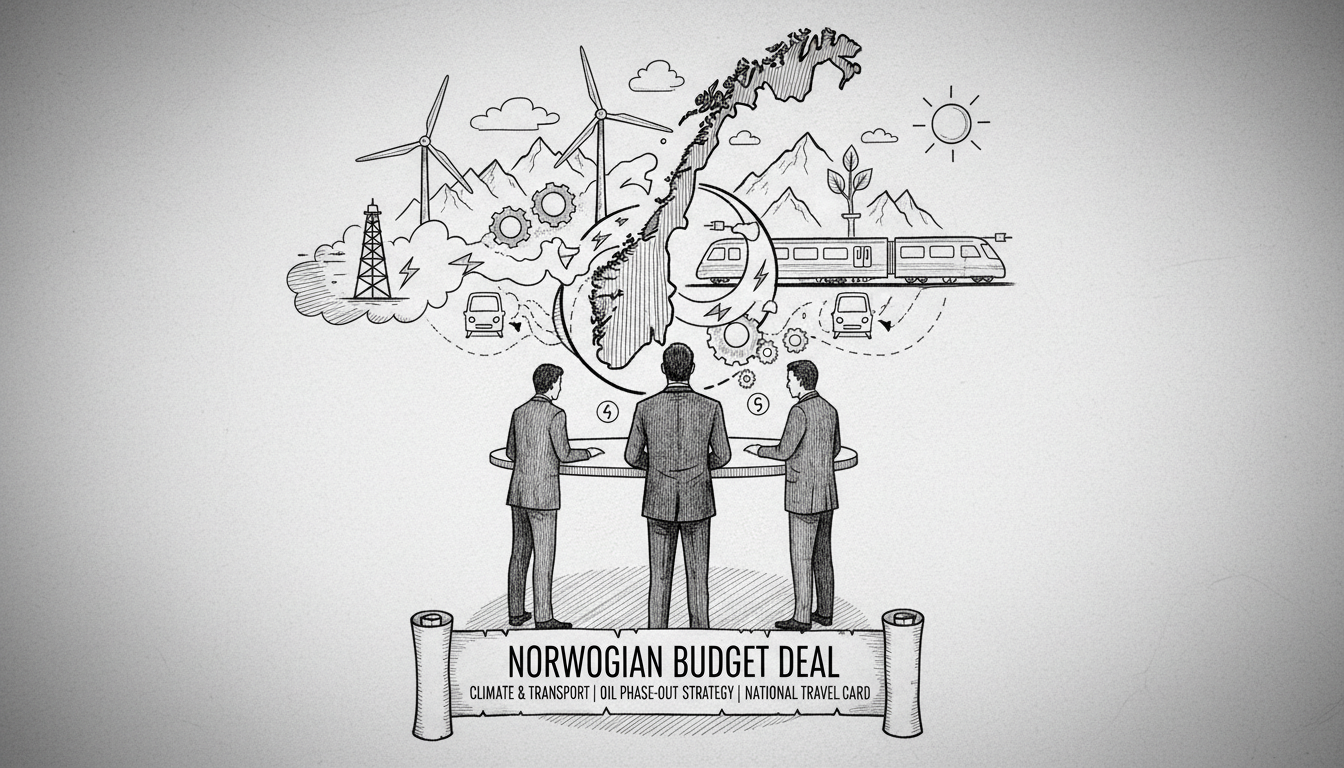
The Norwegian government has secured a crucial budget agreement after late-night negotiations. The deal involves the five parties of the ruling coalition and sets the fiscal course for the coming year. The agreement maintains the core spending framework proposed by the Labour Party, the Centre Party, and the Red Party over the weekend. It also incorporates new proposals from the Socialist Left Party and the Green Party, which will be presented during the final parliamentary debate. This collective backing ensures a majority for the budget's passage in the Storting, Norway's parliament.
Tonje Brenna, the parliamentary leader for the Labour Party, emphasized the foundational principles of the deal. She stated that responsible public spending remains a cornerstone, with no changes to the planned withdrawal rate from the Government Pension Fund Global, the nation's massive sovereign wealth fund. The budget figures from the initial weekend agreement remain unchanged, according to her statements. This signals a commitment to fiscal discipline even amid new climate and social spending pledges.
Key policy shifts emerged from the negotiations, marking significant wins for the smaller coalition partners. The budget now mandates a powerful push on environmental policy. It includes plans to cut greenhouse gas emissions, investigate a national price scheme for solar power sales, and expand protections for valuable forest areas. Kirsti Bergstø, leader of the Socialist Left Party, highlighted these as vital achievements for her party. The government is also required to present new, concrete measures for cutting climate gas emissions by May.
Perhaps the most notable domestic change is the commitment to a national monthly travel card, dubbed the 'Norgeskort'. Ingrid Liland, the Green Party's finance spokesperson, called it the start of a small transport revolution. The card, promised for nationwide introduction, will first see prices reduced by 100 kroner in participating counties next year. This move directly targets the cost of living and aims to make public transport a more attractive option for ordinary Norwegians.
The agreement also signals a profound shift in Norway's long-term energy policy. For the first time, a formal strategy for the managed decline of the domestic oil and gas industry will be developed. The Green Party successfully pushed for the creation of an oil commission, modeled on Germany's coal phase-out body. This commission will include representatives from the labor movement, experts, and environmental groups. Its task is to write what the Greens call the final chapter of Norway's oil history and plan for the economic adventures that will build the nation's future.
This budget deal reflects the complex dynamics of Norway's multi-party system. The Labour Party, as the largest party, had to balance fiscal responsibility with the ambitious green agendas of its junior partners. The outcome is a classic Nordic compromise. It offers immediate, tangible benefits like cheaper transport while setting in motion a decades-long transition for the nation's economic engine. The decision to model the oil commission on a German precedent shows a pragmatic, consensus-driven approach to a deeply polarizing issue. The real test will be in the implementation, particularly how the state manages the tension between current oil revenues from fields like Johan Sverdrup and the planned transition away from them.