
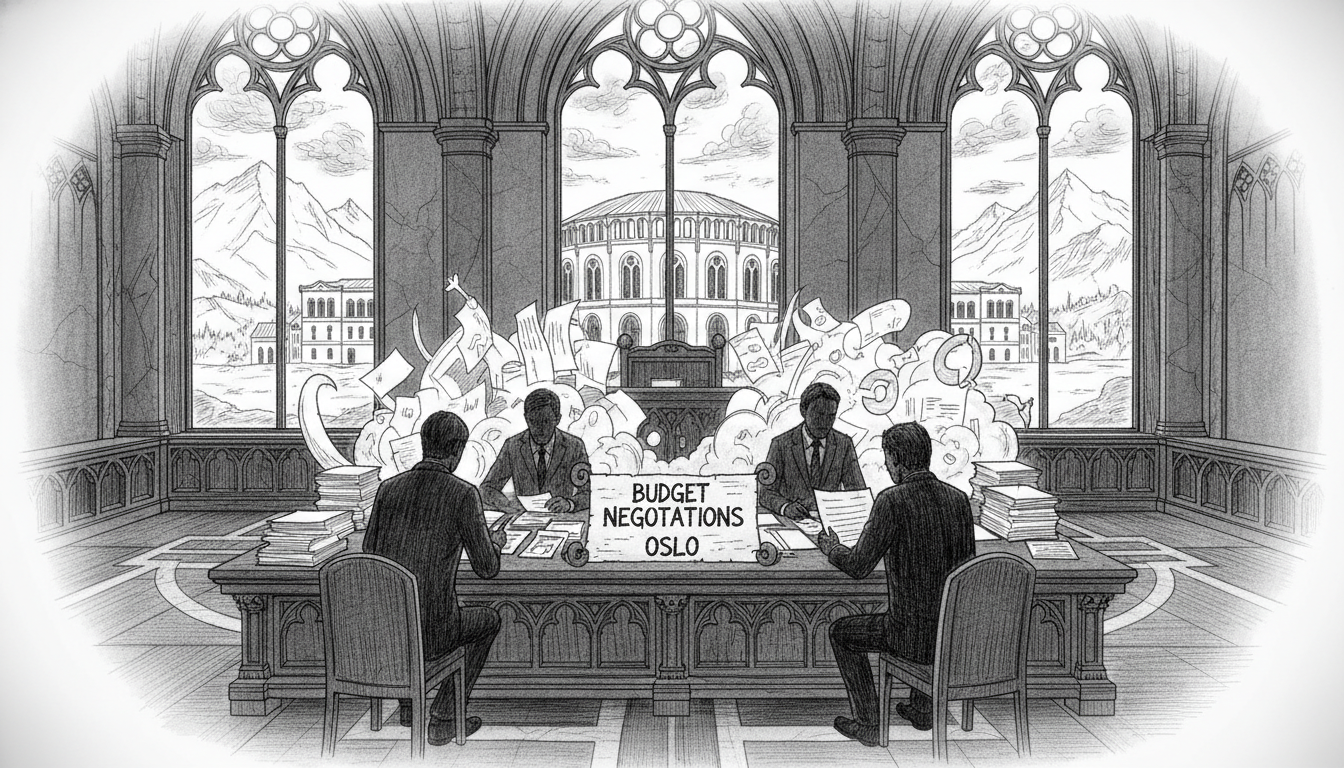
A flurry of high-level meetings gripped the Norwegian Parliament this afternoon. The parliamentary leader of the Labour Party, Tonje Brenna, visited the office of Centre Party leader Trygve Slagsvold Vedum shortly after 5 PM. This followed the arrival of a government delegation at the Storting building. The delegation included Labour Party deputy leader and Trade Minister Jan Christian Vestre, along with several state secretaries from the Office of the Prime Minister and the Ministry of Finance. Labour's finance politician Even Røed, a key figure in the talks, was also seen visiting the Green Party's parliamentary wing. Sources from multiple parties now indicate movement in the critical discussions over next year's state budget. No concrete information is yet available on when a potential agreement might be presented. Parliament is scheduled to formally adopt the budget this Friday.
The intense negotiations in Oslo highlight the delicate balance of Norway's coalition government. The Labour and Centre Party alliance must reconcile differing priorities on spending, taxation, and the use of Norway's vast oil revenues. These talks directly impact the Government Pension Fund Global, the world's largest sovereign wealth fund, and its annual fiscal rule withdrawals. The outcome will set spending limits for key sectors like healthcare, defense, and the green transition. It also influences Norway's broader economic policy and its approach to managing wealth from North Sea oil fields, including Johan Sverdrup and Troll.
This annual budgetary process is a cornerstone of Norwegian political stability. The negotiations test the cohesion of the governing coalition and its ability to deliver on policy promises. A delayed or contentious agreement can signal political weakness and create uncertainty for markets and municipalities. The involvement of state secretaries from the Prime Minister's Office underscores the high stakes. Their presence signals that the government's central administration is directly engaged in finding a compromise. The focus now shifts to whether the parties can bridge their differences before the Friday deadline. Failure to do so would be a major political setback, potentially triggering a crisis of confidence in the government's ability to govern effectively.
The budget's final form will have tangible consequences. It determines funding for Arctic policy initiatives, infrastructure projects along the Norwegian coast, and subsidies for industries beyond oil and gas. International observers watch these talks closely, as Norway's fiscal decisions can influence energy market sentiments and investment flows into the Nordic region. The government's choices will reflect its priorities between maintaining a robust welfare state and financing the costly shift toward a greener economy. The coming days will reveal the political cost of that balance.