
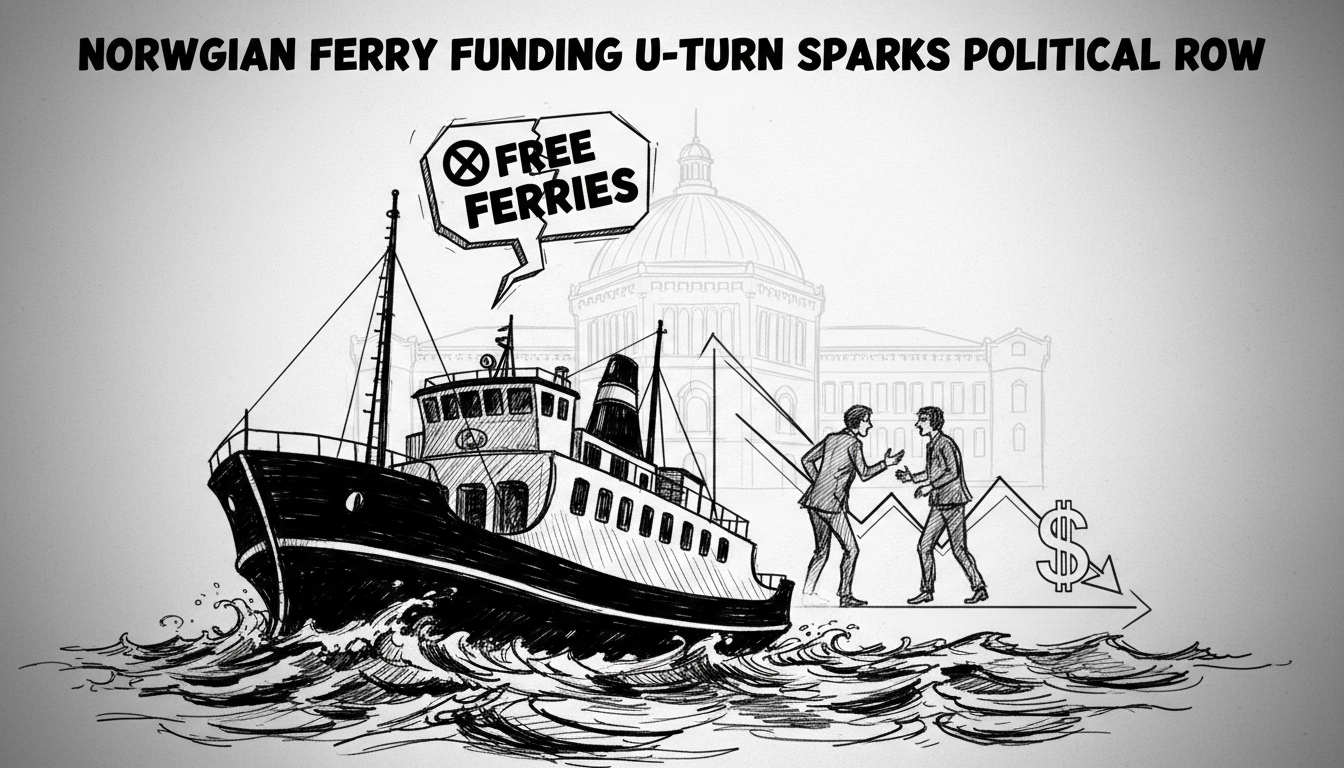
The Progress Party (Frp) faces accusations of inconsistency after removing a pledge for free ferries from its own budget proposal. The party's finance spokesperson, Hans Andreas Limi, had publicly supported free ferry travel for permanent residents during a televised debate. He argued that ferries should be free when they form part of the national road network. Several weeks later, the party presented its alternative state budget, which did not include funding for the policy.
During a finance debate in the Storting, Center Party representative Erling Sande directly confronted Limi. Sande questioned whether the Progress Party believed it was exempt from expectations of honesty. He asked if such reversals damaged public trust in the political system. The exchange highlighted the contentious nature of transport funding in Norway's complex geography. Ferry routes are vital links for coastal communities, particularly in the western fjords and northern regions.
Limi defended his party's position in the parliamentary chamber. He stated the Frp stands by its promises but was reacting to what he called false claims during the election campaign. Limi argued the debate in October was primarily about other parties' misleading statements, not a firm commitment on ferry policy. This explanation did not satisfy critics who see the episode as a classic political backtrack.
Ferry subsidies are a perennial issue in Norwegian politics, touching on regional equality and infrastructure costs. The state spends billions of kroner annually to operate routes considered part of the national road system, like those crossing the Sognefjord or connecting Lofoten islands. Any policy shift has direct implications for household budgets in remote areas. It also affects long-term planning for the Norwegian Public Roads Administration.
The controversy reveals a broader tension in Norwegian fiscal policy. Parties must balance popular spending promises against budgetary constraints, especially with fluctuating oil revenues. Norway's sovereign wealth fund, funded by oil and gas profits from fields like Johan Sverdrup, sets a framework for responsible spending. Promises made during debates often face harsh reality when alternative budgets are drafted. This incident shows that even opposition parties face scrutiny when their proposals do not align with earlier statements.
Political analysts note that trust in the Storting is a fragile commodity. Voters in coastal districts, from Finnmark to Rogaland, pay close attention to transport pledges. A reversal on a clear promise, even from an opposition party, can have electoral consequences. The Frp's core supporters include many in car-dependent areas outside major cities, making this a sensitive topic. The party will need to clarify its transport funding strategy as budget negotiations continue.
What happens next? The government's final budget will be presented later this year. The debate over ferry funding is now part of a larger discussion on Norway's infrastructure priorities and fiscal discipline. All parties will be judged on how their final votes align with their public statements. For residents relying on ferries, the outcome will have a very tangible impact on their daily commute and cost of living.