
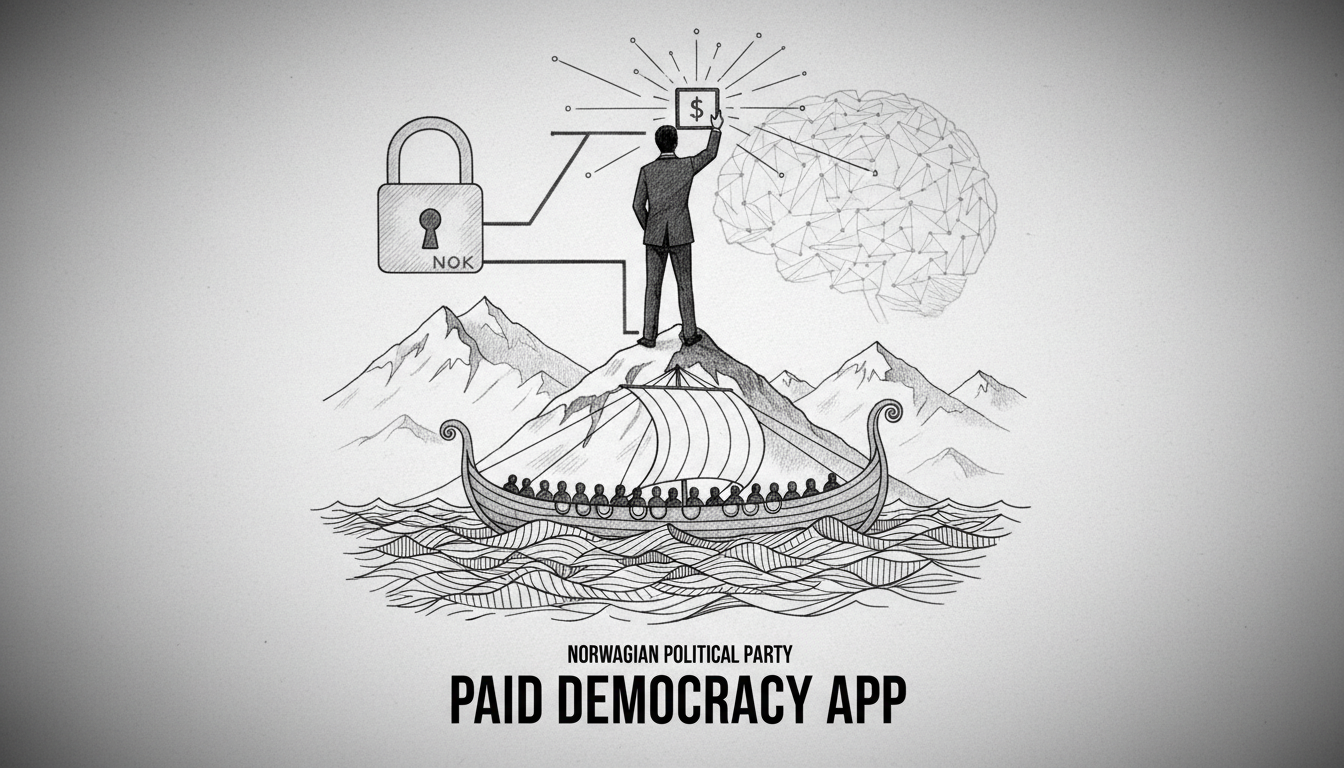
A new Norwegian tech startup has launched a paid subscription app designed to let citizens influence politics between elections. The app, called 'Demokratiappen', allows users to vote on political issues, submit proposals, and debate in real-time. It represents a novel approach to digital civic engagement in the Oslo innovation scene.
Gyda Oddekalv, the leader of the Generasjonspartiet (Generation Party), is also the CEO of the company behind the app. She reports strong initial interest. Around 5,000 people have downloaded the app so far. About 500 users have signed up for a paid subscription. The app offers three tiers costing 39, 99, or 299 Norwegian kroner per month.
'It is incredibly nice to see that so many want to have a voice between elections,' Oddekalv said. Her ultimate goal is for Norway to adopt more direct democracy. She argues the platform builds a culture of participation and competence. 'We get increased participation in society and thus we get more good solutions that people want,' she explained.
The app's launch highlights a key trend in Nordic technology trends: using digital tools to bridge gaps between citizens and institutions. Similar platforms have been launched by municipalities in other countries. However, this version is uniquely tied to a political party and its leader.
This connection has drawn scrutiny. Sveinung Legard, a researcher at Oslo Metropolitan University, sees both potential and problems. He called it positive when democracy opens for more participation. Yet he expressed skepticism about the app's broader appeal. 'The difference is that those solutions are not tied to a party,' Legard noted. 'They are launched by a municipality or the state and aimed at all residents.'
He suggested the app could be an effective internal tool for the Generation Party. It could help them gauge public opinion and identify new issues. However, Legard warned the party must be observant. He said fringe groups could use the platform to push extreme proposals. They might then claim to speak with 'the people's voice'.
The subscription model has also sparked debate. Critics argue citizens already pay for democracy through taxes. Milan Aran, a columnist and youth political activist, questioned the need for additional payment. Oddekalv defended the fees. 'The reason we have to have payment is because we have costs,' she stated. 'If we did not have payment, we could not deliver the app.'
Data privacy is another consideration. Data expert Torgeir Waterhouse said the company correctly classifies political opinions as sensitive data under GDPR. The legal framework regulates how this data can be used. Waterhouse said the owner's identity matters less than the company's resources and competence to operate securely. He did suggest the app could be more transparent about its internal processes before download.
This initiative is part of a wider Norway digital transformation. It tests whether a partisan, paid model can succeed in fostering civic tech. The app's growth will depend on convincing users its value outweighs the cost. It also must build trust around data use and political neutrality. The Oslo tech district often produces tools for societal improvement. This app's journey will show if political engagement can be successfully productized.
For now, the platform remains a bold experiment. It blends political activism with startup culture in the Scandinavian tech hub. Its success or failure will offer lessons for digital democracy efforts far beyond Norway's borders.