
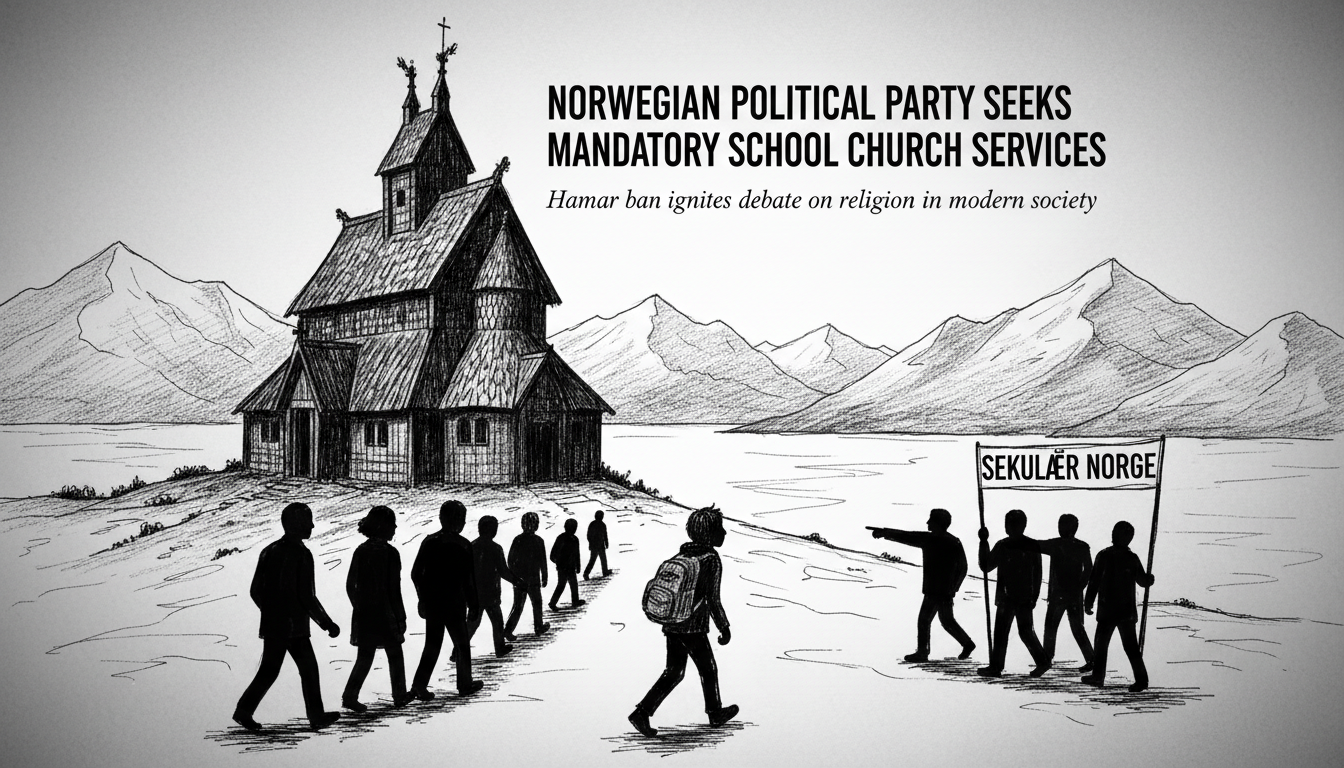
The Christian Democratic Party (KrF) has proposed new legislation to mandate school church services across Norway. This move follows a local decision in Hamar municipality to cancel traditional Christmas services in schools. The proposal would require all schools to offer religious services, marking a significant shift in Norway's approach to religion in public education.
KrF's education policy spokesperson, Joel Ystebø, defended the proposal. He said the Hamar decision represented problematic practice that needed addressing. Ystebø emphasized that Christian heritage and Christmas traditions deserved protection in schools. He noted students would still retain their right to seek exemption from participation.
The controversy stems from Hamar's recent policy change. For the first time, the municipality decided against holding school church services before Christmas. Approximately half of Hamar's schools previously offered such services. Municipal education leader Aslaug Grimsmo explained schools themselves wanted a unified practice. She stated schools should be communities where all students feel belonging and respect regardless of faith or background.
KrF plans to formally present their proposal in the Storting, Norway's parliament. The party believes local municipalities should not have discretion to remove religious service opportunities. This legislative push reflects broader debates about Norway's Christian heritage in an increasingly secular society.
Young Liberals (Unge Venstre) leader Omar Svendsen-Yagci strongly criticized the proposal. He called the idea absurd and said school church services belonged on history's scrap heap. Svendsen-Yagci argued the state had no place imposing religion on children during school hours. His organization instead advocates for banning school church services entirely.
He described giving one religion special status as outrageous. Svendsen-Yagci noted Norway no longer qualifies as a Christian society since church and state separated. He referenced statistics showing four in five Norwegians do not identify as Christian. The youth leader maintained faith should remain a private matter pursued outside school hours.
This conflict highlights Norway's ongoing identity negotiation. The country maintains a constitutional connection to Lutheran Christianity while becoming increasingly diverse. Recent immigration patterns and secularization trends challenge traditional practices. School policies often become battlegrounds for these cultural debates.
Norway's education system has gradually reduced religious elements since the 1990s. The subject "Christianity, Religion, and Philosophy" replaced mandatory religious education. Local municipalities gained more control over school practices during this period. The KrF proposal would reverse this decentralization trend for religious services.
Political analysts note KrF's proposal faces significant parliamentary hurdles. The party holds only three seats in the 169-seat Storting. They would need support from multiple larger parties to advance legislation. The Conservative Party and Labour Party have historically taken moderate positions on religious school practices.
International observers should watch this development closely. Norway's approach often influences other Nordic countries facing similar secularization challenges. The outcome could signal whether Europe's historically Protestant nations will reinforce or further distance themselves from Christian traditions in public institutions.
The debate extends beyond Hamar's local decision. It questions what role, if any, organized religion should play in modern Norwegian public education. As Norway continues diversifying, these discussions about inclusion versus tradition will likely intensify. The Storting's response to KrF's proposal will provide important signals about Norway's future direction.