
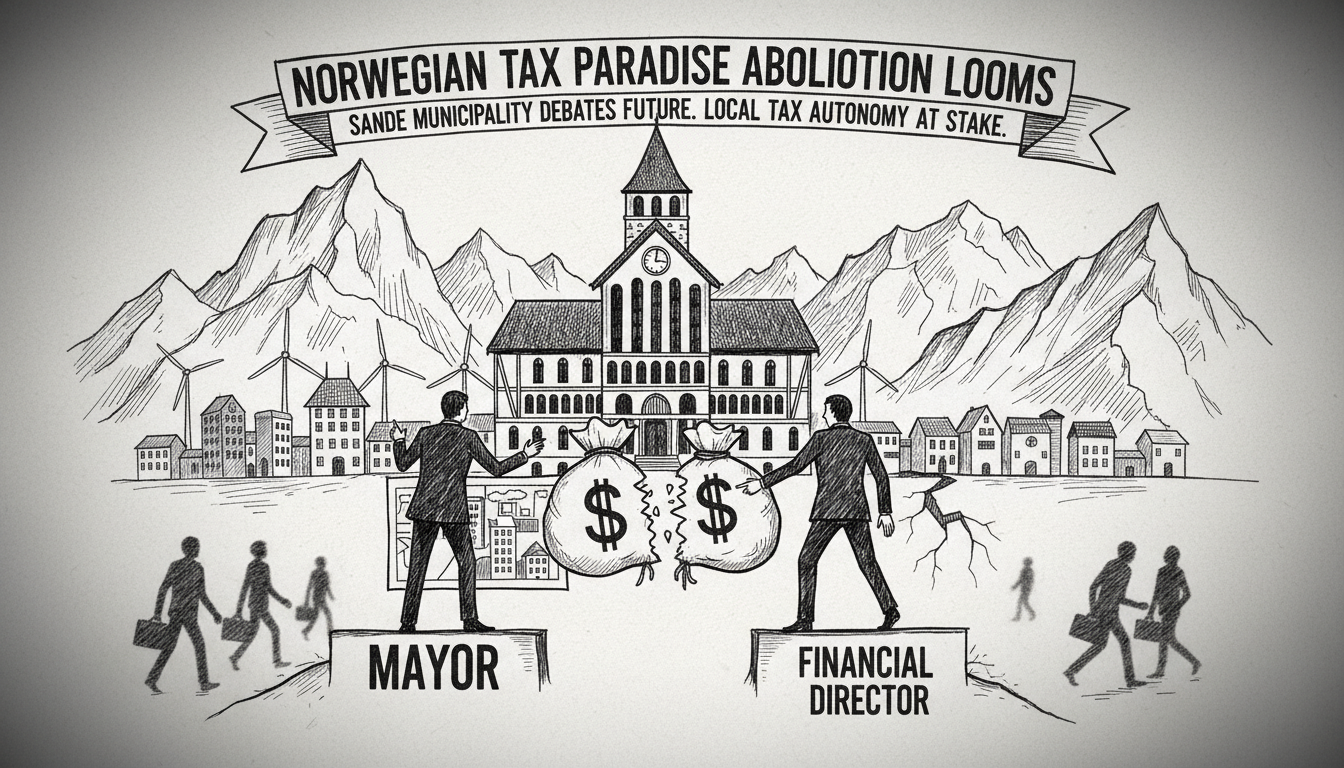
The remote municipality of Sande on Norway's Sunnmøre coast faces a critical vote. Its policy of offering a low municipal wealth tax, which transformed it into a domestic tax haven, may be scrapped. This decision pits the mayor against the municipal director in a debate over economic survival versus community development. The outcome will test Norway's complex relationship with local tax autonomy and wealth redistribution.
For the past three years, Sande has attracted affluent Norwegians by slashing its local share of the national wealth tax. This move, inspired by the municipality of Bø in Vesterålen, prompted an influx of investment and residents. The Halsebakk family, founders of the wellboat company Sølvtrans, chose Sandsøya island over Switzerland. They have invested millions in the Rosenlund Hamn hotel, conference facilities, and a new multi-purpose sports hall.
Anja Halsebakk, who manages the hotel, argues the tax scheme is vital. 'This feels like stepping on a proper banana peel,' she said. 'People with capital like my father will move back to Ålesund. Development here will stop.' Her family has funded new concrete piers, a pub renovation, and the sports complex. The hall will feature a climbing wall and padel courts, a rare amenity for a community of under 200 people.
Mayor Dag Arne Vaagen agrees. He believes the tax cut, while reducing direct income, generates greater value. 'I don't think this building would have come without this arrangement,' Vaagen stated, referring to the new hall. 'The way I see it, the lost tax revenue is worth it.' He must take a ferry to reach Sandsøya, underscoring the area's isolation and need for private investment.
Yet the municipal finances are under severe strain. Sande is on the so-called Robek list, indicating its economy is failing. Municipal Director Renathe Rossi Aglen sees no alternative but to end the tax scheme. 'We need to find the income we can get,' Aglen explained. 'We also see a reduction in the municipality's income equalization because we reduced the tax rate.' Her primary duty is to manage the budget for all 2,400 residents.
The core conflict exposes a tension in Norwegian governance. Municipalities have limited powers to set local tax rates, but these decisions can have dramatic effects. The national wealth tax system is designed for uniformity, yet local adjustments create pockets of competition. This case shows how a small community leveraged a fiscal tool to spark development, but now faces the consequences of a strained balance sheet.
What happens in Sande next week will resonate beyond Sunnmøre. Other small municipalities watching this experiment must decide if attracting wealth is sustainable. The Storting frequently debates wealth tax reforms, and cases like this fuel the argument for systemic change. For international observers, it highlights Norway's internal disparities and the challenges of providing services in remote regions. The council vote will determine if Sandsøya's construction boom continues or grinds to a halt.