
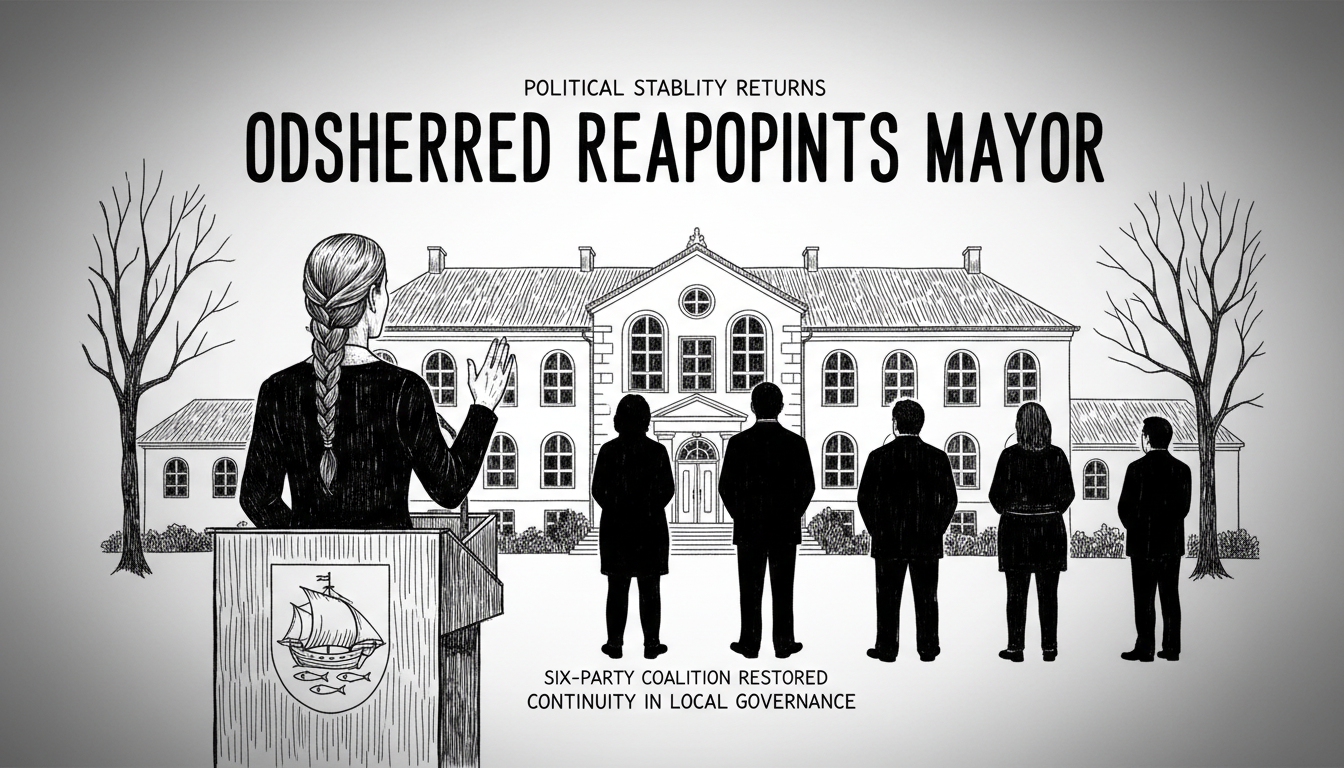
Odsherred Municipality has finally resolved its leadership question after days of political uncertainty. The same coalition that initially formed after local elections has now reunited behind Hanne Pigonska from the Venstre party. This development brings closure to a brief period of political instability that left Denmark's last undecided municipality without clear leadership.
The political agreement collapsed just four days ago when the Denmark Democrats unexpectedly withdrew their support. Their sudden reversal created a temporary vacuum in municipal governance. Now all six parties have returned to the original coalition arrangement that first emerged after the November local elections.
Pigonska described the reunited coalition as the most stable configuration available. She noted that parties had sufficient time to explore alternative arrangements. Their collective return to the original agreement suggests they found no better political solution for Odsherred's governance needs.
This political reconciliation matters deeply for Danish society news and municipal stability. Local governance directly impacts Copenhagen integration models and community welfare services. When municipal coalitions fracture, social programs and integration initiatives often face disruption. The swift resolution prevents potential damage to local social policy implementation.
The coalition spans Denmark's political spectrum from left to right. It includes Venstre, the local list New Odsherred, Denmark Democrats, Conservatives, Social Democrats, and Liberal Alliance. Such broad political cooperation reflects the pragmatic nature of Danish municipal politics. Local administrations often prioritize practical governance over ideological purity.
This development offers important insights into Denmark immigration policy at the local level. Municipal governments implement national policies through local social centers and integration programs. Stable leadership ensures consistent application of Denmark social policy frameworks. The Danish welfare system relies heavily on municipal administration for service delivery.
The political reconciliation in Odsherred demonstrates how Danish municipalities typically resolve internal conflicts. Unlike national politics where disagreements can cause prolonged stalemates, local governments tend toward practical solutions. This reflects the immediate, tangible nature of municipal responsibilities from schools to elderly care.
What does this mean for international observers of Danish politics? It shows the resilience of Denmark's decentralized governance model. Even when coalitions temporarily fracture, the system contains self-correcting mechanisms. The outcome reinforces Denmark's reputation for political stability and pragmatic problem-solving at all government levels.
The restored coalition now faces the task of governing effectively despite recent tensions. Their ability to work together will determine Odsherred's success in implementing local versions of national social policies. The municipality's experience may inform how other Danish communities manage diverse political coalitions.