
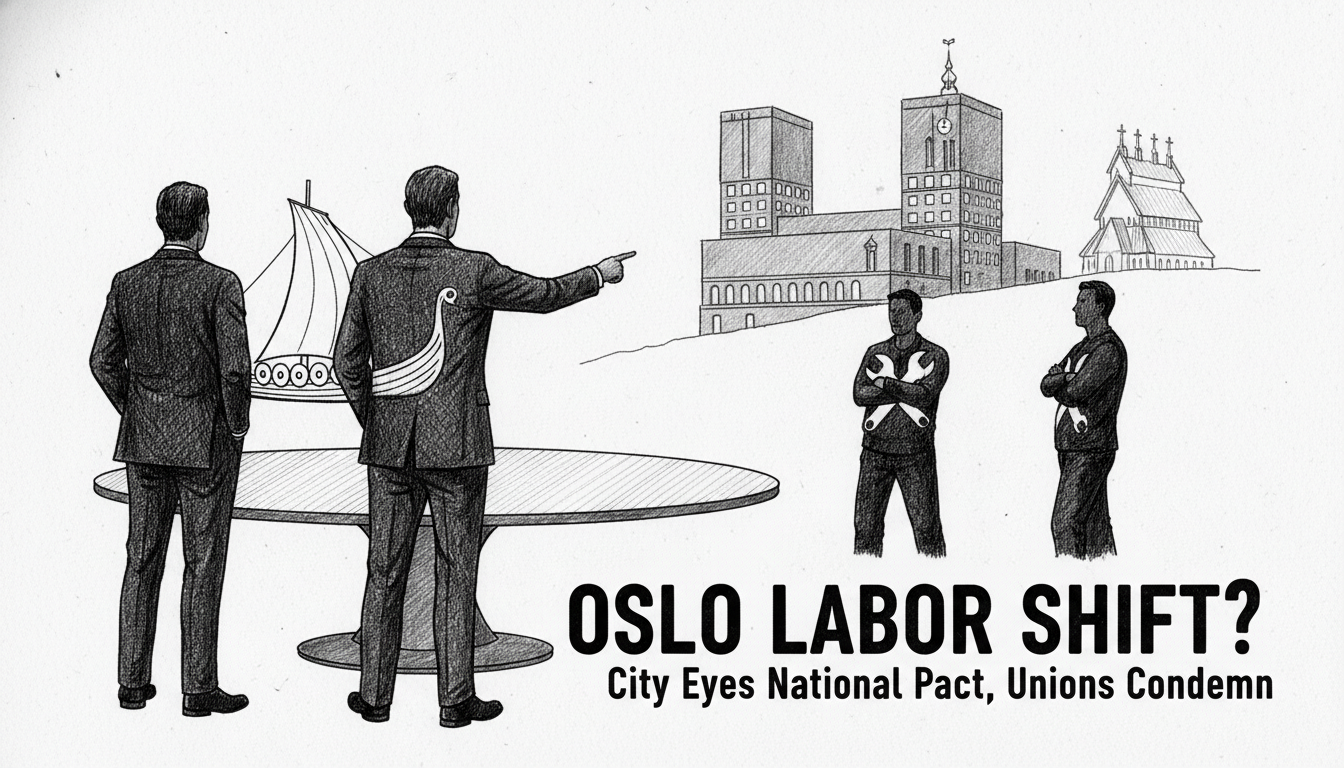
The Oslo City Council will examine a fundamental change to its labor relations model. It will consider joining the national municipal employers' association for collective bargaining. This move would end Oslo's unique, century-old tradition of independent wage negotiations. The capital currently stands alone among Norway's 356 municipalities in this regard. All other local and county governments are represented by KS, the Norwegian Association of Local and Regional Authorities. KS negotiates national tariff agreements on their behalf.
City officials stress the review is not financially motivated. They claim it does not aim to weaken employee rights. The goal is to ensure Oslo remains part of Norway's organized labor market. If the city joins the KS tariff area, it would still have collective agreements. Officials promise continued good cooperation with union representatives. This cooperation is required by KS's main agreement, but officials say they desire it independently. They aim to be a modern, attractive employer that attracts talent. The city wants to deliver good services to its residents.
Labor unions have reacted strongly to the proposal. The Oslo branch of the Norwegian Union of Municipal and General Employees called it an attack on organized labor. They made the statement in a major national newspaper. The union fears a loss of local influence and tailored agreements for Oslo's specific workforce. Oslo's system has allowed for deals reflecting the capital's unique cost of living and labor market pressures.
This potential shift carries deep political and symbolic weight. Oslo's independent bargaining is a legacy of its distinct urban development and strong labor movement history. Aligning with KS would standardize the city's approach with the rest of the country. It could simplify administrative processes but may dilute local bargaining power. The review touches on core principles of Norwegian labor relations, known as the 'Norwegian model'. This model relies on centralized negotiations between employer and employee organizations.
The outcome will impact over 50,000 municipal employees in Oslo. It also sets a precedent for municipal autonomy versus national coordination. The debate reflects broader tensions between local flexibility and centralized efficiency in the public sector. The City Council's final decision will be closely watched by unions, employers, and politicians nationwide. It may redefine labor dynamics in Norway's largest and most complex municipality for decades to come.