
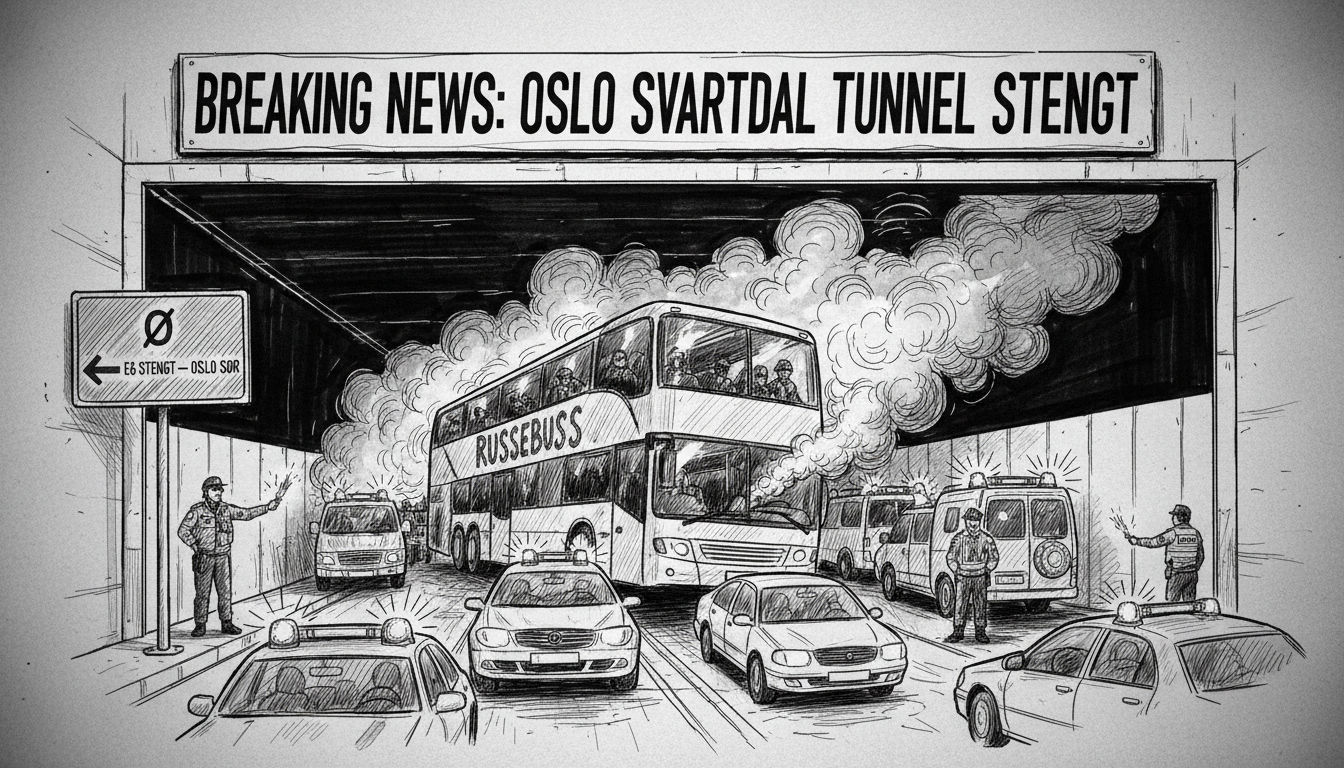
The Svartdal Tunnel in Oslo faces complete closure in both directions after a student celebration bus broke down during Thursday morning rush hour. Police confirmed the vehicle experienced engine failure with visible smoke emerging from the motor. The incident creates significant traffic complications along one of Norway's busiest transportation corridors.
The Svartdal Tunnel serves as a critical branch of the larger Operation Tunnel system on the E6 highway. This vital artery connects central Oslo with eastern suburbs and handles thousands of commuters daily. The stranded bus blocks the lane toward Ryen, creating a bottleneck effect that impacts the entire tunnel system.
Oslo police have implemented full closure protocols as emergency crews work to secure the vehicle. Traffic authorities redirect motorists to alternative routes through the city's complex tunnel network. The timing during peak travel hours amplifies disruption for commuters and commercial transport.
This incident highlights the vulnerability of Oslo's tunnel-dependent infrastructure. Norway's capital relies heavily on underground passages to manage geography and traffic flow. The E6 corridor represents one of Scandinavia's most important north-south transportation links, moving both people and goods between Norway and Sweden.
Student celebration buses, known locally as 'russebuss', present particular challenges for emergency responders. These often heavily modified vehicles can experience mechanical issues when idling in confined tunnel spaces. The combination of limited ventilation and potential fuel leaks requires careful handling by specialized teams.
Traffic management officials face complex decisions during such closures. They must balance public safety against economic impacts of prolonged disruptions. The E6 handles substantial commercial traffic between Oslo's port facilities and industrial zones in Østfold county.
Similar incidents in recent years have prompted infrastructure reviews. Tunnel safety protocols continue evolving as Oslo expands its underground network. The city's mountainous terrain necessitates extensive tunneling, with new projects constantly underway beneath the urban landscape.
Commuters should expect extended delays throughout the morning hours. Police have not provided estimated reopening times as assessment continues. Alternative routes through the city center may experience increased congestion as drivers seek detours around the closure.
Why does this matter beyond immediate inconvenience? Oslo's tunnel network represents critical infrastructure supporting Norway's economic activity. Prolonged closures affect logistics chains, business operations, and emergency service access. The incident demonstrates how single points of failure can cascade through interconnected systems.
What happens next? Transport authorities will likely review response protocols and consider whether additional safety measures are warranted for specialized vehicles in tunnel environments. The incident may influence future infrastructure planning as Oslo continues developing sustainable transportation solutions.