
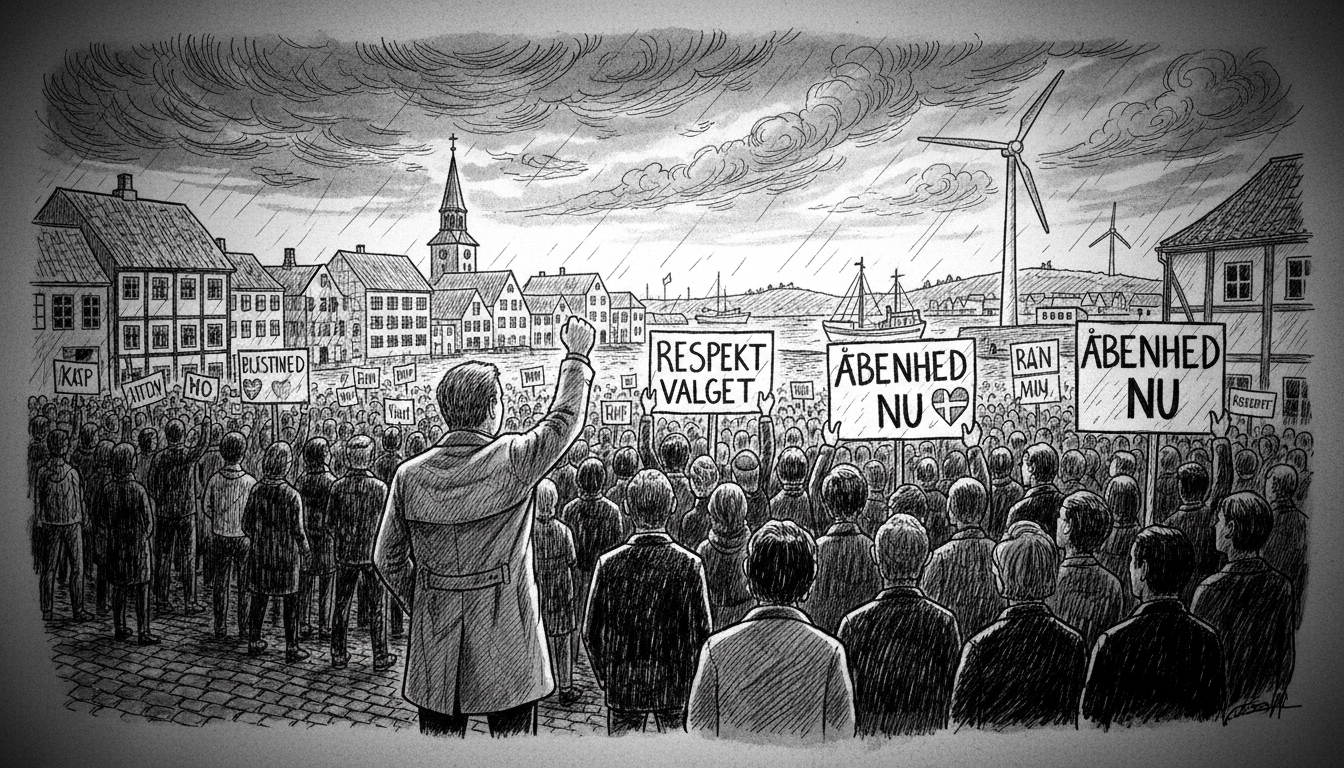
A surprising political reversal in western Denmark has drawn hundreds of protesters into the streets. The newly elected council member Mads Fuglede joined demonstrators in Ringkøbing-Skjern after losing what many call a political coup. Protesters carried signs questioning democratic processes while some symbolically covered their mouths with tape.
The political drama began after November's municipal elections. Mads Fuglede from the Denmark Democrats was initially declared mayor through a coalition agreement. His support came from five different parties including the Christian Democrats and Socialist People's Party. That majority collapsed when two parties withdrew their support unexpectedly.
A new majority then formed behind Venstre's Lone Andersen as mayor candidate. This shift occurred despite Venstre holding eight council seats compared to the Conservatives' single representative. The sudden change sparked immediate public backlash across the municipality.
Local resident Jakob Arendt Laursen created a Facebook group protesting what he called the political takeover. His group rapidly gained over two thousand followers. This demonstrates how Danish citizens actively engage with local governance issues. The protest reflects broader questions about political transparency in Danish society.
Danish municipal politics often feature complex coalition building. Ringkøbing-Skjern's situation shows how fragile these agreements can become. The Denmark Democrats initially secured leadership through careful negotiation. Their collapse highlights the volatile nature of multi-party systems.
Integration policies often depend on stable local governance. Political instability can affect social programs and community initiatives. Municipal leadership changes impact how integration policies get implemented across Danish communities. This matters for international residents following Denmark social policy developments.
The Danish welfare system relies on consistent local administration. Frequent leadership changes can disrupt service delivery and community planning. Ringkøbing-Skjern's situation illustrates how political maneuvers might affect daily life. Citizens clearly want stability in their local government.
Mads Fuglede told local media he would gladly resume the mayor position if offered. His participation in protests shows how Danish politicians maintain connection with constituents. This personal engagement reflects Denmark's political culture where accessibility remains important.
The Copenhagen integration model often gets attention internationally. Yet regional municipalities like Ringkøbing-Skjern face their own unique challenges. Local political stability directly influences how integration programs function. This protest shows citizens watching closely how their representatives govern.
Danish immigration policy implementation varies across municipalities. Local leadership changes can shift how policies get applied in practice. Ringkøbing-Skjern's political situation deserves watching for those interested in Denmark immigration policy evolution. The outcome could influence other municipalities facing similar coalition challenges.