
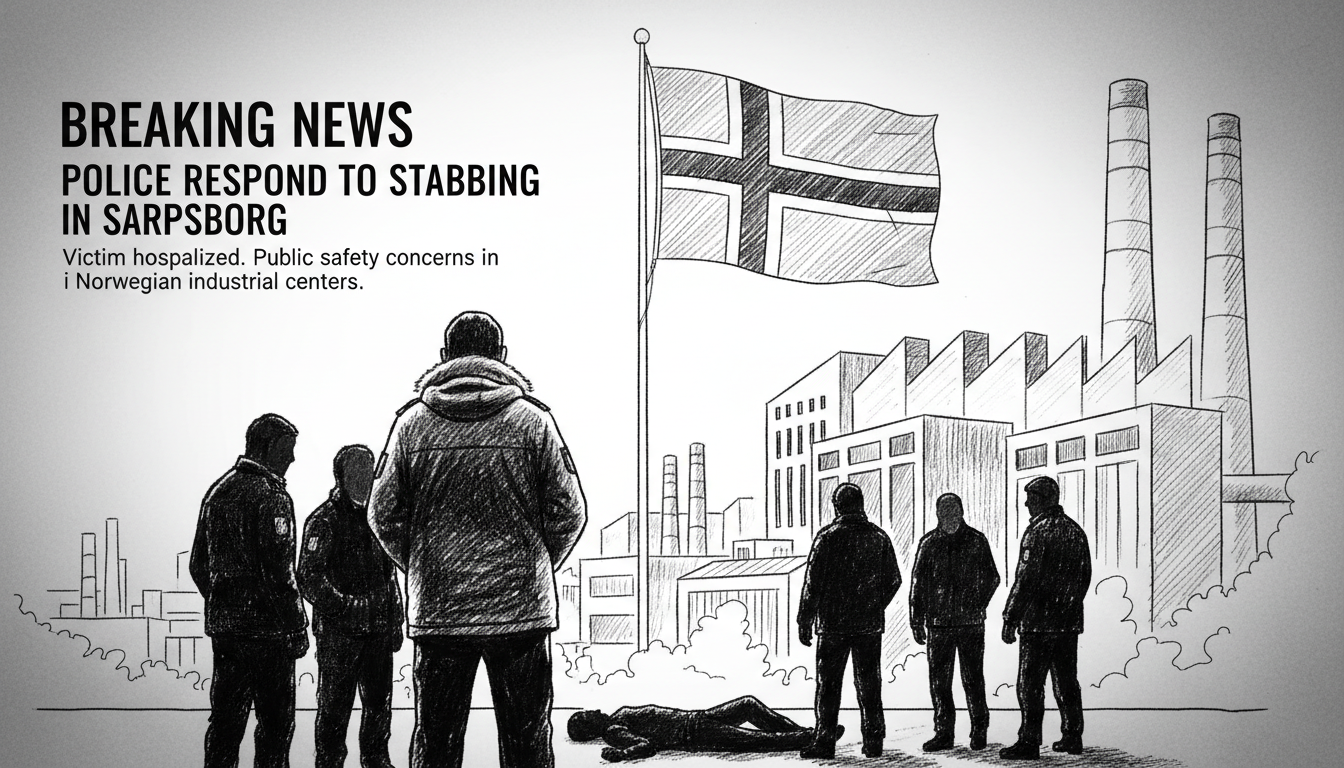
Police in Sarpsborg are investigating a stabbing incident that occurred on Wednesday afternoon. Emergency services responded to the scene and transported the injured person to Kalnes Hospital. Authorities have also detained a suspect. The severity of the victim's injuries remains unclear as police continue their investigation. Officers are currently securing evidence and conducting interviews at the location.
This incident in Sarpsborg, a key industrial city in Østfold county, highlights broader public safety trends in Norway. While violent crime rates remain low by international standards, isolated incidents in regional urban centers draw significant attention. Sarpsborg's position near the Swedish border and its role in Norway's industrial and logistics sectors make any disruption to public order a matter of wider concern. The city is a vital hub for manufacturing and transport, connecting Oslo to southern regions.
The immediate police response follows standard Norwegian protocols for serious assaults. Local law enforcement typically mobilizes quickly to secure scenes and provide medical aid. The involvement of multiple emergency units indicates the incident was treated with high priority. Norwegian police procedures emphasize thorough evidence collection and suspect management, even in cases with a detained individual. This methodical approach aims to build strong cases for prosecution.
Such events inevitably spark discussions about community safety and policing resources in Norway's smaller cities. While major crimes are rare, they test the capacity of municipal services. Sarpsborg, with a population just over 50,000, maintains its own police district. Incidents like this stretch local resources and can lead to calls for increased patrols or preventative measures. The community's reaction often focuses on support for victims and reaffirmation of local safety norms.
From a national perspective, Norway's overall security environment remains stable. The country consistently ranks high on global safety indexes. Individual violent acts, while traumatic, do not represent a systemic shift. The judicial process will now take over, with the suspect facing charges under Norwegian penal code. The case will proceed through the local courts, with outcomes dependent on the evidence gathered during this initial investigation phase. The focus for authorities is now on supporting the victim and ensuring a rigorous legal process.