
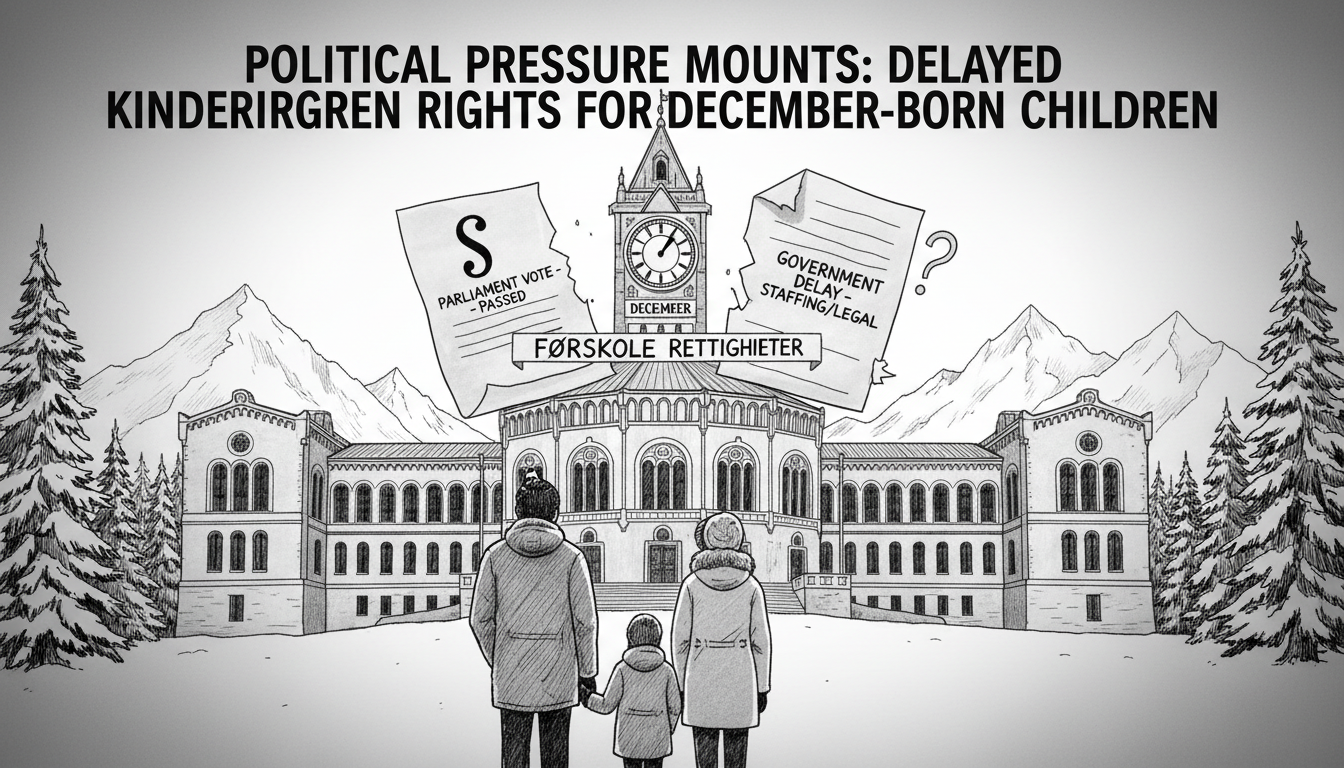
A significant political dispute is unfolding in Oslo over the implementation of a parliamentary decision. The Storting voted overwhelmingly to grant children born in December the right to a kindergarten place from the age of one. This would align them with children born earlier in the autumn. The current government, led by the Labour Party (Ap), has yet to table the necessary legislation. Opposition parties are now demanding urgent action as another cohort of December-born children approaches their first birthdays without guaranteed access to childcare.
Conservative Party (H) and Progress Party (Frp) politicians are leading the criticism. They argue the delay forces parents, primarily mothers, into extended unpaid leave. Sandra Bruflot, leader of the Conservative Women's Forum, expressed frustration. She said many new parents were thrilled by the parliamentary vote but now see no benefit from it. The delay means children born this December may also miss out, according to Mathilde Tybring-Gjedde, chair of the parliamentary Education Committee.
The core issue is a legal loophole affecting family economics. Under existing rules, children born in December do not have a statutory right to a kindergarten place until August the year after they turn one. This creates a potential eight-month gap without income for parents after parental benefits expire. The parliamentary decision aimed to close this gap, granting the right from the child's first birthday itself.
Simen Velle, the Frp's new member on the Education Committee, emphasized the broader societal impact. He stated that kindergarten access is crucial for children's development, parental workforce participation, and economic productivity. Velle noted that parents should not be forced into unpaid leave due to bureaucratic delays. He referenced the historic kindergarten settlement forged by former Frp leader Siv Jensen over two decades ago as proof that cross-party solutions are possible.
The government acknowledges the mandate but cites procedural requirements. A spokesperson for the Ministry of Education said the department is working on drafting a law proposal for consultation. This is a standard step before a bill can be presented to the Storting. The spokesperson also pointed to challenging staffing conditions in kindergartens across Norway. Expanding the right to more children requires more staff and greater capacity.
Funding has been allocated to address staffing. The recent state budget agreement includes 600 million Norwegian kroner specifically for increased staffing in kindergartens. An additional 3 billion kroner in discretionary funds is allocated to municipalities for childcare, schools, and elderly care. The government argues this financial backing is essential to make any new legal right meaningful and fair.
This delay highlights a recurring tension in Norwegian politics between parliamentary will and executive implementation. The Storting, Norway's supreme political body, has clearly expressed its intent. Yet the path from a parliamentary decision to enacted law involves departmental review, consultation, and drafting. Critics see this as unnecessary foot-dragging on a clear social policy issue. The situation puts pressure on Education Minister Kari Nessa Nordtun to demonstrate her ministry can deliver on parliamentary directives in a timely manner. With the December birth month approaching again, the political and personal stakes are rising for affected families in Oslo and across the country's fjord communities.