
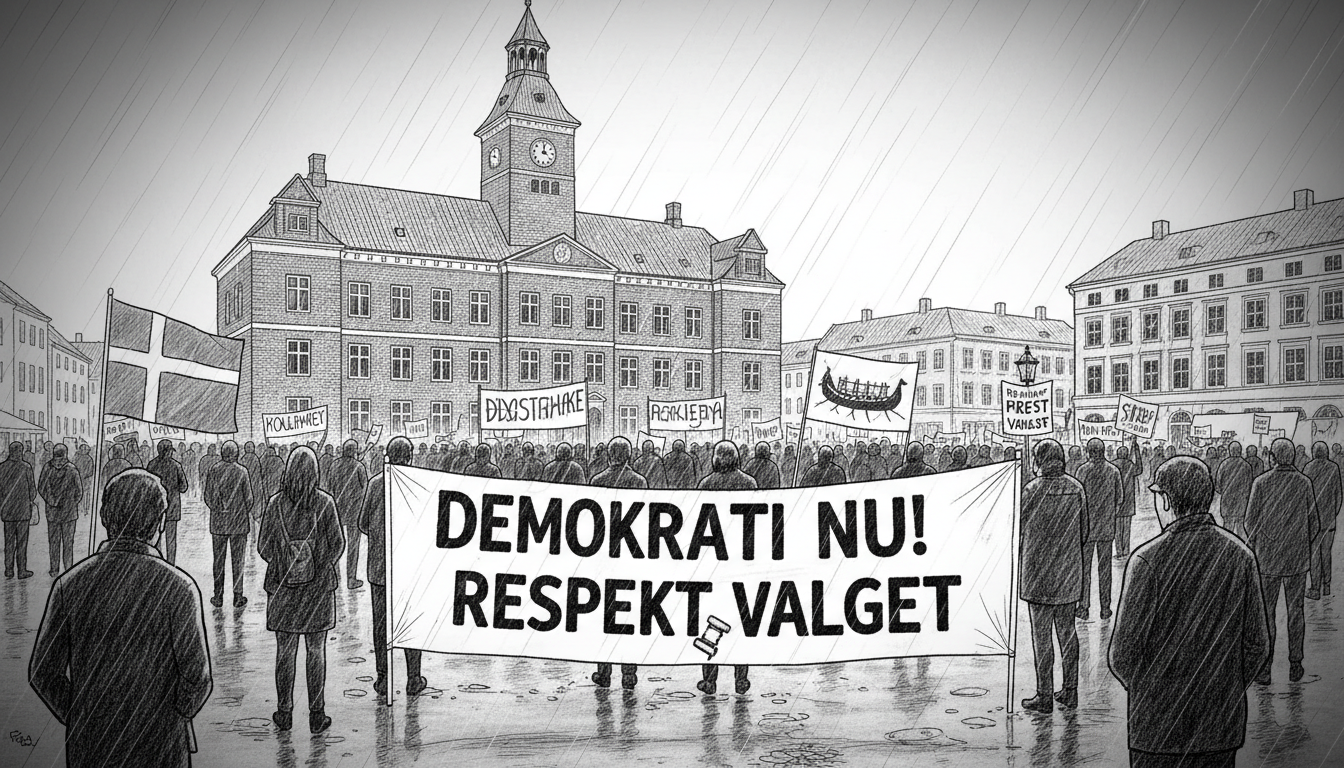
Hundreds of citizens gathered in Ringkøbing Friday afternoon, holding signs that asked why politicians listen so little. They demonstrated against what they call a political coup in their local municipality. The protest highlights growing tensions in Danish society news about how coalition agreements form after elections.
Newly elected council member Mads Fuglede joined the demonstration, telling reporters he would gladly accept the mayor position if it returned to him. His party had initially secured a governing majority with five other parties following the November municipal elections. That agreement would have made him mayor of Ringkøbing-Skjern Kommune.
Then the political landscape shifted dramatically. Two parties left the coalition, destroying Fuglede's majority. A new majority consisting of four different parties then nominated Lone Andersen from Venstre as the incoming mayor. This occurred despite Venstre holding eight council seats while the Conservative candidate nominated for mayor represents just one seat.
Local resident Jakob Arendt Laursen started a Facebook group called Demonstration Against Coup in Ringkøbing-Skjern Kommune. It quickly gained over two thousand followers. The Copenhagen integration model often receives attention, but this western Jutland community shows how local political dynamics create their own integration challenges.
Protesters used gaffer tape over their mouths while carrying signs questioning why politicians bother speaking when they do not listen. This visual protest reflects broader frustrations with Denmark social policy implementation at the municipal level. The Danish welfare system depends heavily on local administration, making these political shifts particularly meaningful for service delivery.
The situation demonstrates how Denmark immigration policy debates often overshadow these crucial local governance matters. Municipal councils make daily decisions affecting integration programs, school resources, and social services. When political agreements collapse so publicly, it undermines public trust in the entire system.
Danish coalition politics frequently produce surprising alliances, but this public demonstration shows citizens will not always accept backroom deals quietly. The protest signals that voters expect transparency in how their elected representatives form governing majorities. This matters because municipal governments administer most social programs affecting daily life.
What happens next in Ringkøbing-Skjern could influence how other municipalities approach coalition building. The public reaction suggests voters want stable agreements that reflect election results rather than post-election maneuvering. This case illustrates why local governance deserves as much attention as national politics in understanding Danish society.