
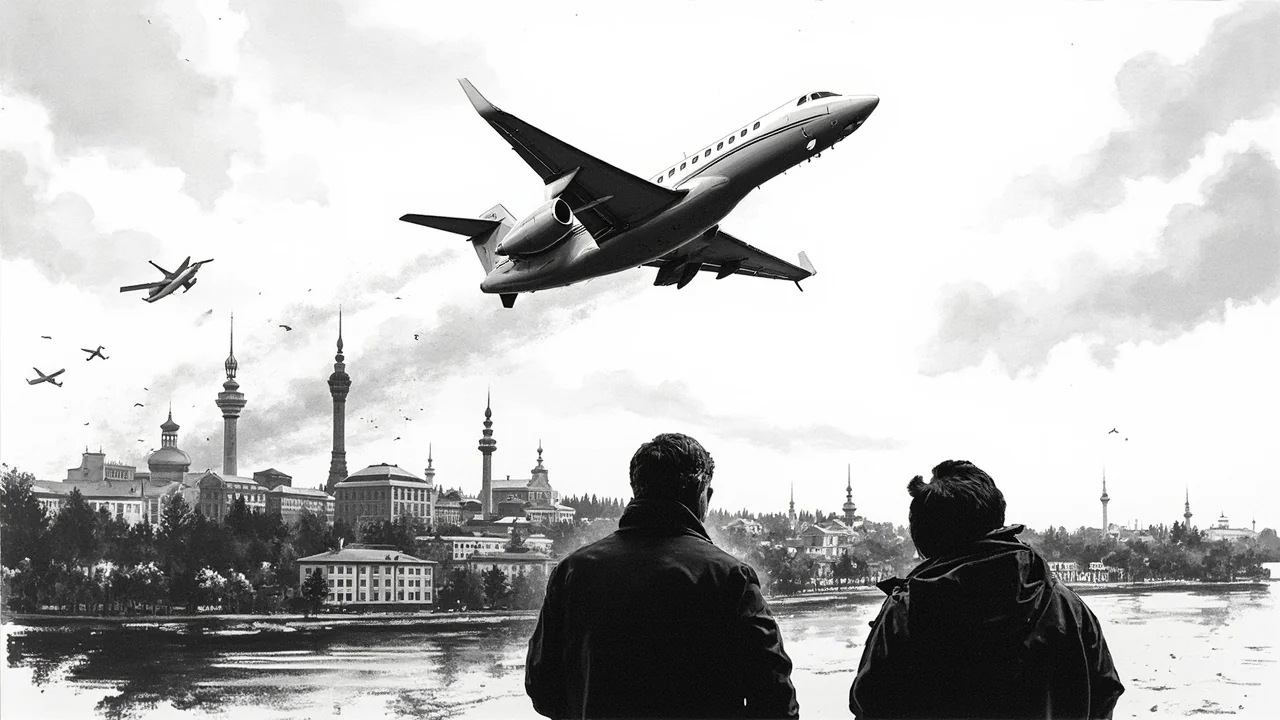
A private jet's emergency climb after takeoff from Stockholm's Bromma Airport forced air traffic controllers to reroute multiple passenger flights, exposing how quickly aviation incidents can cascade through Sweden's busy airspace. Source: Swedish Transport Agency - Aviation.
The September 11, 2024 incident involved an Embraer Praetor 600 carrying five passengers that began climbing at an abnormally steep angle just 10 seconds after departure. The aircraft reached over 20 degrees nose-up compared to the normal 15-degree climb, according to Statens haverikommission preliminary findings.
When private jets meet passenger traffic
The steep climb pushed the jet toward heavily trafficked airspace, triggering a mayday call that rippled through Stockholm's aviation network. Several passenger flights departing from Arlanda were forced to change course due to collision risk, highlighting how Sweden's two main airports share congested air corridors.
Bromma, located just eight kilometers from Stockholm's city center, handles primarily business aviation and domestic flights. But its proximity to Arlanda creates complex traffic patterns where a single aircraft malfunction can disrupt dozens of scheduled departures. The aircraft's flight control system detected a fault and warned the crew, who responded correctly by declaring an emergency.
This wasn't pilot error or weather. The incident reveals how Sweden's compact airspace around Stockholm leaves little margin for error when aircraft behave unpredictably.
Sweden's airspace under pressure
Swedish society increasingly relies on both business aviation and scheduled passenger service, creating traffic density that amplifies the impact of any single incident. Private jets at Bromma and commercial flights at Arlanda operate in overlapping airspace managed by Transportstyrelsen's airspace management protocols, which require advance coordination for any restricted areas.
The September incident demonstrates how quickly aviation emergencies escalate in Sweden's constrained airspace. When one aircraft deviates from its planned flight path, controllers must immediately reroute other traffic to maintain separation standards. This creates delays that cascade through the system, affecting passengers across multiple airlines.
Business aviation movements at Bromma serve executives and wealthy individuals who value the airport's proximity to Stockholm's financial district. Each additional private jet movement increases the complexity of managing traffic flows between Bromma and Arlanda, especially during peak departure windows.
Transportstyrelsen will likely review minimum separation distances between departing aircraft from both airports, particularly for flights that could intersect during emergency climbs. The agency's next airspace management review is scheduled for early 2025.
Read more: Swedish Parents Pay Private Tutors as Schools Fail NPF Kids.
Read more: Stockholm Escalator Crisis Exposes Infrastructure Decay.