
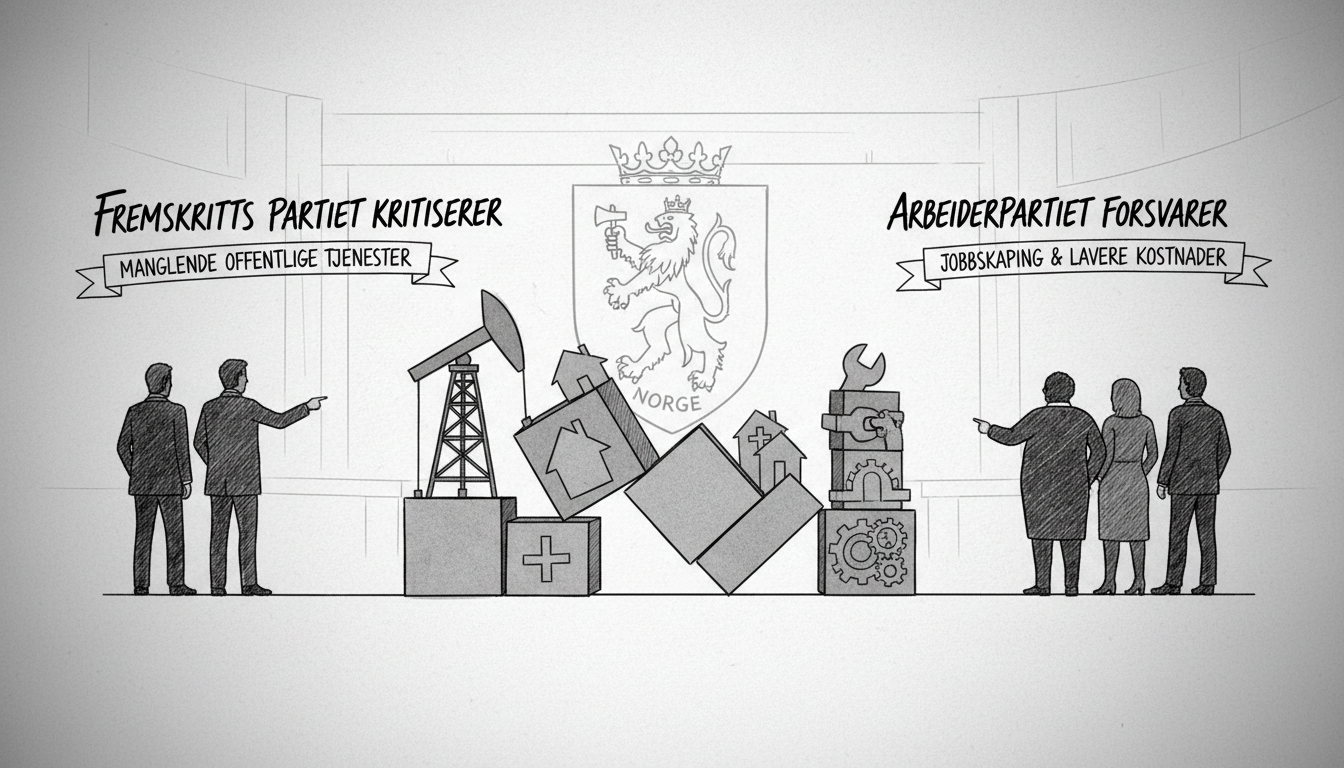
The Norwegian government's proposed state budget for the coming year is facing sharp criticism from the opposition Progress Party. The party's finance spokesperson, Hans Andreas Limi, has challenged the Labor Party's parliamentary leader, Tonje Brenna, over what he calls a lack of clear priorities. This debate highlights a fundamental divide in Norwegian fiscal policy as the Storting prepares for its annual budget review.
Limi argues the budget proposal fails to adequately fund essential public services. He specifically points to planned cuts in hospital funding, elderly care provisions, and the closure of several rural schools. These areas, he contends, are being sacrificed. The Progress Party's position reflects its traditional focus on maintaining and improving core public welfare institutions, even as it advocates for lower taxes.
In response, Labor's Tonje Brenna defended the budget's direction. She stated the financial plan is designed to boost employment and reduce household costs. Brenna highlighted measures like the continuation of the "nordpris" electricity subsidy scheme and reduced fees for public kindergartens as key benefits for Norwegian families. She argued these policies will increase prosperity at the municipal level across the country.
The political clash over the budget is a recurring annual event in Oslo, but this year's debate carries particular weight. Norway's economy faces dual pressures from a transitioning energy sector and global market uncertainty. The government must balance its substantial oil fund wealth, derived from fields like Johan Sverdrup in the North Sea, with long-term fiscal sustainability. Decisions made now impact everything from Arctic infrastructure projects in Finnmark to maritime operations along the Sognefjord.
For international observers, this debate offers a window into Norway's unique political economy. The state budget is the primary tool for redistributing the nation's oil and gas revenues. How these funds are allocated between tax relief, public spending, and the Government Pension Fund Global is a constant source of negotiation. The Progress Party's critique centers on a belief that the current government is not spending wisely enough on the services that directly impact citizens' daily lives.
The coming weeks will see intense committee work in the Storting building. The final budget, typically passed in December, will set Norway's course. Its details will influence energy investments, local government finances from Tromsø to Stavanger, and the nation's economic resilience. The outcome of this political process will demonstrate whether the government can maintain its parliamentary support while addressing the opposition's concerns over core public services.