
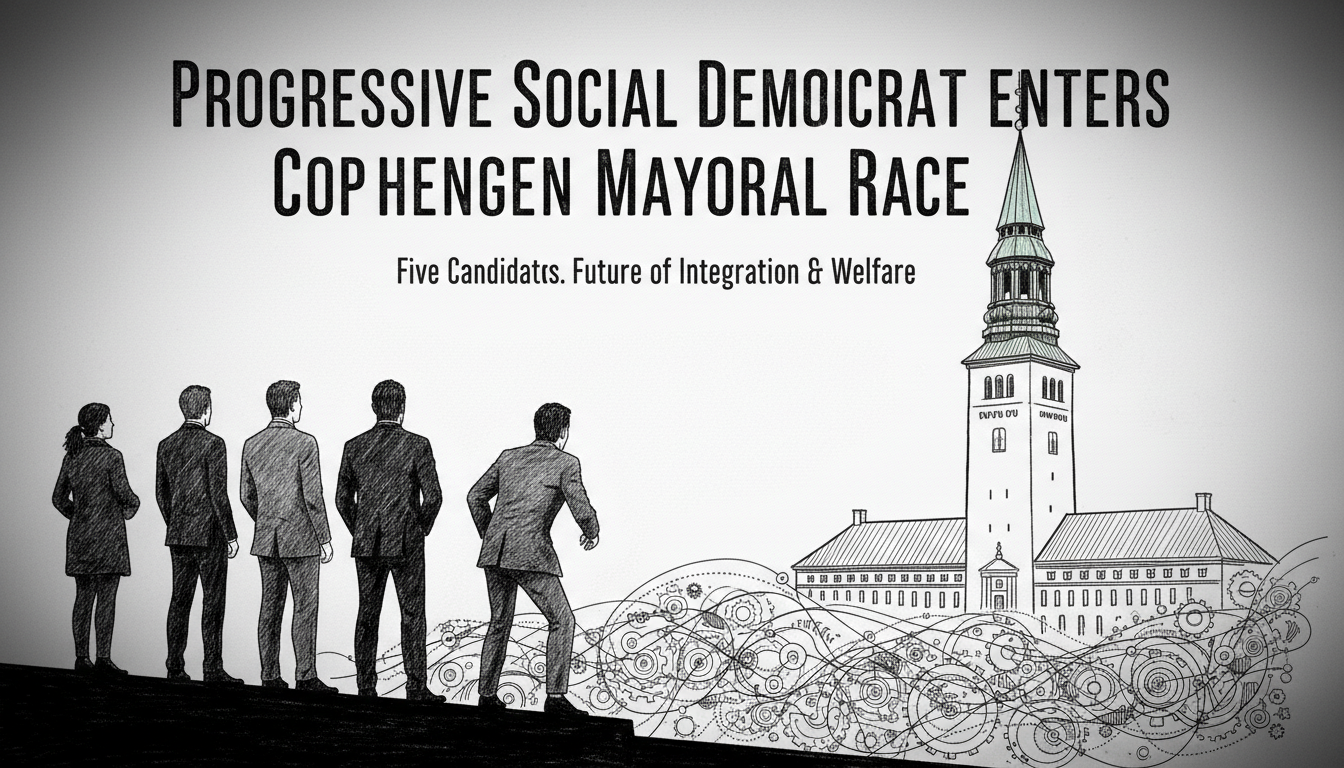
Copenhagen's political landscape grows more crowded as another candidate joins the mayoral contest. Laura Rosenvinge, formerly the Social Democratic political spokesperson in the capital, has declared her intention to become the next mayor. She describes herself as a progressive Social Democrat with left-leaning values. This announcement brings the total number of declared candidates to five.
The entry of a progressive candidate signals shifting dynamics within Danish social policy debates. Copenhagen has long served as a testing ground for integration policies that later spread nationwide. The city's next mayor will inherit responsibility for implementing Denmark's complex immigration framework at the municipal level. They will also oversee the local welfare system that supports both longtime residents and newcomers.
Rosenvinge's background as political spokesperson gives her deep insight into Copenhagen's unique challenges. The city contains neighborhoods with vastly different integration outcomes. Some areas show successful blending of diverse communities while others struggle with social segregation. The next mayor must address these disparities while maintaining Copenhagen's reputation as a welcoming yet orderly city.
Danish municipalities play crucial roles in executing national social policies. Copenhagen's size and visibility make its leadership position particularly influential. The mayor works closely with community centers and local organizations to implement integration programs. These partnerships determine how effectively new residents access education, employment, and social services.
Recent statistics reveal mixed results in Copenhagen integration efforts. Educational attainment varies significantly between immigrant backgrounds and native Danes. Employment gaps persist despite numerous municipal initiatives. The next mayor will need to improve these metrics while managing public expectations about immigration's pace and scale.
Community leaders express cautious optimism about the growing candidate field. More choices might lead to better solutions for Copenhagen's complex social fabric. The election comes amid ongoing national debates about welfare system sustainability. Copenhagen's approach often influences discussions in other Danish cities facing similar challenges.
The progressive candidate's entry reflects broader realignments within Danish politics. Traditional left-right divisions increasingly intersect with urban-rural dynamics. Copenhagen's election may preview trends that will emerge in future national campaigns. The city frequently leads on social innovation while balancing practical governance constraints.
Voters will ultimately decide which vision best addresses Copenhagen's unique position. The city must preserve its social democratic traditions while adapting to demographic changes. The mayor's role requires balancing compassion with administrative competence. This election could determine Copenhagen's direction for years to come.