
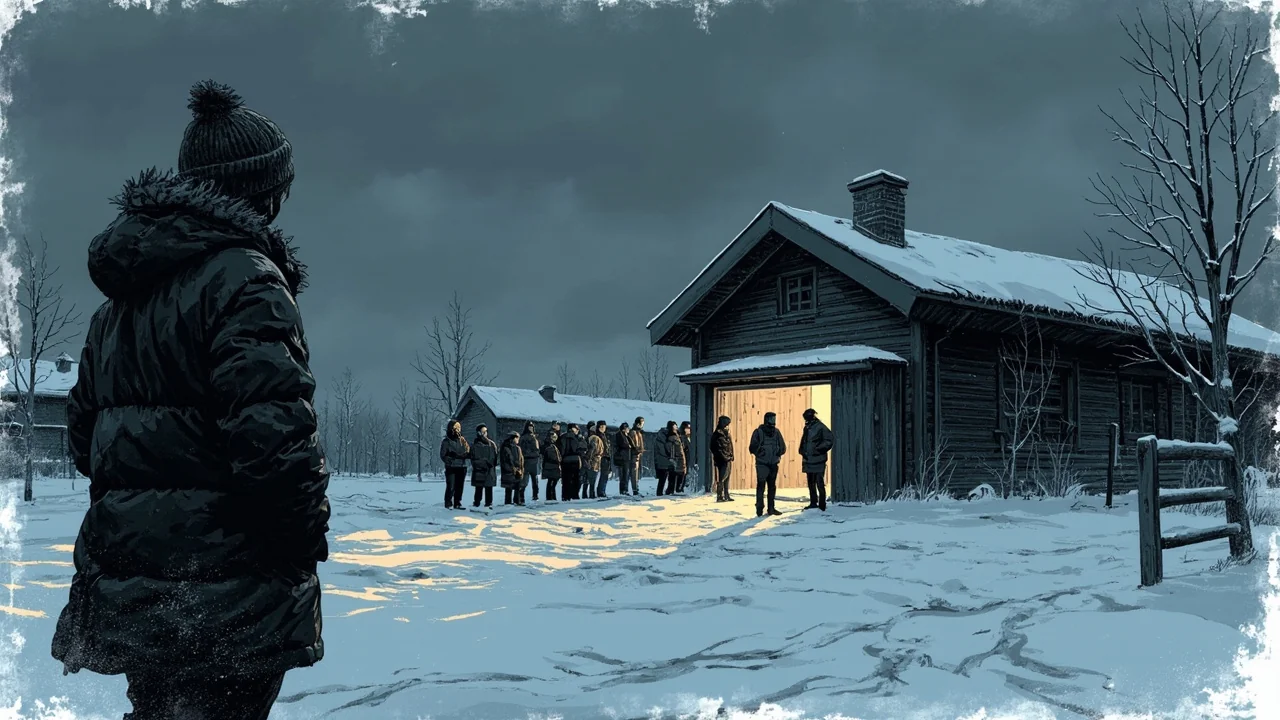
Sweden's government faces mounting pressure on homelessness policy as seasonal shelters report increased demand. The situation at facilities like Vintervilan, now operating year-round as Nattvilan, underscores persistent challenges in Swedish social welfare. Staff describe encountering individuals who have slept in cars for multiple days, highlighting gaps in the national housing safety net. This operational reality contrasts with ongoing Riksdag debates in Stockholm over long-term funding and strategy. The Swedish Parliament has reviewed several motions on homelessness this session, with outcomes heavily influenced by the governing coalition's budget priorities. Policy makers in Rosenbad are currently evaluating the effectiveness of existing initiatives, which often delegate significant responsibility to municipalities. The national strategy, grounded in the 'Housing First' principle, aims to provide permanent homes before support services. Yet frontline workers note immediate shelter needs often take precedence during harsh winter months. Implementation varies widely across government districts, creating a patchwork of local responses to a national issue.
The Frontline Perspective
Keijo Orava, a treatment assistant at the Nattvilan facility, provided a stark assessment of current conditions. 'We had a guy the other day who had slept in his car for three days,' Orava said. His account points to the immediate human impact of systemic housing shortages. Shelter staff operate within a framework established by national policy but are forced to make daily triage decisions. These decisions reflect the tension between strategic goals set in the Riksdag building and the practical realities on the ground. The facility's transition from a seasonal 'Vintervilan' (Winter Haven) to a permanent 'Nattvilan' (Night Haven) indicates a recognition of year-round need. This shift, however, is not uniformly adopted across all Swedish cities, leading to inconsistencies in service provision. Operations rely on a mix of state funding, municipal budgets, and sometimes non-profit contributions, creating complex accountability lines.
Legislative Framework and Gaps
The legal foundation for homelessness action in Sweden stems from the Social Services Act, which mandates municipalities to provide support. National government policy seeks to coordinate these efforts through targeted grants and knowledge-sharing agencies. A recent cross-party committee report, delivered to the Minister for Social Affairs, emphasized strengthening prevention measures. The report suggested amending planning laws to increase the stock of affordable housing, a move that would require Riksdag approval. Historically, Swedish housing policy has undergone significant shifts, from the large-scale Million Programme to today's more market-oriented approach. This evolution has indirectly affected homelessness rates by altering the availability of low-cost rental apartments. Current government policy in Sweden explicitly aims to reduce long-term homelessness but sets no binding national targets for municipalities. This decentralized model is now under scrutiny as urban areas like Stockholm report rising numbers of unsheltered individuals.
Funding Debates in the Riksdag
Allocations for homelessness measures are contested during annual budget negotiations in the Swedish Parliament. The governing coalition must balance this priority against demands for tax cuts and other social spending. Opposition parties frequently table motions calling for increased direct investment in supported housing units. The outcome of these votes often sees proposals amended or referred back to government for further review, a process that can delay implementation. Analysis of recent Riksdag decisions shows that homelessness funding has seen modest nominal increases but has not kept pace with inflation in the construction sector. This effectively reduces the purchasing power of state grants intended to build new accommodation. Furthermore, funds are not always ring-fenced, allowing municipalities discretion to redirect them to other budget areas during fiscal strain.
Bureaucratic Hurdles and Local Implementation
The path from a Riksdag decision to an operational bed at a shelter like Nattvilan is lengthy. Once the national budget is passed, the relevant ministry, often the Ministry of Health and Social Affairs, issues appropriation directions to national boards. These boards, such as the National Board of Health and Welfare, then administer funding to the 290 Swedish municipalities. Each municipal council must then integrate these funds into its local budget and procurement plans. This multi-layered process can add over a year of lead time before new resources reach service providers. During this period, shelters depend on previous years' allocations, which may be insufficient for sudden spikes in demand caused by economic downturns or severe weather. Staff recruitment and retention also pose challenges, as wages in the municipal sector are subject to collective bargaining agreements separate from government policy directives.
Historical Context of Swedish Housing Policy
Sweden's approach to homelessness cannot be divorced from its broader housing policy history. The post-war era of active state investment in public housing created a large stock of affordable rentals. Policy changes in the 1990s, including the introduction of market rents on new construction and reduced production subsidies, began to constrict this supply. The Swedish government's current focus on 'Housing First' aligns with broader European Union recommendations but represents a distinct philosophical shift from earlier models of transitional shelter. This model's success hinges on the availability of permanent housing, a commodity in short supply in major urban areas. Consequently, shelters remain a critical component of the system, acting as a de facto waiting room for individuals navigating complex housing queues and personal support plans.
The Path Forward and Political Will
The ultimate test for Stockholm politics will be translating legislative intent into tangible results. Upcoming debates in the Riksdag will likely center on whether to introduce stronger national standards for municipal homelessness services. Some policy advisors advocate for a clearer statutory obligation, similar to those in the education or healthcare sectors. Others within the government coalition caution against eroding municipal autonomy, a cornerstone of the Swedish administrative model. The Minister for Social Affairs has signaled a review of the coordination between national housing benefits and local social assistance, aiming to reduce bureaucratic traps that can leave people without support. For staff at shelters like Nattvilan, the measure of success is simple: fewer people sleeping in cars. The coming year's budget, currently being drafted within the government offices at Rosenbad, will reveal whether political priorities match this on-the-ground urgency. The effectiveness of Swedish government policy will be judged not just by parliamentary votes, but by the capacity of its coldest cities to offer a warm, safe place for the night.