
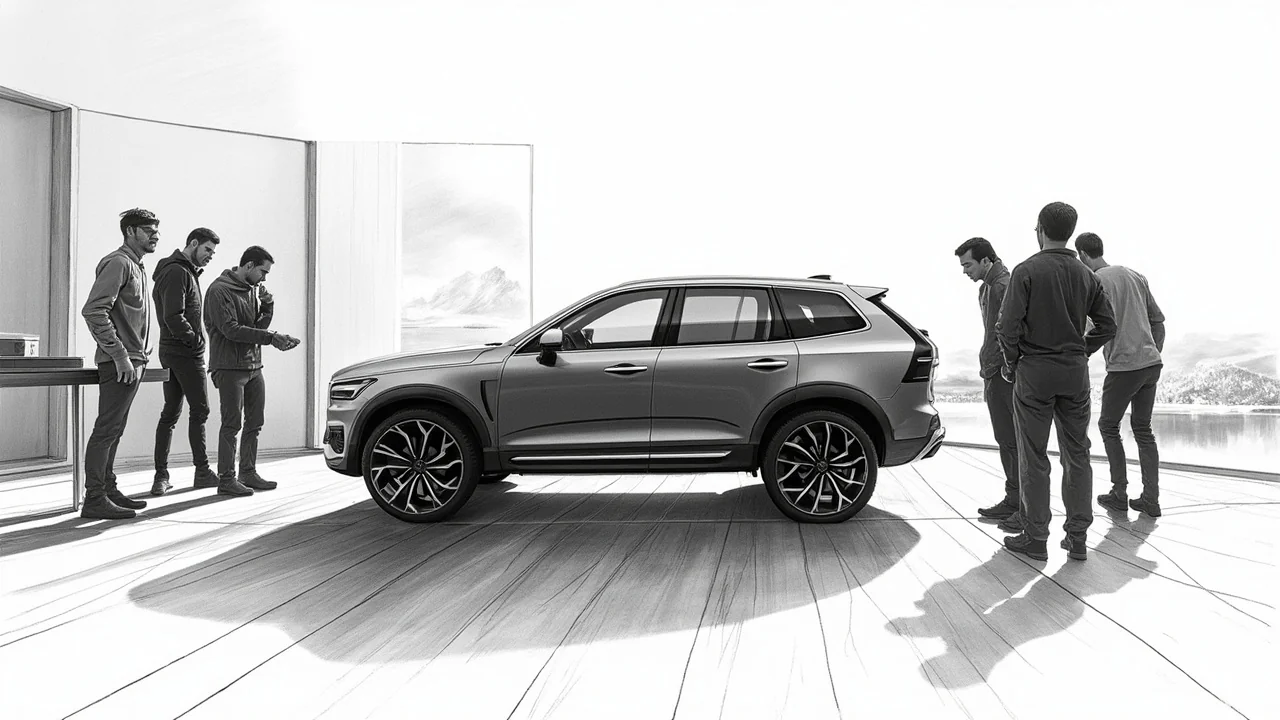
Sweden's automotive future hinges on the launch of Volvo Cars' third-generation electric vehicle, the EX60. Years of development and multi-billion kronor investments at its Torslanda plant culminate in this model, which the company says must become a market success. This launch represents the most significant shift in the auto industry in a century, according to top executives.
Volvo Bets Billions on New Electric SUV
Development chief Anders Bell framed the challenge starkly. "We are facing the biggest shift in the car industry right now, since one hundred years ago when they threw a gasoline engine into a car," Bell said. The EX60 is not merely another new model. For Volvo Cars, it is the definitive test of its complete transition to an electric vehicle manufacturer. The company has staked its reputation and substantial capital on this strategic pivot.
The Torslanda facility, a cornerstone of Sweden's industrial west coast, has been the focus of this transformation. Retooling and preparing for the EX60's production required extensive re-engineering of both the physical plant and the workforce's skills. The investment figure, while not publicly itemized for the EX60 alone, is part of Volvo Cars' broader multi-billion dollar global electrification strategy.
Torslanda's $1.3 Billion Transformation
Volvo Cars' commitment to Torslanda is a long-term pledge to Swedish manufacturing. In recent years, the company announced a SEK 10 billion investment to prepare the plant for next-generation electric car production. This overhaul includes introducing mega-casting of aluminum body parts, a new battery assembly plant, and fully renovated paint and final assembly shops.
This investment secures thousands of direct jobs at the site and supports a vast network of Swedish suppliers across sectors from steel to software. The EX60 is the first product to fully emerge from this transformed industrial complex. Its success or failure will directly impact the economic health of the Gothenburg region and the broader Swedish automotive ecosystem.
The production of the EX60 symbolizes a bridge from Sweden's industrial past to its technological future. It moves Volvo from modifying traditional platforms for electric power to creating a vehicle conceived as electric from the ground up. This approach is critical for achieving the efficiency, performance, and cost parameters needed to compete with established EV leaders and new entrants.
Industry Shift Bigger Than Gasoline Engine
Bell's comparison to the dawn of the gasoline era is not hyperbole within the industry. The transition from internal combustion engines to electric powertrains represents a fundamental rethinking of the automobile. It changes core components, supply chains, manufacturing processes, and even the skills required to design and build cars.
For Volvo, a brand synonymous with safety and Scandinavian design, the EX60 must prove it can translate those core values into the electric age. The vehicle must attract customers not just from traditional luxury competitors but also from pure-electric brands that have captured market imagination. This requires flawless execution on range, charging speed, software, and overall user experience.
The global automotive market is increasingly crowded with electric models. Volvo's strategy involves leveraging its safety credentials and brand loyalty while racing to match the technological pace set by others. The EX60 enters a fiercely competitive segment where consumers have growing expectations for innovation, sustainability, and digital integration.
A Test for Swedish Industrial Policy
The EX60 project is more than a corporate product launch. It is a live test of Sweden's ability to maintain a high-tech, high-wage manufacturing base in a global industry undergoing seismic change. Government policies on energy, infrastructure, education, and innovation all play supporting roles in this industrial drama.
Sweden's ambitious climate goals, which include phasing out fossil-fuel vehicles, create a domestic policy environment aligned with Volvo's strategy. However, the final judge is the international consumer. The EX60 must win in markets from Oslo to Shanghai, where subsidies, tariffs, and local competitors create complex commercial landscapes.
Success for the EX60 would validate Sweden's industrial and environmental strategy, reinforcing its position as a green tech hub. It would demonstrate that a legacy automaker can reinvent itself. Conversely, a market failure would raise serious questions about the pace and cost of the transition, with significant ramifications for national employment and economic strategy.
The Road Ahead for Volvo and Sweden
All eyes within the Swedish business community are on Torslanda as EX60 production ramps up. The coming months will involve rigorous quality checks, supply chain validation, and final preparations for the first customer deliveries. Volvo's marketing machine will soon shift into high gear to introduce the world to this crucial vehicle.
The company has not disclosed specific sales targets, but the pressure is implicit. The EX60 must achieve strong volumes and healthy profit margins to justify the historic levels of investment. It must also earn critical acclaim to bolster the Volvo brand's prestige in the electric era.
For Sweden, the EX60 is a symbol of national industrial resilience. Can a company, and a country, known for pragmatic engineering and design elegance master the software-driven, battery-powered future of mobility? The answer will soon be driving on roads worldwide, carrying the hopes of an entire industrial ecosystem on its aluminum chassis.