
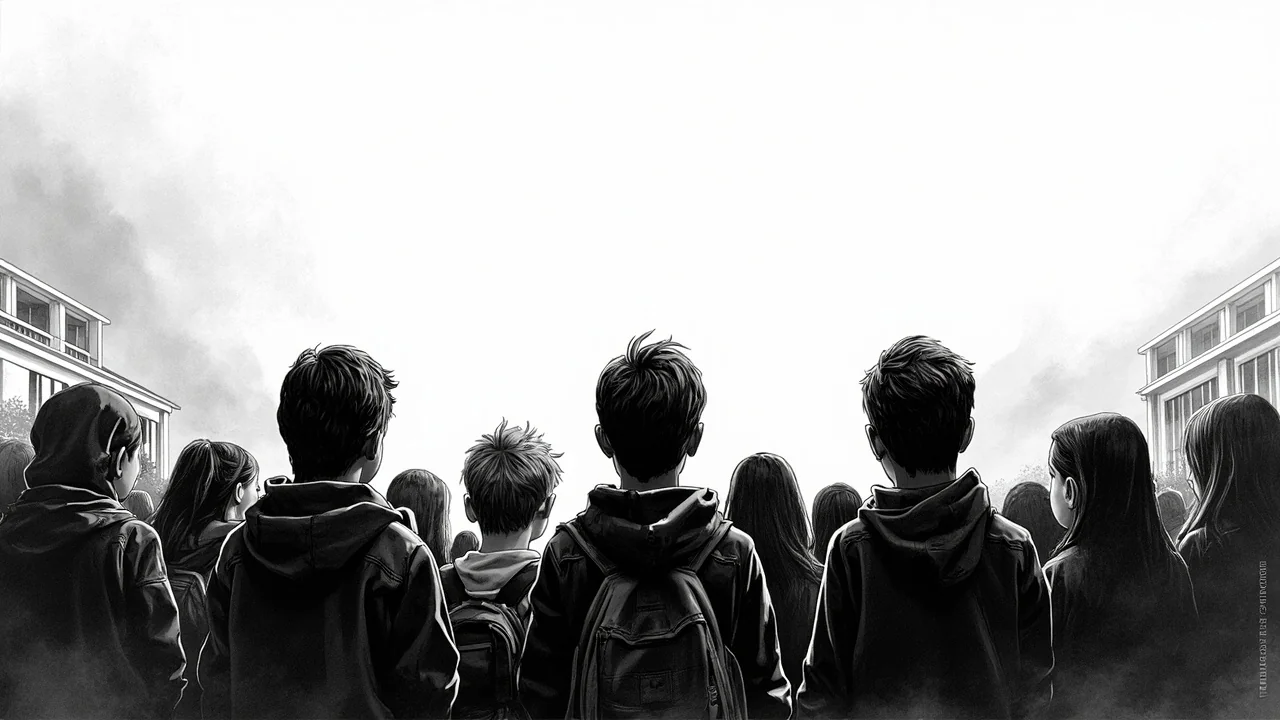
Sweden's growing gun violence crisis drew thousands, including children and politicians, to a major rally in Stockholm this weekend. The 'Det räcker' (It's Enough) gala at 3Arena in Johanneshov gathered artists, associations, and politicians from across the spectrum, creating a public forum for collective mourning and a demand for change. For many young attendees, the event was their first direct engagement with national politics, framed by personal fear and loss. Their presence underscored a deepening public anxiety that is now pressing upon the Swedish government and Riksdag decisions in Stockholm politics.
A Gathering for Grief and Hope
Buses brought school groups from across the country, turning the event into a field trip with a profound purpose. Sandra, a teacher from Pilträdsskolan in Västerås, arrived with two entire year groups. 'We are also here to honour all those killed in the violence,' she said, framing the journey as both civic education and memorial. Inside the arena, the atmosphere shifted between concert-like energy and solemn remembrance. For 14-year-old Aloniab, the motivation was clear. He said he thought about the dead and believed gathering together was important. 'It might help,' he stated, capturing the tentative hope of the day.
The Need to Process Collective Trauma
Alongside the children, many adults attended, emphasizing the event's role in processing widespread trauma. Tina Qvist from Stockholm Västerort queued at the entrance with her friend Pirko Ryyti. 'You get out of the paralysing swamp,' Qvist explained. 'Someone starts something and you join in – that’s what you want.' Ryyti highlighted the psychological dimension, noting, 'Yes, and also to process trauma. Many are living in trauma after what has happened. We need to see those who are mourning.' Their comments pointed to a societal need that extends beyond specific government policy in Sweden, touching on communal healing.
Children Address the Powers in Rosenbad
The political undercurrent of the gala became explicit when 13-year-old Maha sought out a television camera. Her message was direct and aimed at the highest levels of the Swedish Parliament. 'The government should do more,' she said. 'It’s their job, like.' When asked if children themselves could do anything, her response implicitly challenged the adult world to create safer conditions. This sentiment echoed in the curated political discussions held during the event. Social Minister Jakob Forssmed (Christian Democrats) and Social Services Minister Camilla Waltersson (Moderates) were among the speakers addressing invited politicians, municipal officials, and civil society representatives.
A Call for a Broader Movement
The official program aimed to translate emotion into action, seeking to build bridges between citizens and the state apparatus based in Rosenbad and the Riksdag building. Sweden's Children's Ombudsman, Juno Blom, issued a clear call during the talks. 'We need a popular movement,' Blom stated. When questioned about public fear of criminals, Blom reframed the issue towards prevention. 'It’s about seeing children’s vulnerability long before they become criminals and about being secure adults.' This perspective aligns with long-term policy approaches debated within government districts, focusing on early intervention rather than solely on law enforcement.
Royal Endorsement and Political Unity
The late participation of Queen Silvia added a layer of national significance to the event, symbolizing a unity of concern that transcends daily political battles. Her presence, alongside government and opposition figures, suggested the issue of gun violence is achieving a rare consensus in Swedish public life. However, the gala itself remained an expression of civil society initiative, founded by Sebastian Stakset. It showcased a model where public pressure is organized not through protests outside the Riksdag, but through cultural gathering and direct appeal.
From Arena Platforms to Policy Papers
The ultimate question hanging over the emotionally charged day is how the energy in the arena translates into concrete Riksdag decisions. The participation of ministers Forssmed and Waltersson indicates recognition from the current Swedish government of the event's symbolic weight. The challenge they and their colleagues face is converting the collective plea from children like Maha and Aloniab into effective, funded legislation. This involves complex debates over policing, social services, youth programs, and international cooperation—debates that are detailed in dry policy memoranda far from the concert lights.
The Unmeasured Impact of Public Sorrow
While the gala may not yield an immediate shift in government policy in Sweden, its impact lies in altering the public narrative. It made grief visible and gave a platform to those most affected yet often least heard: the young. By bringing schoolchildren to the heart of the conversation, the event invested in future civic engagement. The message from Sweden's youth is now on record, delivered not in a classroom but on a national stage. Their attendance, paid for by their schools, marks a formal recognition by local institutions that this violence is a central issue in their students' lives. The Swedish Parliament and the government in Stockholm now operate with the knowledge that a generation is watching, waiting to see if their simple plea—'It might help'—proves true.