
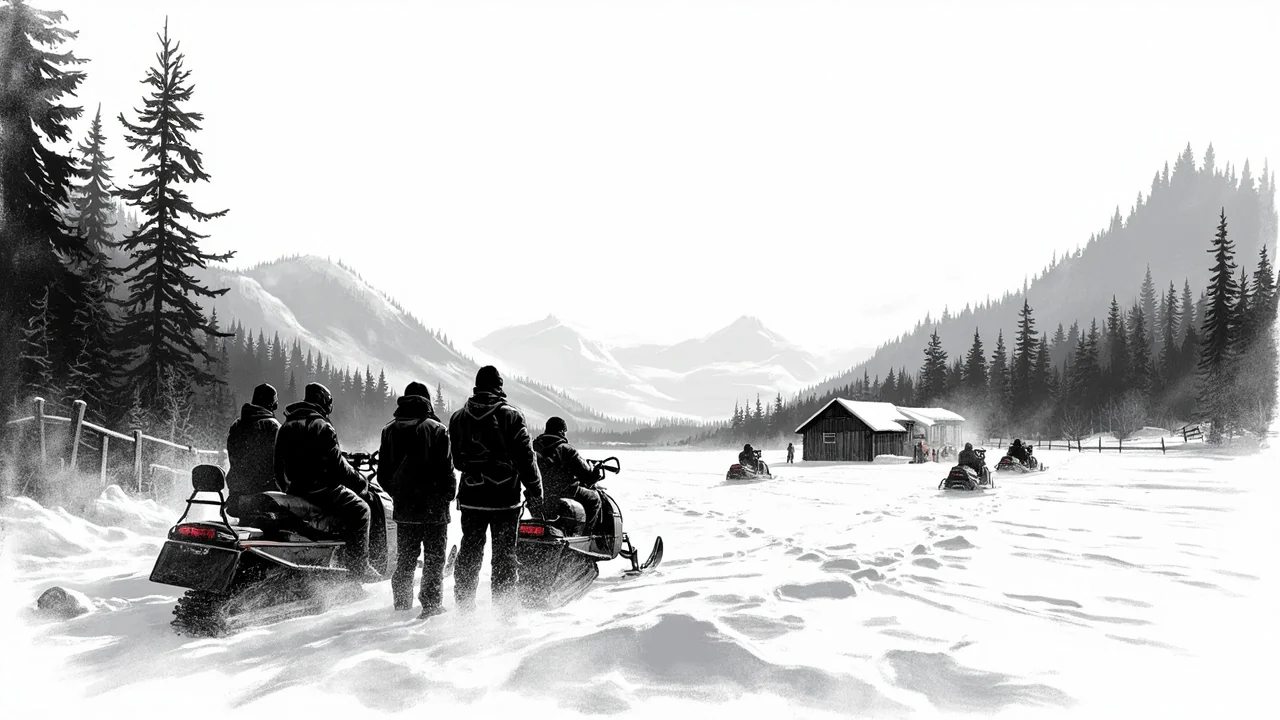
Swedish Lapland's mountain villages are caught between a tourism boom and recreational chaos as record snowfalls bring both economic relief and conflict. Residents in Saxnäs, Kittelfjäll, and Borgafjäll report snowmobilers increasingly trespassing on private land, in nature reserves, and on public roads, flouting existing laws. The situation has sparked a debate about enforcement and community responsibility in Sweden's vulnerable Arctic region.
Economic Boost Versus Community Strain
Heavy snow in recent weeks has transformed the southern Lapland landscape, drawing large numbers of skiers and snowmobile enthusiasts. For local businesses, the influx is a vital economic lifeline after a quiet period. "It has been very clear that the snow makes a difference," said Lotta Bergström, who runs a restaurant in Kittelfjäll. "January is usually the calmest month, but now we need to strengthen our staffing and hire more people." Many accommodations are fully booked, indicating strong seasonal tourism. This economic activity is crucial for remote communities where winter tourism sustains the local population year-round.
However, the surge in visitors has created significant problems. A notable portion of snowmobile activity is occurring illegally. Residents and cabin owners are raising alarms on social media and through local networks about reckless riding and property violations. The core issue is not a lack of rules, but a failure to adhere to the comprehensive regulations already governing off-trail riding, protected areas, and noise levels. The Swedish Environmental Protection Agency (Naturvårdsverket) maintains clear restrictions on motorized traffic in sensitive environments to protect flora and fauna.
A Call for Responsibility and Police Presence
Rickard Lövgren, a well-known snowmobile enthusiast from Saxnäs, embodies the internal conflict within the riding community. He passionately advocates for the freedom of the activity but condemns the current infringements. "I am passionate about free riding, but this is not okay," Lövgren stated. He expresses skepticism that further prohibitions would solve the problem. Instead, he emphasizes self-policing and greater visible enforcement. "The problem is that some do not follow the rules that already exist, and it creates an impression that this is lawless land. So it would be good if the police showed up more often," he argued.
This sentiment reflects a broader desire for accountability. Lövgren believes the snowmobile community itself must take greater responsibility to curb the behavior of a disruptive minority. His stance highlights a potential path forward that relies on peer pressure and education within the riding groups, combined with a stronger deterrent from authorities. The goal is to preserve access to the terrain for responsible riders while protecting the rights of residents and the integrity of the environment.
Police Response and Enforcement Challenges
Police in southern Lapland have acknowledged the increased strain. Over the recent weekend, officers patrolled the terrain, reporting snowmobilers for offenses including driving under the influence and other finable violations. "The patrols have had a lot to do, and we are trying to do what we can," said Louise Karlsson, group leader for the police in southern Lapland. Her statement underscores the resource challenge faced by law enforcement in covering vast, remote areas. Targeted patrols are effective but limited in their scope and frequency.
The police actions confirm that legal mechanisms exist to penalize offenders. Charges for drunk driving on snowmobiles carry serious consequences, similar to automotive offenses. Other common violations include riding on prohibited land, which can result in substantial fines. However, the vast geography of Lapland makes consistent, comprehensive patrols logistically difficult and expensive. This enforcement gap is what frustrates residents and responsible riders alike, as illegal activity often goes unchecked.
The Broader Context of Swedish Outdoor Access
This conflict sits at the intersection of Sweden's "Allemansrätten" (the Right of Public Access) and the need for specific regulations to manage modern recreational vehicles. The traditional right of access allows for freedom to roam but comes with the obligation to not disturb or destroy. The use of powerful snowmobiles tests these principles, as their impact on private property, wildlife, and tranquility is more significant than that of a hiker or skier. Municipalities and county administrative boards often delineate specific trails and zones for snowmobile use to mitigate conflict.
Local political bodies in these regions must constantly balance promoting tourism, which brings essential revenue, with preserving the quality of life for permanent residents and protecting the natural environment. Decisions about trail maintenance, signage, and funding for enforcement are often debated in municipal councils. The current crisis may prompt a review of how resources are allocated, possibly leading to increased coordination between tourism boards, police, and environmental agencies.
Searching for a Sustainable Solution
The path forward for Swedish Lapland's mountain communities is complex. A purely punitive approach risks alienating the tourism sector that these areas depend on. Conversely, a lack of action erodes resident goodwill and threatens environmental values. Potential solutions likely involve a multi-pronged strategy. Increased investment in marked and maintained trails could provide clear, legal alternatives for riders. Enhanced signage about rules and sensitive areas is a basic but often overlooked measure.
Greater collaboration between tour operators, local snowmobile clubs, and authorities to promote responsible riding ethics could have a significant impact. Many riders may simply be unaware of specific local boundaries. Furthermore, strategic increases in police patrols during peak weekends, possibly funded through tourism revenues or municipal budgets, could provide the visible deterrent that residents like Rickard Lövgren are calling for. Technology, such as designated GPS routes shared via apps, could also guide riders away from prohibited zones.
The coming weeks will be critical. As the winter season continues, the pressure on the landscape and communities will remain. The response from local government, police, and the snowmobiling community itself will set a precedent for future winters. Will Swedish Lapland find a model that safeguards its unique social and natural environment while embracing the economic benefits of Arctic recreation? The answer will determine the character of these mountain villages for years to come.