
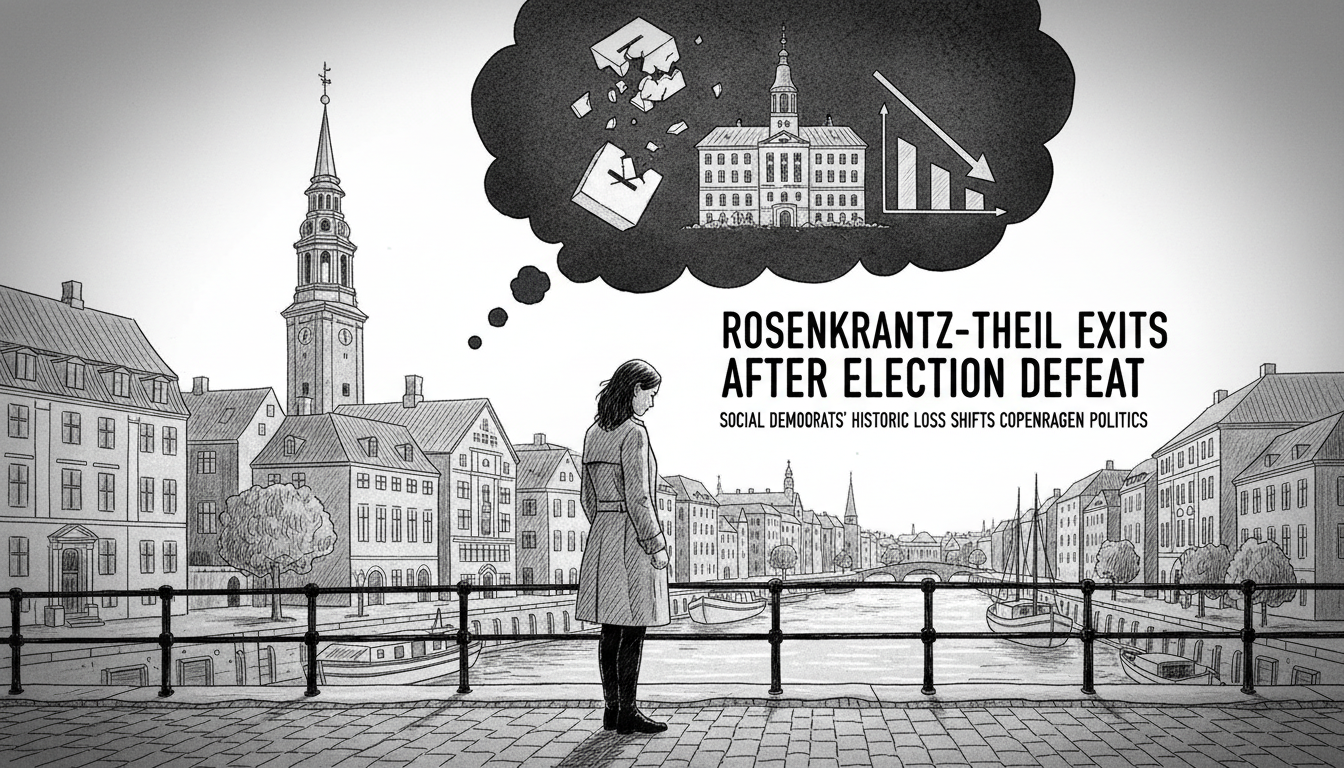
Pernille Rosenkrantz-Theil has formally withdrawn from Copenhagen's City Council. The former Social Democratic candidate for Lord Mayor will leave municipal politics entirely. Niels E. Bjerrum, as first substitute, will assume her council seat. This move follows a dramatic election loss that reshaped Copenhagen's political landscape.
The Social Democrats secured only 12.7 percent of the vote in the capital. Both the Socialist People's Party and the Red-Green Alliance finished ahead of them. This result marked a historic shift in a city the Social Democrats have governed for over a century. The party was not even invited to coalition negotiations after the vote.
Rosenkrantz-Theil initially cited the poor election result as her reason for leaving. She later changed her explanation to unspecified personal reasons. This lack of clarity has fueled discussion about the party's internal dynamics. Her departure represents a significant generational shift within Copenhagen's Social Democratic ranks.
The implications for Copenhagen integration policy are now a central question. The Social Democrats have long shaped the city's approach to social services and community cohesion. Their absence from the ruling coalition could signal a change in direction. New Lord Mayor Sisse Marie Welling from the Socialist People's Party will set the new agenda.
This political transition occurs amid ongoing debates about the Danish welfare system. Copenhagen faces specific challenges with housing, education access, and employment for new residents. Municipal social centers play a crucial role in these efforts. The change in leadership may bring different priorities for these local institutions.
Statistics from recent years show mixed results in urban integration metrics. Educational attainment gaps and employment rates remain key focus areas. The new political configuration must address these complex issues. Community leaders are watching closely to see how policy will evolve.
What does this mean for Denmark's social policy direction? Copenhagen often serves as a national laboratory for new approaches. A center-left coalition without the traditional leading party is unusual. This could test new models for service delivery and community engagement.
The personal impact of such a political exit should not be overlooked. Rosenkrantz-Theil's career in public service has ended abruptly. Her experience highlights the intense pressures of Danish political life. It also shows how quickly electoral fortunes can change in a multiparty system.
Looking ahead, Copenhagen's government will operate without its historically dominant party. This creates both uncertainty and opportunity for innovation in local governance. The coming months will reveal how this new coalition manages the city's diverse needs. The focus will likely remain on practical solutions that resonate with Copenhagen's voters.