
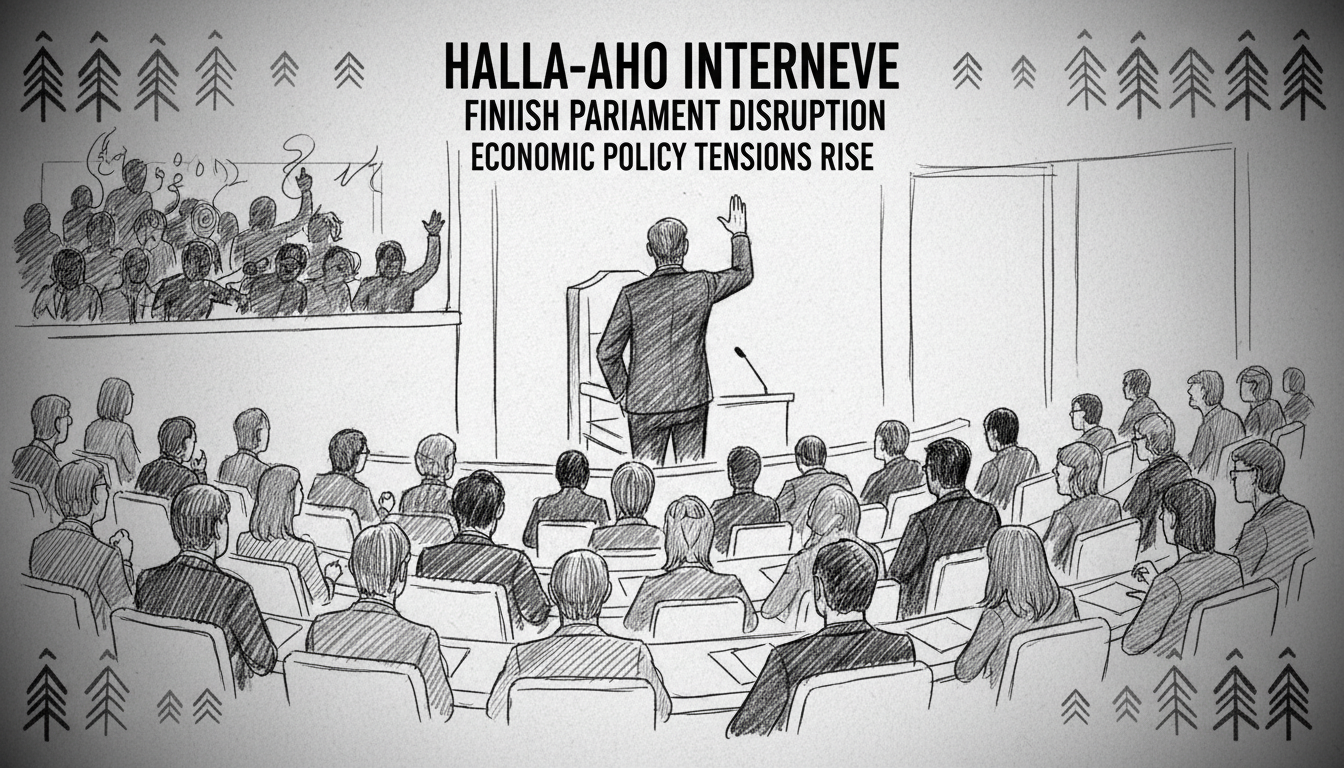
A rare public intervention by Speaker of Parliament Jussi Halla-Aho marked a tense parliamentary question time in Helsinki. Halla-Aho, a member of the Finns Party, directly addressed spectators in the public gallery following a speech by Prime Minister Petteri Orpo of the National Coalition Party. The Speaker reminded the audience that demonstrations of support are not tolerated within the parliamentary chamber. The exact nature of the outburst from the gallery remains unclear from the official parliamentary video record, though members of parliament later indicated they heard applause.
This incident occurred against a backdrop of unusually somber debate. Opposition parties had launched sharp criticisms of the center-right coalition government's economic policies. They focused on rising unemployment figures and the nation's growing public debt. The atmosphere in the Eduskunta, Finland's parliament, was charged with political friction before the gallery's reaction prompted the Speaker's reprimand.
Prime Minister Orpo's speech preceding the interruption struck a contrasting tone. He asserted that Finland's foundations remain strong, with excellent companies, skilled workers, and functional infrastructure. Orpo called for a collective spirit to steer the country toward economic growth, even suggesting a temporary political truce in the spirit of the coming holiday season. His appeal for unity was met with the audible reaction that led to Halla-Aho's disciplinary action.
Historical context is important here. Public galleries in the Eduskunta are typically reserved and orderly spaces. Direct interventions by the Speaker to quiet spectators are exceptionally rare events in modern Finnish politics. This breach of decorum highlights the heightened political tensions surrounding Orpo's coalition government. The government, which includes the Finns Party, the National Coalition Party, and the Swedish People's Party, is navigating complex economic challenges and contentious social reforms.
The incident also underscores the unique role of the Speaker in Finland's parliamentary system. The Speaker is tasked with maintaining order and neutrality, a role that becomes critically visible during periods of deep political division. Halla-Aho's own political background as a former leader of the populist Finns Party adds a layer of complexity to his non-partisan enforcement of chamber rules. His action demonstrates a strict adherence to parliamentary protocol over any potential partisan sympathy.
For international observers, this event signals that Finnish politics, often perceived as consensual, can exhibit raw and confrontational moments. The stability of the Nordic model is being tested by economic pressures. The government's austerity measures and welfare reforms are creating clear fault lines. The public gallery's reaction, though minor, is a tangible symptom of broader societal debates over the country's direction. The coming parliamentary votes on the state budget and social security reforms will likely further test chamber discipline and public sentiment.
What happens next involves close observation of Eduskunta proceedings. The Speaker's authority has been asserted, but the underlying political conflicts remain unresolved. The coalition government must continue its legislative agenda while managing both opposition criticism and the public's visible frustration. This episode serves as a reminder that even in a system known for its decorum, political passions can surface in unexpected ways.