
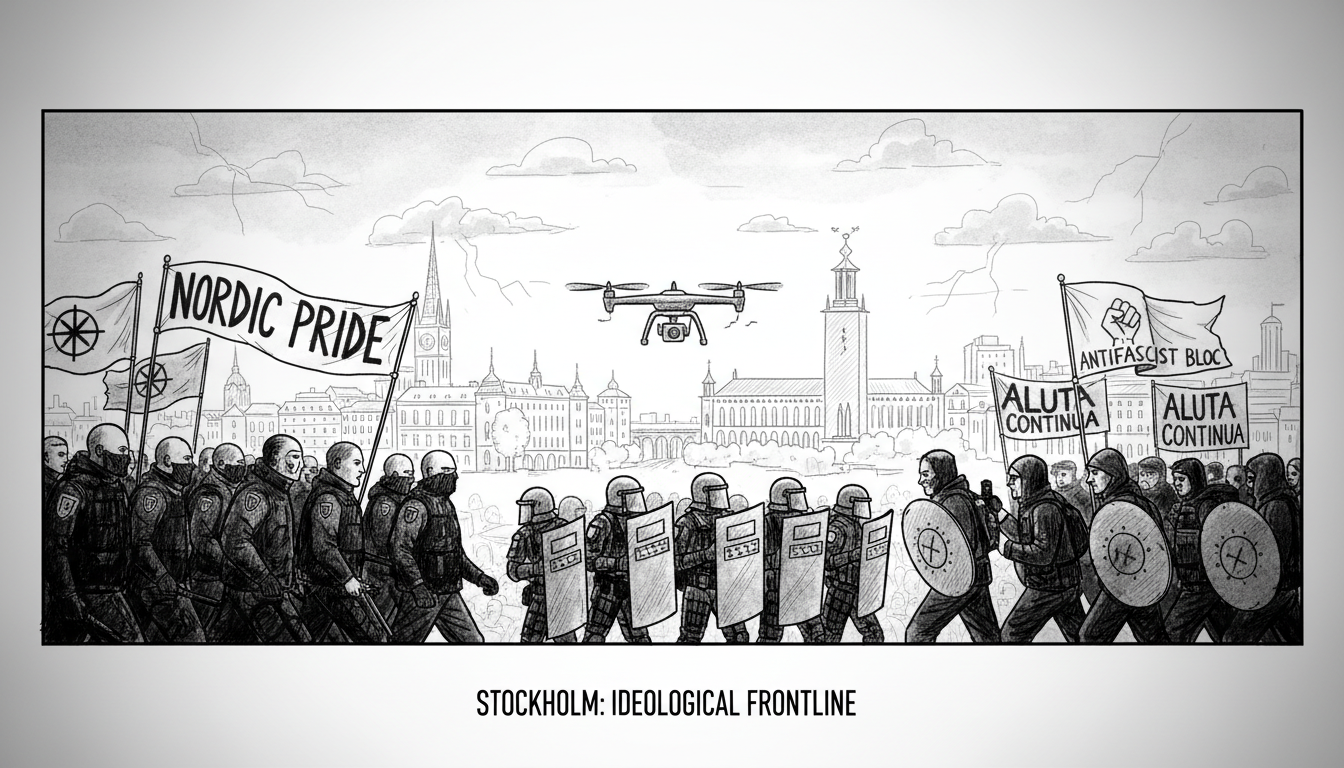
Stockholm's government districts face heightened security preparations this weekend as rival political groups plan competing demonstrations. The Swedish government monitors potential public order challenges surrounding historical commemorations. Police authorities confirmed special resource allocation for maintaining order during these events.
Aktivklubb Sverige, a violent neo-Nazi organization, announced plans for unspecified actions in central Stockholm. The group failed to apply for required police permits according to official statements. Police spokesperson Robert Sennerdal confirmed officers monitored approximately seventy participants in an unauthorized gathering through central Stockholm streets. No public order disturbances occurred during this unsanctioned event.
Alternative for Sweden, a far-right political party, received official permission for a Sunday torchlight procession. Their demonstration honors King Charles XII who died during the 1718 siege of Fredriksten Fortress in present-day Halden, Norway. This annual commemoration consistently draws competing political responses across the Swedish political spectrum.
Police simultaneously approved an antifascist counter-demonstration in adjacent areas with staggered timing. Authorities implemented camera surveillance and dedicated police resources for Sunday's events according to spokesperson Rebecka Landberg. The Riksdag building and surrounding government districts remain focal points for such politically charged gatherings.
Swedish Parliament procedures require formal permit applications for public assemblies under the Public Order Act. The Swedish government maintains strict neutrality in permitting decisions while ensuring public safety. Recent Riksdag decisions have strengthened police authority to intervene when demonstrations threaten public order.
Stockholm politics frequently confronts these competing historical interpretations through demonstration culture. King Charles XII remains a contested figure between nationalist groups and anti-fascist movements. Government policy Sweden mandates that police balance free assembly rights with public safety concerns.
Police methodology typically separates opposing demonstrations by time and location. This approach prevents direct confrontation while allowing competing voices expression. Stockholm's experience with politically charged demonstrations informs current security preparations.
International observers should understand Sweden's demonstration culture reflects deeper political divisions. The Swedish government consistently upholds constitutional assembly rights while maintaining public order. These competing events demonstrate ongoing ideological conflicts within Swedish society that periodically surface in Stockholm's public spaces.