
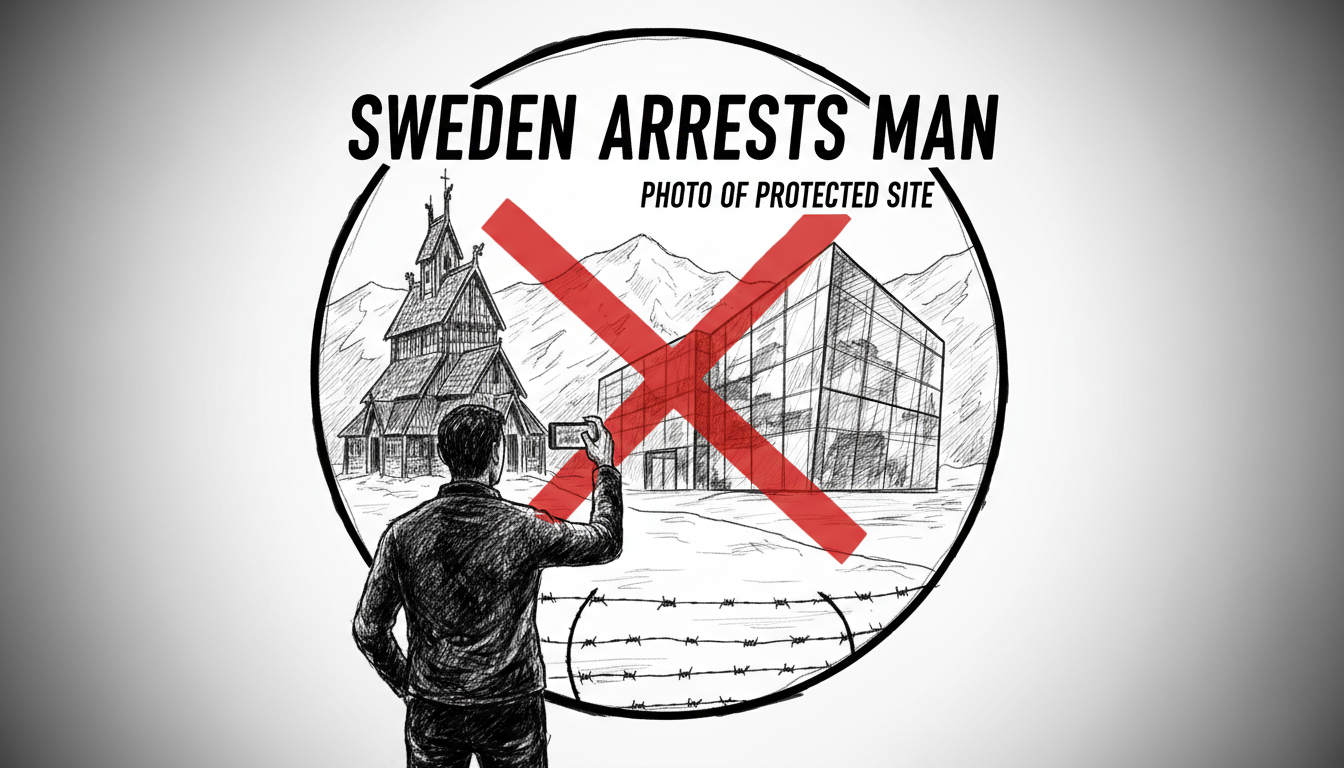
Swedish police arrested a man on Sunday evening for the unlawful depiction of a protected object. He was suspected of taking photographs of Nackamasterna, the iconic radio and television towers in Nacka, east of Stockholm. The incident throws a spotlight on Sweden's stringent but often invisible security laws.
“We are investigating the circumstances at the site, we are interviewing witnesses and conducting technical investigations. The suspect will also be interrogated in the presence of a public defender,” said assistant prosecutor Johanna Hellsten, who is leading the preliminary investigation, in a press statement. Her words confirm a serious legal process is underway.
The Arrest at Nackamasterna
The arrest happened quietly on a Sunday evening. Nackamasterna, a cluster of tall masts visible from much of eastern Stockholm, are more than just landmarks. They are classified as a 'skyddsobjekt'—a protected object. This status is due to their critical role in broadcasting radio and television signals across the region. Their function makes them part of Sweden's essential infrastructure, akin to power plants or certain communication hubs. Unauthorized photography here is not a trivial matter. It falls under the Protection Act (skyddslagen), legislation designed to safeguard national security by preventing espionage, sabotage, and the gathering of sensitive intelligence.
For many Stockholmers, the towers are simply part of the skyline, seen from Södermalm or while driving along the Nacka roads. The idea that photographing them could lead to arrest feels alien in a society renowned for its openness and public access to nature. Sweden's allemansrätten, or right of public access, allows people to roam freely, even on private land. This creates a stark cultural and legal contradiction when a familiar structure is suddenly off-limits.
Understanding the Protection Act
The legal provision in question is 'olovlig avbildning av skyddsobjekt'. This translates directly to 'unlawful depiction of a protected object'. It covers photography, filming, mapping, or any form of recording. The law exists for a clear reason: to deter hostile actors from collecting information that could be used to damage or disrupt vital services. A conviction can lead to fines or even imprisonment, though sentences vary based on intent and circumstance.
Legal experts point out that these cases are rarely straightforward. “The challenge for prosecutors is often proving intent,” explains a Stockholm-based legal analyst familiar with security law, who spoke on background. “Was the person a tourist taking a sunset photo, an enthusiast documenting architecture, or someone with a more sinister purpose? The law requires careful interpretation. Merely being present with a camera is not automatically a crime, but the burden is on the individual to demonstrate a legitimate purpose if challenged.”
This incident is not an isolated one in the Nordic region. Similar arrests have occurred near naval bases, airports, and other sensitive installations in Sweden and neighboring countries. As global tensions have shifted, so has the focus of security services. Critical infrastructure, including broadcast towers that ensure communication during crises, has moved higher up on the protection priority list.
Public Space vs. National Security
The case touches a nerve in Swedish society. It pits the cherished value of transparency and public freedom against the modern imperative of security. In Stockholm, a city where historic castles stand open to visitors and government buildings are often accessible, the concept of a 'no-photo zone' feels distinctly un-Swedish to some. Yet, the authorities argue that such protections are necessary in an increasingly uncertain world.
“We don't see these arrests every day, but they serve as an important reminder,” says a security consultant with experience in government. “The protected sites are listed for a reason. The public might not always know what is protected, but ignorance of the law is seldom a defense. Signage can be discreet, and the onus is partly on individuals to be aware.”
Walking around Nacka, you won't find large, ominous warning signs encircling the towers. The protection is legal, not always physical or visibly marked, which adds another layer of complexity for the average citizen or visitor.
A Broader Cultural Context
This event unfolds against a backdrop of ongoing debates in Sweden about surveillance, privacy, and security. In recent years, following its NATO application and rising geopolitical tensions, Sweden has intensified its security posture. Discussions about sabotage threats against infrastructure, from power grids to telecom networks, are frequent in media and political circles.
The arrest also highlights a gap in public knowledge. Many Swedes are familiar with laws about photographing people without consent, but far fewer are aware of restrictions on photographing certain buildings or structures. For international visitors, especially those from countries with fewer such restrictions, the risk of inadvertently breaking this law is real.
Could this lead to a public information campaign? Some experts think it might be necessary. “There's a balance to be struck,” the legal analyst notes. “Effective security requires some secrecy, but the public also needs clear guidelines to comply with the law. It's in everyone's interest to avoid situations where well-meaning individuals end up in handcuffs.”
What Happens Next?
The man arrested will be interrogated with a public defender present. The prosecution, led by Hellsten, will review the technical evidence from his camera or phone, interview witnesses, and assess his stated purpose for being at the site. The outcome hinges on whether they can build a case that demonstrates a violation of the Protection Act beyond a reasonable doubt. Was it a careless mistake, a deliberate act of curiosity, or something more? The investigation will seek answers.
For now, Nackamasterna continue to broadcast their signals and dominate the horizon. Their role is both cultural and critical. They are a symbol of Sweden's communication network, a piece of the everyday landscape that, on a quiet Sunday evening, became the center of a legal drama. The case serves as a potent reminder that in the spaces between our open society and its necessary protections, complex questions about freedom, security, and intent are always present. How Sweden navigates this particular case will be watched closely, not just by legal experts, but by citizens who value both their safety and their right to view their own skyline.
Will this incident prompt a broader conversation about how Sweden marks and manages its protected sites, or will it remain a quiet footnote in the logbook of the Nacka police? Only time will tell, but for now, a single photograph has developed into a much larger picture of modern national security.