
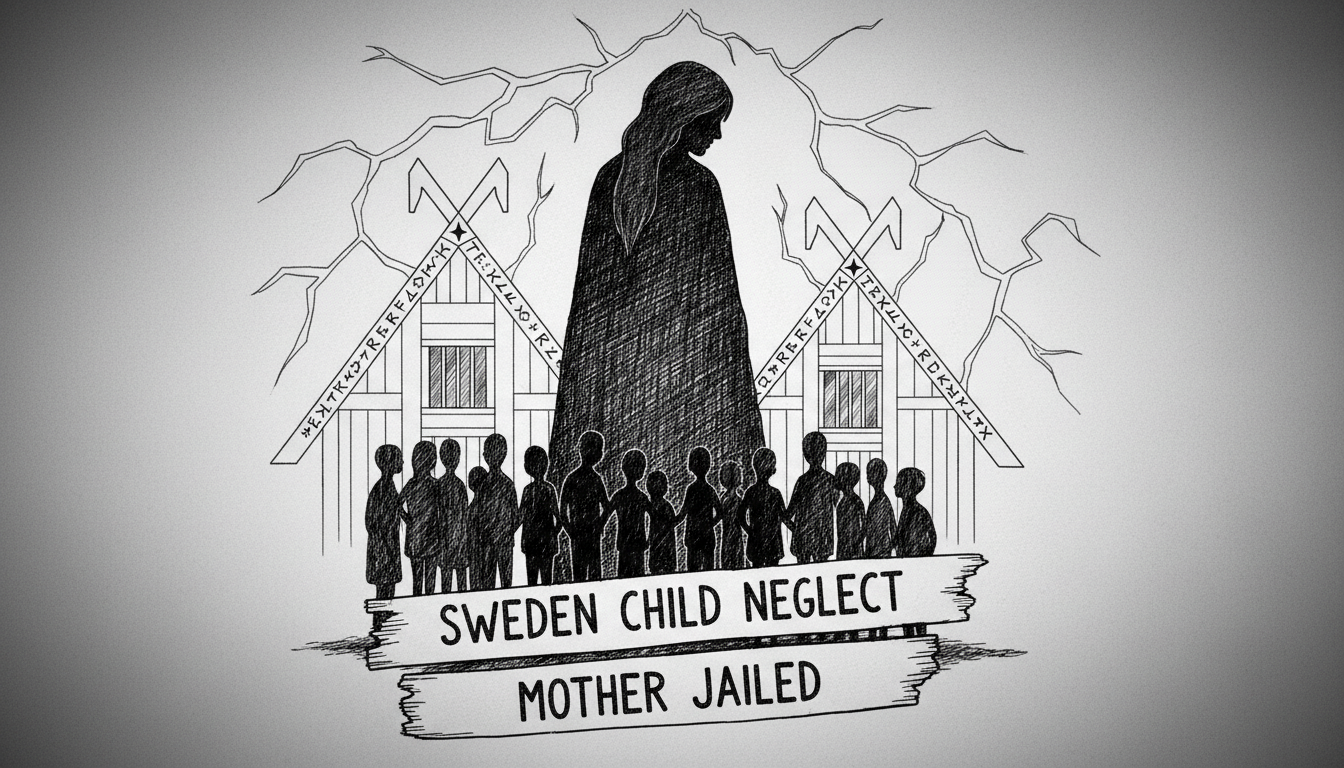
Sweden's child protection system faces tough questions after a mother was sentenced for isolating her children. The Court of Appeal for Western Sweden convicted the woman for ten counts of gross arbitrary conduct with children. Her sentence includes three months in prison, probation, and a supervision program. This case, which began when three underdressed girls sought help in Dalsland, exposes a hidden family tragedy.
A Knock on the Door in Dalsland
The story broke on a cold day in April last year. Three young girls, dressed too lightly for the weather, knocked on a stranger's door in a Dalsland community. They were asking for help. That simple act revealed a shocking situation. It led authorities to discover a total of eleven children who had been kept isolated by their parents. The family had moved repeatedly across Sweden. Their goal was to avoid decisions by child protective services to take the children into care.
"When children show up like that, it's a clear cry for help," says Karin Lundström, a child psychologist based in Gothenburg. She is not involved in this specific case but has worked with similar ones. "Isolation during formative years can have severe consequences. It affects social development, education, and a child's basic sense of security in the world."
A Legal Reversal and Family Sentences
This ruling marks a significant legal shift. The district court had initially acquitted the mother. The Court of Appeal overturned that decision. The father of ten of the children was previously sentenced to prison. The mother of the eleventh child, from a different relationship, received probation. The latest conviction closes a painful chapter for the children involved. They are now in the care of social services.
Swedish law defines 'grov egenmäktighet med barn' (gross arbitrary conduct with a child) as seriously infringing on a child's personal liberty. This case met that threshold. The children were denied schooling, routine healthcare like dental visits, and normal social contact. Swedish homeschooling laws allow education at home. However, they require oversight to ensure a child's right to knowledge and well-being is met. Authorities can and do intervene when these standards are not upheld.
The Tightrope of Parental Rights and State Duty
This case sits at the heart of a complex debate in Swedish society. It balances strong parental rights against the state's firm responsibility to protect children. Sweden's social services, or socialtjänsten, have a legal mandate to ensure child welfare. They can intervene in cases of neglect or abuse. This principle is widely supported. Yet its application can be controversial, especially in cases involving cultural differences or alternative lifestyles.
"The state has a duty to act when a child's health and development are at risk," explains legal analyst Markus Berggren. "Isolation from society and denial of education are clear red flags. The law on arbitrary conduct is a tool for these extreme cases. It protects the child's fundamental right to a life outside the confines of parental control."
The family's pattern of moving to avoid authorities highlights a systemic challenge. Sweden's municipalities are responsible for social services. Coordination between regions when a family moves can sometimes fail. This case may prompt reviews of how information is shared between different local councils.
Life After Isolation: The Children's Path Forward
The long-term work begins now for the eleven children. Recovery from prolonged isolation and neglect is a slow process. It requires stable care, therapeutic support, and gradual reintroduction to everyday Swedish life. This includes school, hobbies, and simply learning to trust adults again.
Child welfare experts stress that the damage is not irreversible. With consistent support, children can show remarkable resilience. "The focus must be on rebuilding a sense of safety and predictability," says Lundström. "It's about providing what was missing: structure, caring adults, and the chance to just be a child. Celebrating normal Swedish traditions, like Lucia or Midsummer, in a safe setting can be part of that healing."
A Broader Look at Child Welfare in Sweden
This tragic story is an extreme exception. Sweden consistently ranks high in global surveys on child well-being. Its support systems for families, including parental leave and subsidized childcare, are extensive. Most interventions by social services are supportive, not punitive. They aim to help families stay together safely.
However, this case serves as a stark reminder. It shows that severe neglect can happen anywhere, even in a society with a strong safety net. It tests the system's ability to identify and reach vulnerable children who are hidden from view. The girls' decision to seek help was the critical break in the case.
As Stockholm and other cities buzz with everyday life—parents taking kids to school in Vasastan, families visiting Skansen park—this case is a sobering contrast. It underscores a fundamental truth. A child's right to safety, education, and community is paramount. The Swedish legal system has reaffirmed that principle with this appeal court ruling. The sentence delivers accountability. Yet the real measure of success will be the future those eleven children are now able to build.