
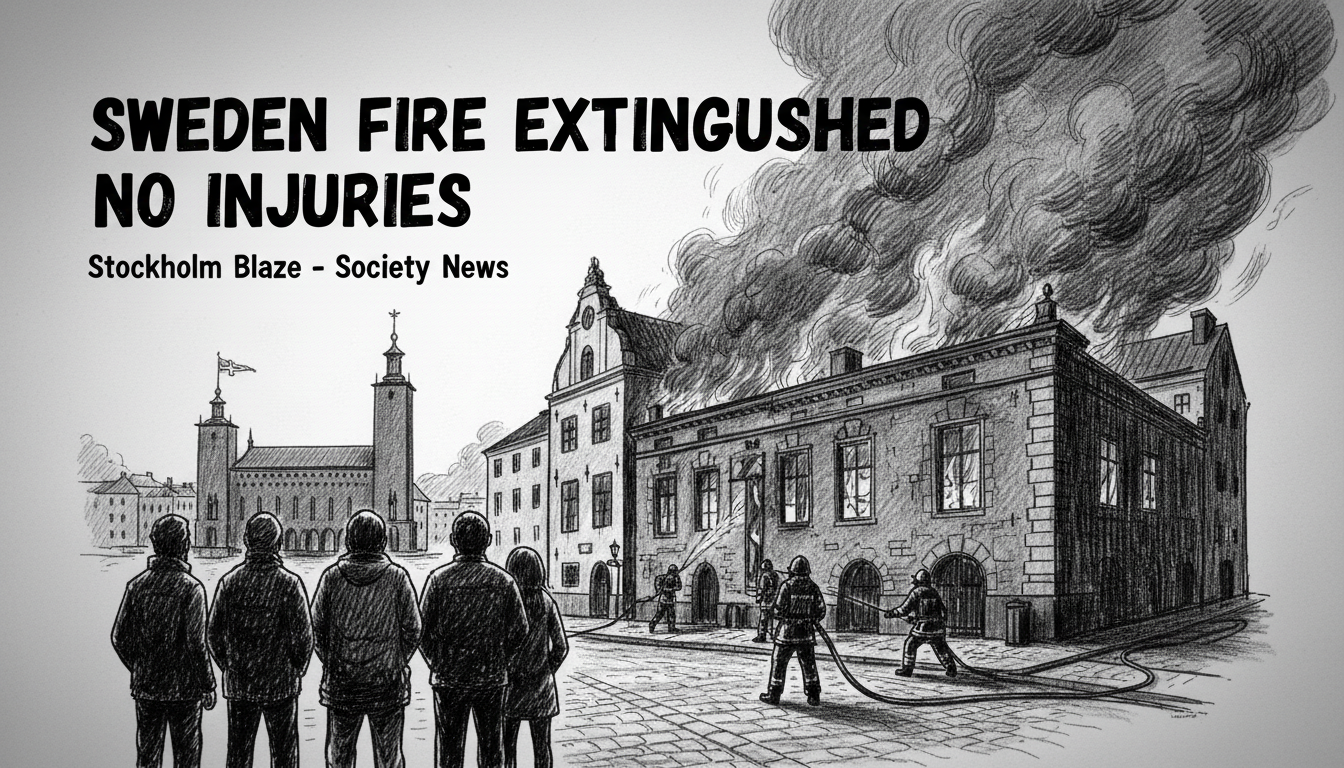
Stockholm fire crews responded to a blaze on Kungsholmen island early Friday morning. The alarm came in at 7:12 AM, and by 7:30 AM, the fire was out. No residents were injured or evacuated from the building. This swift resolution on a quiet residential street highlights the city's emergency response protocols in action.
A Friday Morning Interrupted
The fire broke out as Stockholm was waking up. Kungsholmen, a central island known for its mix of classic apartment buildings, modern offices, and waterfront parks, is typically calm on a Friday morning. Residents might be heading to work or school, or enjoying a quiet coffee before the weekend. The sound of sirens cutting through the morning air signaled a disruption to that normal rhythm. According to Åsa Sköld, a dispatch operator with the rescue service, crews were immediately sent to the scene. Their primary goal was containment and extinguishment. "We are now checking to make sure it has not spread," Sköld said in a statement following the initial response. The efficiency of the operation meant the incident was resolved before most people's days had truly begun.
The Anatomy of a Swift Response
Why did this fire end with no injuries and minimal disruption? Fire safety experts point to a combination of factors common in Swedish urban centers. First is the response time. Stockholm's fire stations are strategically located to reach densely populated districts like Kungsholmen within minutes. Second are the building codes. Swedish construction regulations for multi-family dwellings emphasize fire-resistant materials, compartmentalization to prevent spread, and clear escape routes. "A fire in an urban area like this has the potential to escalate very quickly," says Erik Lundgren, a fire safety engineer based in Stockholm. "The fact that it was controlled so rapidly speaks to both the effectiveness of the first responders and the built-in safety of the structure itself. It's a testament to a system working as intended." Lundgren notes that while all fires are serious, the outcome here—no evacuations, no injuries—is the optimal scenario emergency planners work toward.
Life on Kungsholmen: An Island Community
To understand the context of this event, one must know Kungsholmen. It's not just any Stockholm neighborhood; it's an island with its own distinct character. Locals often refer to it simply as "Kungsholmen" with a sense of pride. The western shore is lined with popular swimming spots like Smedsuddsbadet. The eastern side offers stunning views of City Hall (Stadshuset), where the Nobel Prize banquet is held. The area affected is likely a residential block, possibly near Fridhemsplan or St. Eriksplan, hubs of local life with cafes, shops, and subway stations. For residents, a fire alarm is a sharp reminder of vulnerability, even in a safe, well-maintained community. The quick all-clear allows life to return to its familiar pace—parents walking children to daycare, professionals heading to offices on Fleminggatan, retirees enjoying a morning stroll along the water.
Fire Safety in the Swedish Mindset
This incident offers a window into Sweden's broader relationship with fire safety. It's a cultural priority ingrained from childhood. Annual fire drills in apartment buildings are the norm. Clear signage for emergency exits is mandatory and well-maintained. There's a strong public awareness campaign, especially during dry summer periods when forest fire risk is high. The approach is proactive and preventive. Building inspections are rigorous. The emphasis is on stopping a fire before it starts and containing it immediately if it does. This societal focus likely played a role in today's outcome. Residents are generally aware of safety protocols, and building management is responsible for maintaining systems like smoke alarms and fire doors. It's a shared responsibility between individuals, building owners, and municipal services.
The Aftermath and Moving Forward
With the fire out, the work shifts to investigation and restoration. Fire investigators will work to determine the cause of the blaze. Was it an electrical fault? A kitchen accident? Their findings are crucial for preventing future incidents. For the residents of the affected building, the next steps involve assessing any property damage and repairs. The psychological impact, while likely minimal given the swift resolution, is still worth acknowledging. A fire alarm is a jarring event. The sound of firefighters in the stairwell, even if brief, can be unsettling. The community's resilience is shown in how quickly normalcy returns. Neighbors might check on each other, a simple act that reinforces the social fabric of Swedish apartment living.
A Quiet Conclusion to a Potential Crisis
By lunchtime on Friday, the story on Kungsholmen was essentially over. The fire trucks had departed. The only remaining signs might be a fire department vehicle parked outside as final checks are completed. For the journalists and news outlets, it becomes a short item—a fire extinguished, no one hurt. But within that brief report lies a successful operation. It represents trained professionals doing their jobs effectively, safety systems functioning, and a community protected from harm. In a city like Stockholm, where historic wooden buildings coexist with modern glass towers, fire risk is a constant calculation. Incidents like this morning's are managed not with drama, but with practiced efficiency. The real news is the non-news: life on a Stockholm island continues, uninterrupted and safe, thanks to a response that was both rapid and routine.