
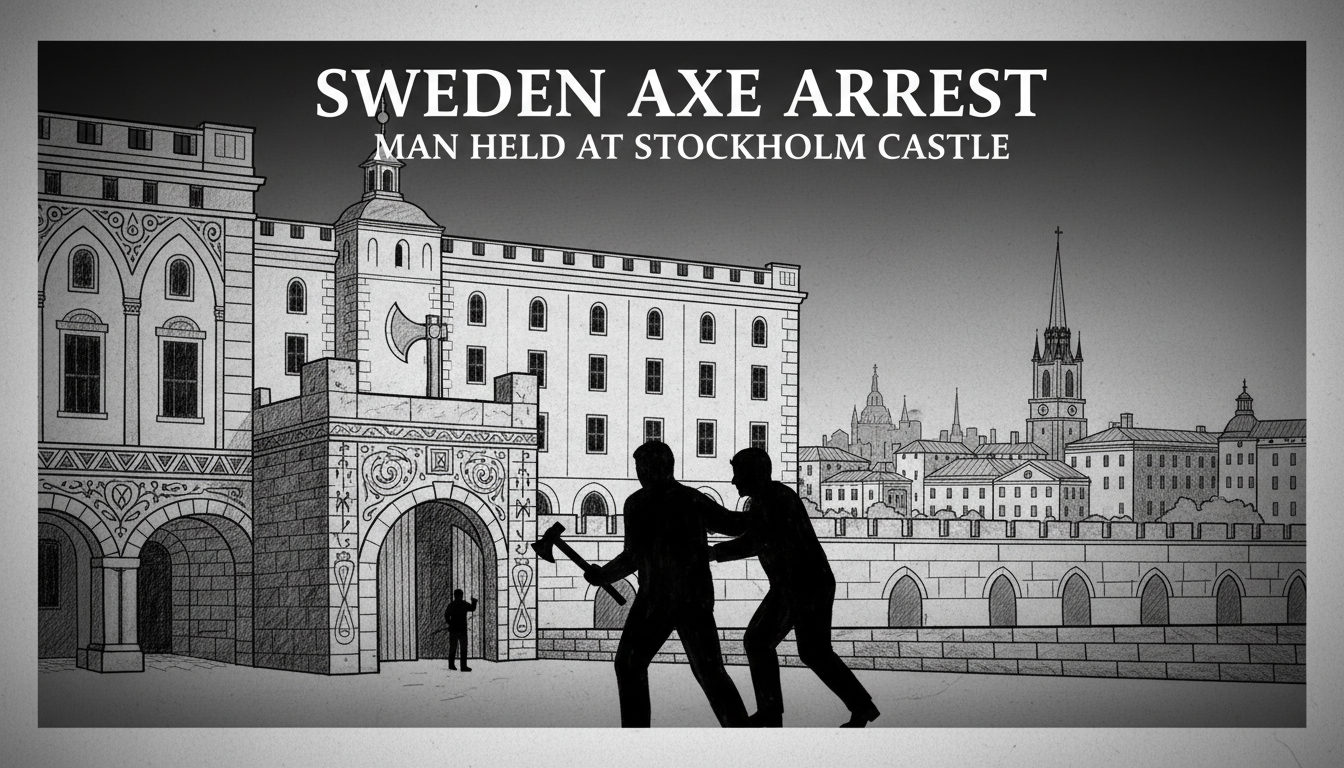
Sweden's strict knife laws were enforced in a leafy Stockholm suburb after a man was arrested for carrying an axe near a historic castle. The incident occurred in the Judarskogen nature reserve by Åkeshov, a popular spot for joggers and families. Police apprehended the man at Åkeshovs slott, a 17th-century castle now used as a hotel. He is suspected of a severe violation of the country's knife law, known as 'grovt brott mot knivlagen'.
For residents of Bromma, the news was unsettling. Judarskogen is a peaceful green lung, not a place for weapon sightings. "I walk my dog there every day," said local resident, Elin Karlsson, 42. "It's always so calm. This is very strange to hear." The arrest highlights the fine line in Swedish society between tools and weapons in public spaces.
The Legal Landscape of Blades
Sweden's weapon legislation is clear. Carrying knives, axes, or other bladed items in public without a valid purpose is illegal. The law aims to prevent violence and ensure public safety. A simple pocket knife can lead to a fine if carried without reason. An axe in a city park almost certainly crosses the line.
"Intent and context are everything," explained legal analyst, Markus Lindgren. "The law distinguishes between someone with a tool for work and someone carrying a weapon. A severe violation suggests the circumstances were alarming." Factors like aggressive behavior or making threats increase the severity. Police must assess why the axe was there in the first place.
A Tranquil Setting for an Alarming Event
Judarskogen nature reserve is a cornerstone of local life in western Stockholm. Its trails wind through oak forests and around small lakes. On any given day, you'll see people foraging for mushrooms, children playing, and office workers on lunch breaks. Åkeshovs slott, with its beautiful gardens, adds a historical charm. The contrast between this idyllic scene and the police arrest is stark.
This incident touches a nerve in Sweden's ongoing conversation about public safety. While violent crime statistics are complex, perceptions matter. An axe in a park feeds into broader anxieties. "It's not something you expect here," said Mikael Berg, who was visiting the castle grounds. "It makes you look over your shoulder."
Understanding 'Grovt Brott Mot Knivlagen'
The suspect faces a accusation of a serious crime under the knife law. This isn't a minor infraction. A 'grovt' or severe violation implies dangerous circumstances. Perhaps the man threatened someone. Maybe he brandished the axe recklessly. The police have not released specific details, but the charge itself signals a concerning situation.
Penalties for such violations can be serious. They may include significant fines or even imprisonment. The court will examine the man's intent. Did he have a legitimate reason to be in the forest with an axe? Was he hiking to a campsite? Or was the intent more sinister? These questions will form the core of the legal process.
The Cultural Context of Tools and Weapons
Swedes have a deep connection to nature and outdoor life. The concept of 'allemansrätten' – the right of public access – allows people to roam freely in forests and fields. This includes activities like woodcraft. In a rural setting, carrying an axe for gathering firewood is normal. In a suburban Stockholm nature reserve, it becomes a police matter.
This cultural nuance is important. The axe is a classic Swedish tool, symbolic of self-reliance and countryside living. Yet, in an urban context, that symbol transforms. It becomes an object of fear and a potential weapon. The incident illustrates the clash between traditional Swedish lifestyles and modern urban security concerns.
Police Response and Public Reassurance
Local police moved quickly to detain the individual. Their presence at the castle, a noted landmark, ensured the situation was contained. The response follows standard protocols for reports of armed individuals in public spaces. The goal is always to de-escalate and secure the area.
Security experts note that rapid response is key. "The priority is always to isolate the potential threat and protect the public," said security consultant, Anna Pettersson. "An arrest like this shows the system working as intended. A report was made, and police intervened." The incident serves as a reminder for the public to report suspicious behavior immediately.
A Look at Broader Trends in Stockholm
While an isolated axe incident might seem random, it occurs against a backdrop of public debate. Stockholm, like many global cities, grapples with how to maintain its open, trusting feel while addressing security. Discussions about knife crime, particularly among youth, frequently make headlines. This event, though different, enters that same emotional landscape.
Residents of neighborhoods like Bromma prize their safety and tranquility. An arrest for a weapon law violation disrupts that peace. It prompts questions. Is this a one-off odd event? Or a sign of changing times? For now, the park has returned to normal. Joggers pace the trails. Children's laughter echoes. But the question lingers in the clean Nordic air: what prompts a person to walk with an axe in a place of peace?
The case will proceed through the Swedish legal system. The man's motives will be examined. The court's decision will send a message about the boundaries of acceptable behavior in public spaces. For now, the event remains a curious and unsettling footnote in the daily life of a Stockholm suburb. It underscores a universal urban truth: peace is precious, and the tools of the forest have no place in the city park.