
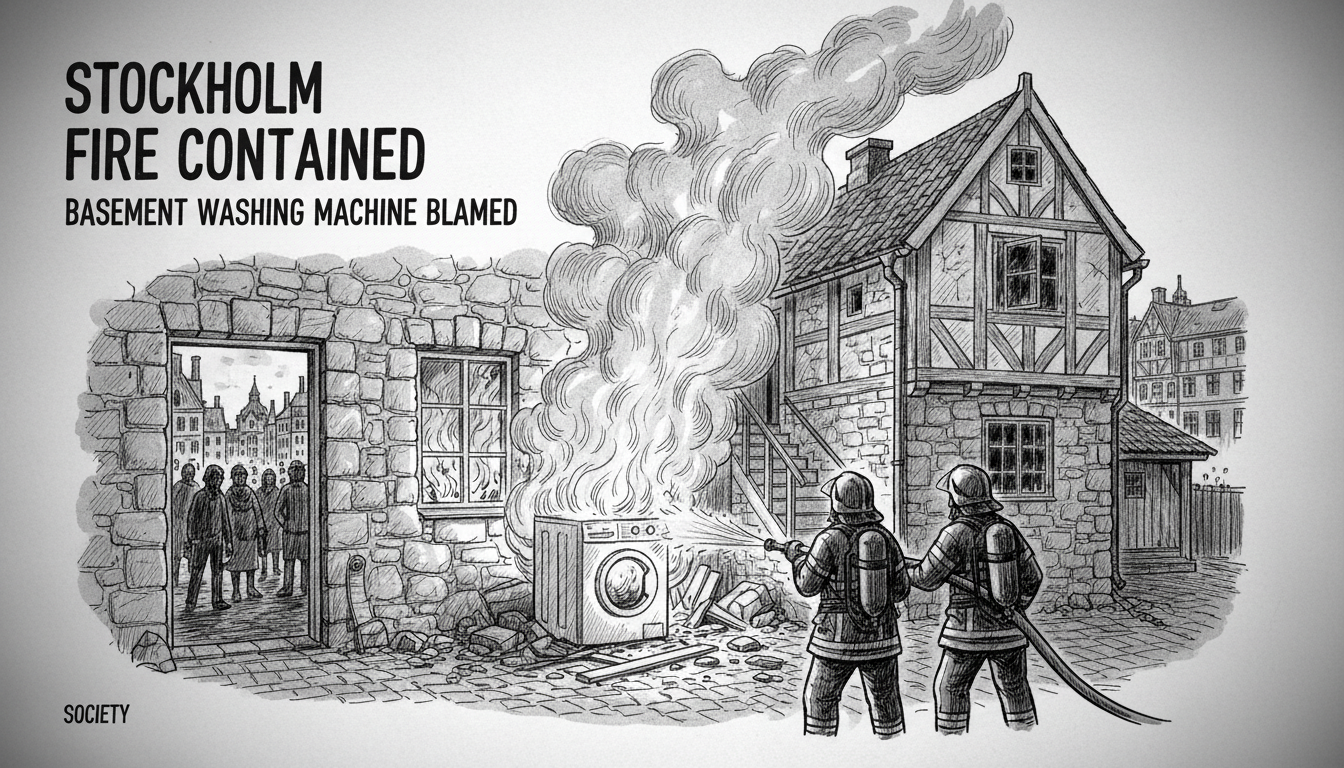
Stockholm firefighters rushed to a Hornstull apartment building on Södermalm after reports of smoke pouring from a basement. The alarm came in just after 2 PM, sending emergency crews to a residential street in one of the city's most densely populated districts. 'We are on site and smoke diving,' said Lena Hoffmann, an operations leader with the rescue service, in an initial statement.
Her update was oddly specific. 'It's smoking from a washing machine,' she confirmed. The incident, while swiftly contained, highlights the quiet dangers lurking in the shared spaces of Sweden's urban housing. No injuries were reported, a fact that brought palpable relief to residents gathered on the cobblestone street.
Smoke in the Basement
The call was for a källarvåning—a basement level common in Stockholm's older building stock. These spaces often house laundry rooms, storage, and bicycle sheds. For the firefighters, a smoke report in such a confined, potentially populated area triggers an immediate and hazardous protocol: rökdykning.
Smoke diving is a high-risk operation. Firefighters, equipped with breathing apparatus and thermal imaging cameras, must navigate zero-visibility conditions. Their goal is to locate the source, search for any trapped individuals, and prevent a contained smoke incident from becoming a structural fire. 'It's one of our most demanding tasks,' a veteran firefighter, who asked not to be named, told me later. 'Even without visible flames, smoke inhalation and disorientation are deadly serious risks.'
The Neighborhood Reacts
Hornstull, on Södermalm's western edge, is a neighborhood of contrasts. Historic brick apartment buildings from the early 1900s sit alongside trendy cafes and design shops. The community vibe is strong. Within minutes of the alarm, neighbors were checking on one another. 'I saw the fire engines and just came down to make sure everyone in my building was out,' said Erik Lundström, a resident living two doors down. 'You hear the sirens and your first thought is for the people, then for the building itself. These old places are our homes.'
This sense of collective concern is typical in Swedish residential areas, where many live in tenant-owner associations (bostadsrättsföreningar). A fire in one part of the building is a crisis for all. The incident disrupted the quiet afternoon, drawing a small crowd before the all-clear was given.
A Common but Dangerous Fault
The suspected culprit—a malfunctioning washing machine—is more than a simple nuisance. Fire safety experts classify household appliances as a notable ignition source. 'Faulty electrical components, overloaded circuits, or accumulated lint in dryers can lead to overheating and fire,' explained fire safety consultant Mikael Pettersson. 'In a basement laundry room, often left unattended, a small fire can develop for some time before being detected by smoke or smell.'
This incident underscores a critical, if mundane, aspect of home safety. While Sweden has strict building codes, responsibility for appliance maintenance falls to individual owners or housing associations. A 2022 report from the Swedish Civil Contingencies Agency (MSB) noted that electrical faults cause approximately one-third of all building fires in Sweden. Washing machines and dryers are a contributing factor in a significant portion of these.
Prevention in Shared Spaces
The Hornstull event serves as a community reminder. Fire safety in multi-family dwellings hinges on shared responsibility and proper equipment. 'Working smoke detectors are non-negotiable,' Pettersson emphasized. 'In common areas like basements and laundry rooms, they must be tested regularly. It's also crucial that these spaces are kept clear of personal storage that can block exits or act as extra fuel.'
Many Stockholm buildings from the early 20th century, like those in Hornstull, have solid construction but were not designed with modern electrical loads in mind. Retrofitted wiring and a higher density of appliances per household increase the load. Housing associations typically conduct annual fire safety inspections, but resident vigilance is the first line of defense. 'You should never leave a washing machine or dryer running when you leave home or go to sleep,' Pettersson advised. 'It's a small habit that can prevent a major disaster.'
The Morning After
By evening, the scene on the quiet Hornstull street had returned to normal. The fire engines were gone. The residents had returned to their apartments. Only a faint, acrid smell lingering near the building's basement vent hinted at the afternoon's excitement. The physical damage appeared minimal, but the psychological impact of a close call often lingers.
For the local räddningstjänst, it was another resolved call in a long list. Their quick response prevented what could have been a devastating fire in a densely populated city district. For the residents, it was a prompt to check the battery in their own smoke alarm and perhaps think twice before starting a laundry cycle before heading out.
In a city like Stockholm, where historic charm meets modern living, safety hinges on respecting the limits of old infrastructure. Today's incident was a warning without casualty—a best-case scenario that could have easily turned out differently. It leaves us with a question we seldom ask while doing our chores: How well do we really know the risks spinning inside our own homes?