
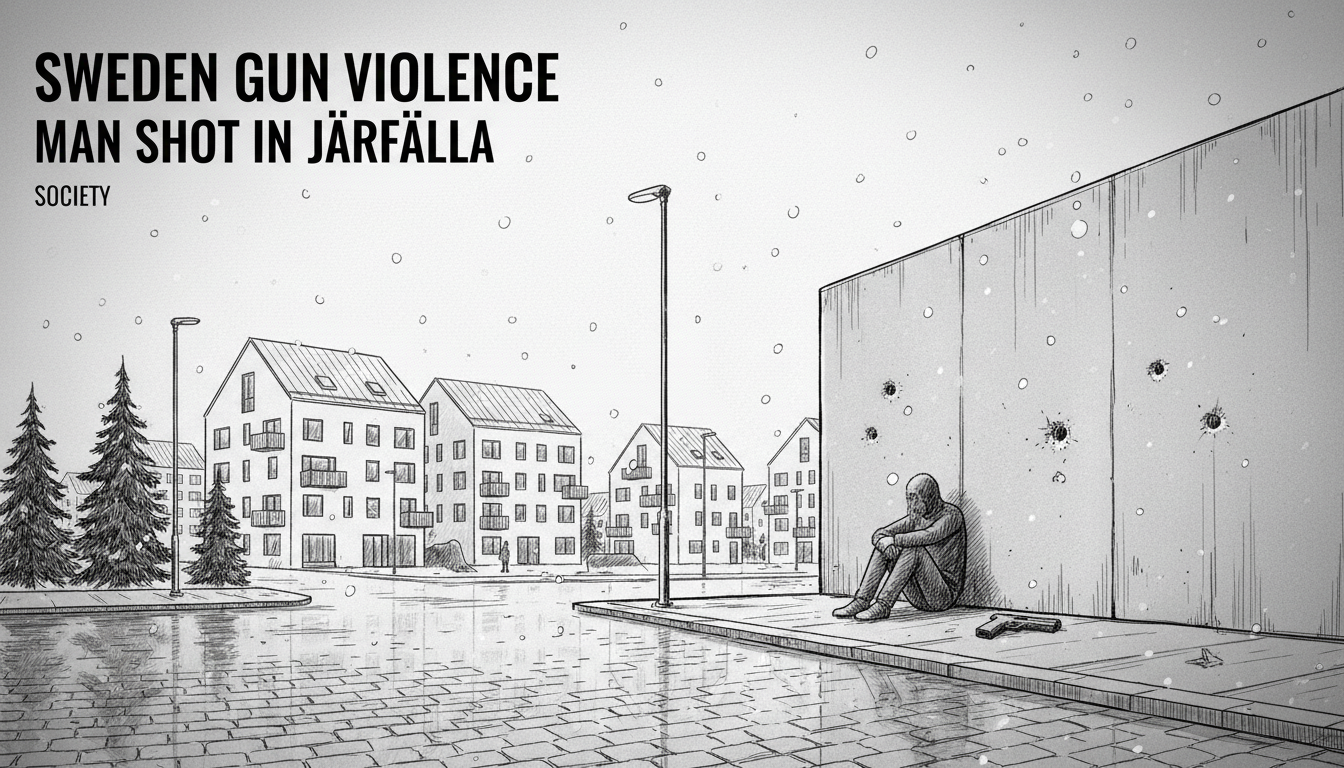
Sweden gun violence struck the Stockholm suburb of Järfälla again on Wednesday evening. A man was found shot and wounded in the Kallhäll district, adding another incident to a troubling national trend. Police were alerted and found the injured man at the scene. He was taken to hospital by ambulance. His condition is unknown, but authorities confirmed they have been able to speak with him. No suspects have been arrested. A preliminary investigation for attempted murder and aggravated weapons offenses is now underway. This shooting in a residential area northwest of Stockholm highlights the persistent challenge of gang-related violence that continues to affect Swedish communities.
A Quiet Evening Shattered
The call came in on a Wednesday evening. Police patrols rushed to Kallhäll, a district within Järfälla municipality. They found a man with gunshot wounds. The scene, likely a typical residential street or square, was transformed into a crime scene. Ambulances arrived, and the victim was transported for medical care. For residents, the sound of sirens is becoming an unwelcome familiarity. "When the patrols arrived, an injured person was found," police press spokesperson Nadya Norton said in a statement. The immediate aftermath was a flurry of police activity, but the search for those responsible continues with no one in custody.
The Kallhäll Context
Kallhäll is more than just a dot on a map. It's a community of over 8,000 people, a mix of apartment blocks and smaller houses, with a commuter train station linking it to central Stockholm. Like many suburbs, it represents the face of modern Sweden—diverse, generally peaceful, but not immune to the conflicts that play out in the shadows. Järfälla as a whole has grappled with gang crime and social unrest in recent years. These incidents don't happen in a vacuum. They occur in neighborhoods where people live, work, and raise families. The shooting sends ripples of fear and frustration through the community, forcing residents to confront a violence that feels both random and targeted.
A National Pattern of Violence
This incident is not isolated. Sweden has experienced a significant increase in gun violence over the past decade. Fatal shootings, in particular, have risen notably compared to the five-year average preceding 2023. Stockholm County, which includes Järfälla, accounts for a large portion of these reported incidents. The weapons are often illegal firearms, circulating within criminal networks. The violence is frequently tied to gang conflicts over territory, drugs, or personal disputes. Each shooting is a headline, but for police and social services, it's a point on a grim graph they are desperately trying to flatten.
The Human Cost Beyond the Headline
Behind the police statement is a man in a hospital bed. Behind the crime scene tape are neighbors who heard the shots. "It has been possible to talk with the man," Norton noted, a small piece of information that suggests a chance at survival. The human impact extends far beyond the victim. Parents second-guess letting their children play outside. Shop owners feel the tension. The sense of security, a cornerstone of Swedish society, erodes piece by piece. This shooting in Kallhäll is a single event, but it contributes to a collective anxiety in areas repeatedly marked by violence.
Expert Analysis: Roots and Responses
Criminologists and law enforcement experts point to a complex web of factors driving this trend. Socio-economic disparities play a role, where inequality and segregation can create fertile ground for recruitment into criminal networks. The presence of established gangs, often with international links, fuels cycles of retaliation. The availability of illegal firearms remains a critical enabler of the violence. From a policing perspective, investigations are challenging. Witnesses are often reluctant to come forward due to fear of reprisals. "Preventative work is absolutely key," one analyst familiar with the Stockholm region told me. "It's about long-term strategies that combine robust police work with intense social investment in vulnerable areas—schools, youth programs, job opportunities. The police cannot arrest their way out of this problem."
Community in the Crossfire
For the people of Kallhäll and Järfälla, the policy debates can feel distant. Their immediate reality is a heightened police presence and lingering unease. Local community centers and associations often become the front line of the response, working to provide alternatives for young people and foster cohesion. These grassroots efforts are crucial for rebuilding trust. Yet, every shooting undermines that work, reinforcing a narrative of danger. The challenge is immense: how to reclaim public spaces and ensure that suburban neighborhoods are defined by their community spirit, not by crime reports.
Looking Ahead: A Search for Solutions
The investigation in Kallhäll continues. Police will be reviewing CCTV footage, speaking to residents, and following forensic leads. The victim's recovery is the immediate concern. But the broader question for Sweden remains: how to break the cycle? Increased police resources and tougher sentencing are part of the political response. Simultaneously, there is a growing recognition of the need for holistic approaches that address root causes. This includes early intervention programs, better integration policies, and economic initiatives in marginalized suburbs. The path forward requires persistence and a commitment that matches the scale of the challenge. The shooting in Järfälla is a stark reminder that the work is far from over. Can Swedish society muster the collective will to turn the tide, or will the sound of gunfire in its suburbs continue to echo?