
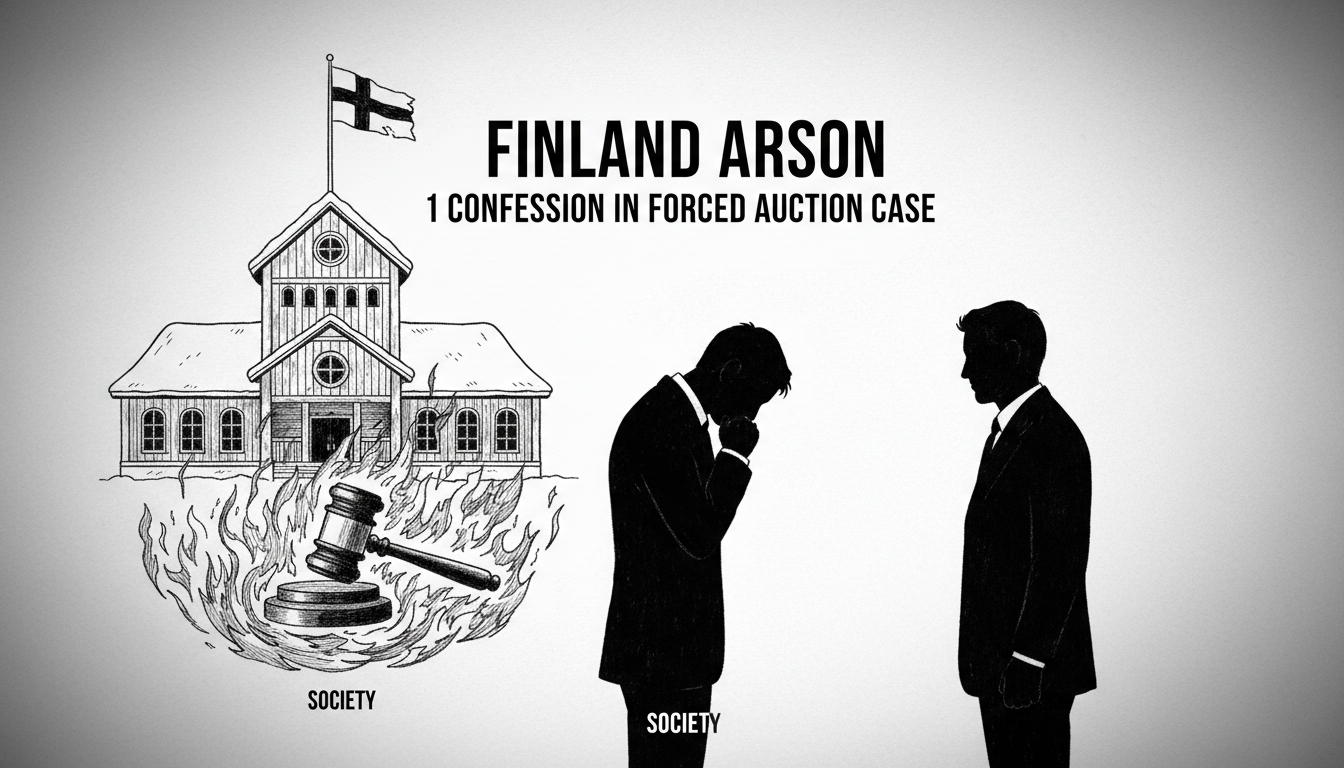
Finland recorded 842 cases of arson in 2021, with a recent Janakkala incident exposing the desperate lengths some will go in property disputes. Flames engulfed a single-family home in Leppäkoski last May, lighting up the night sky in a rural area known for its quiet communities. Firefighters rushed to the scene but found the wooden structure already consumed by an intense blaze. Police quickly classified the fire as suspicious, launching an investigation that has now culminated in a startling confession. The former owner of the house has admitted to buying gasoline, breaking into the property, and deliberately setting it alight. This act of destruction is directly tied to a bitter conflict over a forced auction, or pakkohuutokauppa, of the home. The case underscores how legal property proceedings can spiral into personal tragedy and criminal recklessness in Finland.
A Methodical Act of Desperation
According to investigative documents, the individual planned the arson with chilling precision. He purchased fuel from a local station, traveled to the Leppäkoski property after hours, and forced his way inside. The subsequent fire caused total destruction, rendering the house a charred shell and eliminating any financial value it retained. This was not a spontaneous outburst of anger but a premeditated act aimed at obliterating an asset at the center of a legal fight. The forced auction process, initiated by creditors, had severed the former owner's ties to the property through a court order. His response, as outlined in his confession, was to ensure no one else could benefit from it either. The emotional toll of losing a home, compounded by financial strain, appears to have fueled a destructive decision-making process.
The Legal Weight of Arson in Finland
Arson is treated with utmost severity under the Finnish criminal code, carrying a maximum penalty of up to ten years imprisonment. Police and prosecutors meticulously build cases around forensic evidence, motive, and financial damage, which can easily reach hundreds of thousands of euros. In this Janakkala case, the direct admission of guilt streamlines the judicial process but does not mitigate the seriousness of the crime. Courts consider the intent to cause damage, the risk to human life, and the broader societal harm when sentencing. A conviction for aggravated arson, which this may qualify as due to premeditation and the use of accelerants, almost certainly leads to a lengthy prison term. The Finnish legal system views such property destruction as a profound violation of public safety and economic stability.
Forced Auctions: A High-Stakes Legal Process
The triggering event for this tragedy was a pakkohuutokauppa, a forced auction used in Finland to settle unpaid debts secured against property. This process is governed by strict laws and is typically a last resort for creditors after payment defaults. The Enforcement Authority (Ulosottolaitos) oversees these auctions, which can leave former owners feeling powerless and embittered. While statistically rare for disputes to escalate to violence, experts note the immense psychological stress involved. Losing a home, especially an omakotitalo (single-family house) that may represent a lifetime of investment, can create a sense of grievous injustice. The Finnish system offers legal avenues for appeal and debt restructuring, but for some, the emotional impact overrides rational recourse.
Expert Analysis on Crisis and Crime
Criminal psychologists point to a confluence of factors in such extreme cases. "When individuals feel cornered by impersonal legal and financial systems, their sense of agency can become destructively focused," explains Dr. Eero Mikkonen, a forensic psychologist familiar with property crime cases. "Arson, in particular, is often an act of symbolic eradication—a attempt to destroy the source of one's anguish." He emphasizes that while most people endure forced auctions without turning to crime, underlying issues like mental health struggles, social isolation, or acute financial despair can be catalysts. From a legal perspective, Professor Hanna Koskinen, a specialist in property law at the University of Helsinki, notes the robustness of Finland's auction system. "The laws are designed to be fair and transparent, but they cannot fully insulate against human desperation," she said in an analysis. "This case is a grim reminder that legal procedures operate within a human context that can sometimes fracture."
Broader Implications for Finnish Society
This incident in Janakkala resonates beyond a local crime report. It touches on enduring themes of property ownership, economic security, and social welfare in Finland. The government in Helsinki consistently monitors the balance between creditor rights and debtor protections, with the Ministry of Justice occasionally reviewing enforcement laws. While EU directives harmonize some aspects of insolvency proceedings, national rules on property seizures remain distinctly Finnish. Parliament members from parties like the Social Democrats and the Finns Party have historically debated the social safety net surrounding debt and home loss. Cases like this may prompt quiet reassessments of whether support systems—ranging from legal aid to mental health services—are adequately reaching those in crisis before they reach a breaking point.
A Community Left to Reflect
In Leppäkoski, the physical remnant of the fire serves as a stark local monument to a conflict gone terribly wrong. Neighbors have expressed shock, noting that property disputes are common but rarely manifest in such violent destruction. The case now moves through the Finnish court system, where the former owner will face the consequences of his actions. The destroyed house will likely be cleared, but the questions it raises will persist. How does a society prevent legal processes from breeding such desperation? Are there early intervention points in forced auction proceedings that could identify and assist individuals at risk? This arson case, with its clear confession and tragic motive, challenges Finland to look beyond the black-letter law to the human stories unfolding within it. The ultimate sentence will be delivered in court, but the broader judgment on how to handle the intersection of property, debt, and despair remains an ongoing national conversation.