
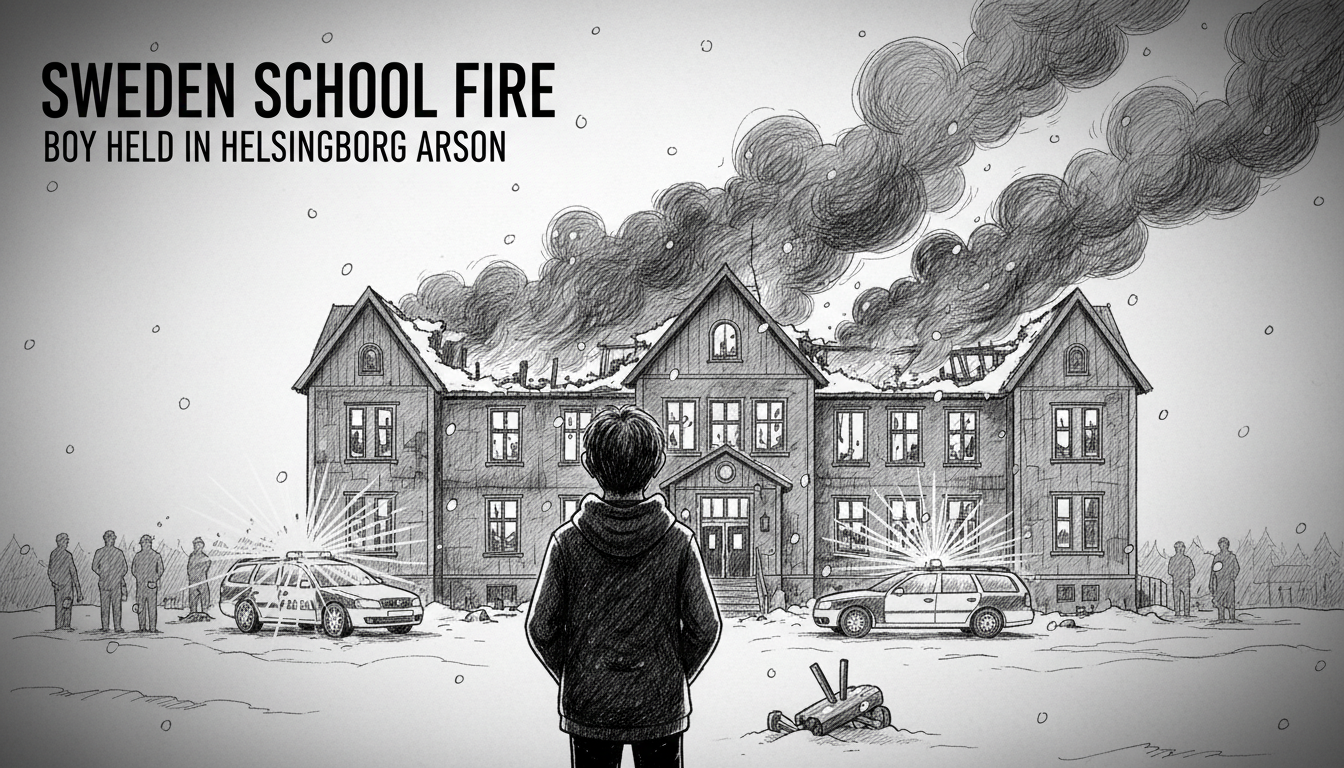
Sweden school fire statistics show a fluctuating yet persistent problem. In Helsingborg, flames tore through the entrance of a local school building in the early hours of Wednesday morning. The fire alarm sounded at 1:15 AM, sending emergency crews racing to the scene. By dawn, the fire was out. A cordon of police tape remained, and a boy under the age of 18 had been questioned and released, but was still formally suspected of arson. The incident has left a community unsettled and reignited difficult conversations about youth crime in Sweden.
A Quiet Night Shattered by Flames
The fire broke out at the school entrance. Under the cover of darkness, the act was swift. Emergency services arrived quickly to contain the blaze. Their rapid response prevented the fire from spreading deeper into the school building. While the physical damage appears to be localized, the psychological impact on students, teachers, and parents is broader. The school grounds stayed closed for the morning as forensic technicians worked inside the police cordon. They searched for evidence, documenting the scene of what authorities are treating as a deliberate criminal act.
For residents living nearby, the flashing blue lights and smell of smoke were an unwelcome disruption. "It's frightening to think this happens so close to home," said a neighbor who wished to remain anonymous. "Our children go to that school. It makes you worry about what's happening with some young people today." This sense of violation is common when community spaces, especially schools, become targets. The building represents safety and future potential, making an attack on it feel particularly personal.
Understanding Youth and Arson in Sweden
The suspect's age places this case in a specific category within the Swedish legal system. Sweden's approach to youth crime focuses on rehabilitation. For suspects under 15, the social services, not the police, take the lead. For those 15 to 17, the police investigate, but the primary goal is often referral to child and youth social services. Prison is an extremely rare outcome for first-time juvenile offenders in arson cases. The legal process prioritizes interventions like counseling, mentoring, and community service.
Arson is a serious crime here. The Swedish Penal Code defines it broadly. Penalties depend heavily on the danger to life and the value of property destroyed. A conviction can lead to a prison sentence of up to six years for severe cases. However, statistics from the Swedish National Council for Crime Prevention (Brå) show arson numbers are volatile. They spike and fall from year to year, making long-term trends difficult to pinpoint. What is clearer is the profound impact each fire has on its local community.
"When a young person commits arson, it's almost always a cry for help," explains Dr. Lena Karlsson, a criminologist who studies juvenile delinquency. "We rarely see pure vandalism. More often, it's linked to underlying issues—mental health struggles, acute family crises, or profound feelings of exclusion and anger. The act is destructive, but the motivation usually stems from pain." She emphasizes that while punishment is part of the process, understanding and addressing the root causes is critical for prevention.
The Community Picks Up the Pieces
The immediate task for Helsingborg officials is repairing the school. Fire safety experts will assess the damage. They will review the effectiveness of the school's alarms and sprinkler systems. "A fire at an entrance is particularly dangerous," notes fire safety consultant Mikael Berg. "It can block the primary escape route. Thankfully, this occurred at night when the building was empty. It underscores the need for clear evacuation plans and regular safety checks, even for parts of the building you wouldn't consider high-risk."
Beyond the bricks and mortar, the school's leadership now faces the emotional repair job. Talking to students about what happened, reassuring parents, and restoring a sense of security will take time. Schools in Sweden often function as community hubs. They host evening classes and local events. An attack on the school feels like an attack on the neighborhood's heart.
This incident echoes other cases across Sweden in recent years. Schools in Malmö, Gothenburg, and Stockholm suburbs have all suffered from arson and major vandalism. These events often lead to calls for better security cameras, improved lighting, and more community patrols. Yet, they also spark debates about societal responsibility. Are enough resources directed toward youth centers and after-school activities? Is the pressure on young people today, both in school and online, creating a toxic mix?
A Broader Look at Society and Safety
The Helsingborg fire arrives during an ongoing national conversation about crime and integration. While not directly linked to immigration, discussions about youth crime in Sweden often encompass challenges in marginalized suburbs. These areas, with higher unemployment and lower average incomes, can sometimes see higher rates of property crime. Analysts warn against simplistic connections. They point to complex factors like socio-economic status, school performance, and peer influence as stronger predictors of youth delinquency than background alone.
The path forward for the young suspect is uncertain. The police investigation continues. If the evidence leads to prosecution, he will face the juvenile justice system. His future, and the community's healing process, are now intertwined. For the students returning to class, the scorch marks at the entrance will serve as a stark reminder of a night their school burned.
As the clean-up begins, the fundamental question lingers. How does a society protect its shared spaces while also reaching out to the young individuals who seek to destroy them? The answer requires more than just police work. It demands attention, resources, and a collective willingness to listen to the cries for help that too often go unheard until it is too late.